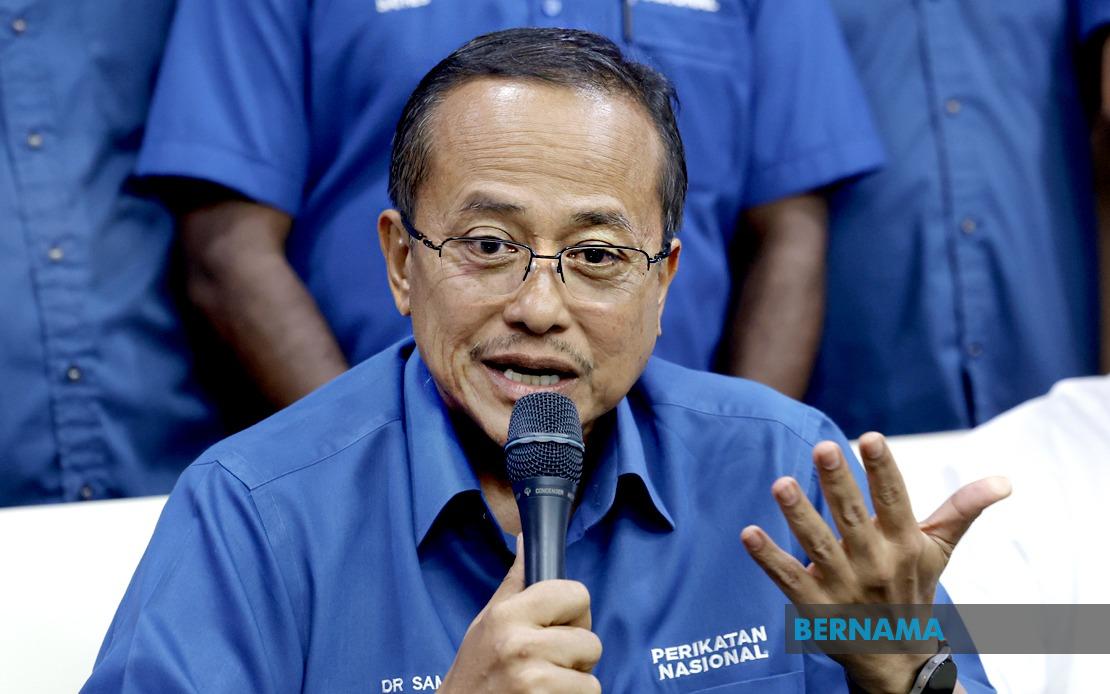
Perikatan Nasional has signalled its willingness to engage in negotiations with Barisan Nasional in advance of the forthcoming Melaka state election, according to the coalition's chairman Datuk Seri Dr Ahmad Samsuri Mokhtar. Speaking in Taiping at the 23rd Perak PAS Convention, Ahmad Samsuri stressed that while no formal discussions have transpired between the two major political coalitions to date, the window for potential dialogue remains considerably open. He emphasised that the absence of a confirmed dissolution date for the Melaka State Legislative Assembly provides an adequate timeframe for meaningful negotiations to commence, should both sides demonstrate readiness to proceed.
The PN chief's remarks represent a notable shift in the political landscape of Melaka, where the coalition currently operates from the opposition benches. His comments suggest that rather than contesting the state election as adversaries, the two coalitions might explore configurations that could alter the electoral mathematics significantly. Ahmad Samsuri's statement carries particular weight given PN's recent electoral gains in other states, which have emboldened its negotiating position across the country. The timing of his overture to BN indicates strategic awareness that early discussions, rather than last-minute negotiations, might yield more favourable outcomes for all parties involved.
During his address at the Perak PAS gathering, Ahmad Samsuri articulated a specific assessment of PN and BN's combined electoral prospects. He proposed that a collaborative arrangement between the two coalitions would carry approximately a 75 per cent probability of securing control of the Melaka state government in the forthcoming election. This confident projection reflects internal calculations suggesting that their combined voter base and grassroots machinery could overcome potential fragmentation or independent candidacies that might otherwise dilute the contest. The analysis underscores why Ahmad Samsuri considers alliance negotiations worthwhile, despite the historical tensions and ideological differences that have occasionally complicated PN-BN relations at various political levels.
However, Ahmad Samsuri tempered his optimism with candid acknowledgment of the complexities inherent in such negotiations. He cautioned that the journey towards converting electoral potential into actual governmental control would prove neither straightforward nor effortless. His metaphor comparing the path to something lacking the smoothness of a highway, and devoid of convenient rest stops, conveyed the reality that coalition-building demands sustained commitment and strategic flexibility from all participants. This realistic framing suggests that while PN views cooperation with BN as desirable and potentially transformative, the coalition recognises that achieving such an arrangement requires careful navigation of competing interests and divergent political cultures within both major coalitions.
The prospect of PN-BN cooperation in Melaka carries broader implications for Malaysian politics. Such an arrangement would represent a recalibration of the adversarial dynamics that have characterised federal-level politics since PN's formation and its subsequent federal government partnership with BN from 2020 to 2023. At the state level, particularly in Melaka where recent elections have proven fiercely competitive and occasionally volatile, a coordinated approach could bring greater stability to governance and reduce the perpetual campaign mentality that has disrupted administrative continuity. For Malaysian voters, however, such arrangements raise pertinent questions about democratic choice, as pre-poll negotiations can significantly constrain the range of viable options presented at the ballot box.
The Melaka state election context renders these negotiations particularly significant. The state has witnessed dramatic political swings in recent election cycles, with control shifting multiple times between BN and opposition coalitions. This volatility reflects a deeply divided electorate and the presence of significant swing constituencies where electoral outcomes remain genuinely uncertain. Both PN and BN recognise that attempting to contest Melaka as separate entities risks allowing a third force to capitalise on vote splitting, potentially determining the election outcome. This competitive reality provides substantial incentive for both coalitions to explore common ground and identify mutually acceptable arrangements that maximise their collective representation while maintaining internal party distinctions.
Ahmad Samsuri's framing of cooperation as a potential "game changer" for PN merits careful analysis. Currently operating as opposition in Melaka, PN views electoral victories and government formation as essential to its political viability and relevance. Securing control of additional state governments strengthens PN's negotiating position at the national level and demonstrates to its constituents that the coalition remains a dynamic political force capable of delivering tangible governance outcomes. This aspiration explains why PN leadership appears genuinely motivated to explore accommodation with BN, despite ideological differences or past electoral competition between their respective component parties.
The role of PAS within PN adds another layer to these negotiations. As the largest component party within Perikatan Nasional and a participant in the Perak PAS Convention where Ahmad Samsuri made these comments, PAS's organisational strength and grassroots presence in Melaka would be critical to any electoral compact. PAS brings significant institutional capacity and voter loyalty in rural and semi-urban constituencies throughout the state, making it an indispensable partner in any PN electoral strategy. The presence of Perak PAS Commissioner and PAS vice-president Datuk Idris Ahmad at the gathering underscores the coordination occurring at senior levels within the coalition regarding these strategic considerations.
For BN, which commands traditional voter bases and institutional networks in Melaka developed over decades, the calculation regarding talks with PN involves different considerations. BN must weigh whether accommodating PN in electoral negotiations would energise or demoralise its own supporters, whether sharing power would strengthen or weaken its long-term position in the state, and how such an arrangement might influence its standing at the federal level. These are not straightforward assessments, and different BN component parties may harbour divergent views on the desirability of cooperation with PN.
Ahmad Samsuri's emphasis on the importance of conducting negotiations before assembly dissolution reflects sophisticated political awareness. Once the dissolution occurs and elections are called, the negotiating environment shifts dramatically, with parties unable to formally commit to arrangements without violating election laws and regulations governing campaign conduct. Pre-election negotiations, by contrast, represent legitimate political activity that allows coalitions to forge agreements regarding candidate nominations, government formation plans, and portfolio allocations without legal impediment. This window, Ahmad Samsuri suggests, remains open but finite, creating natural urgency for discussions to commence promptly should both sides demonstrate genuine interest.
The substantive question of what a PN-BN electoral compact in Melaka would entail remains unspecified. Such arrangements typically involve decisions about which coalition component parties contest which seats, agreements regarding government formation if the combined alliance wins majority support, and frameworks for cabinet positions and resource distribution. These negotiations require patience and political maturity from all involved, as every party seeks maximal advantage while maintaining internal cohesion.
The broader political significance of these remarks extends beyond Melaka itself. They signal that despite years of competition and occasional acrimony, PN and BN retain sufficient common interests and pragmatic flexibility to contemplate cooperation when circumstances render such arrangements mutually advantageous. For Malaysia's democratic system, this suggests a relatively stable, institutionalised approach to coalition politics, even as specific alignments shift in response to local and national developments. The coming weeks will clarify whether these preliminary overtures from Ahmad Samsuri translate into substantive negotiations or remain aspirational commentary on unrealised political possibilities.

