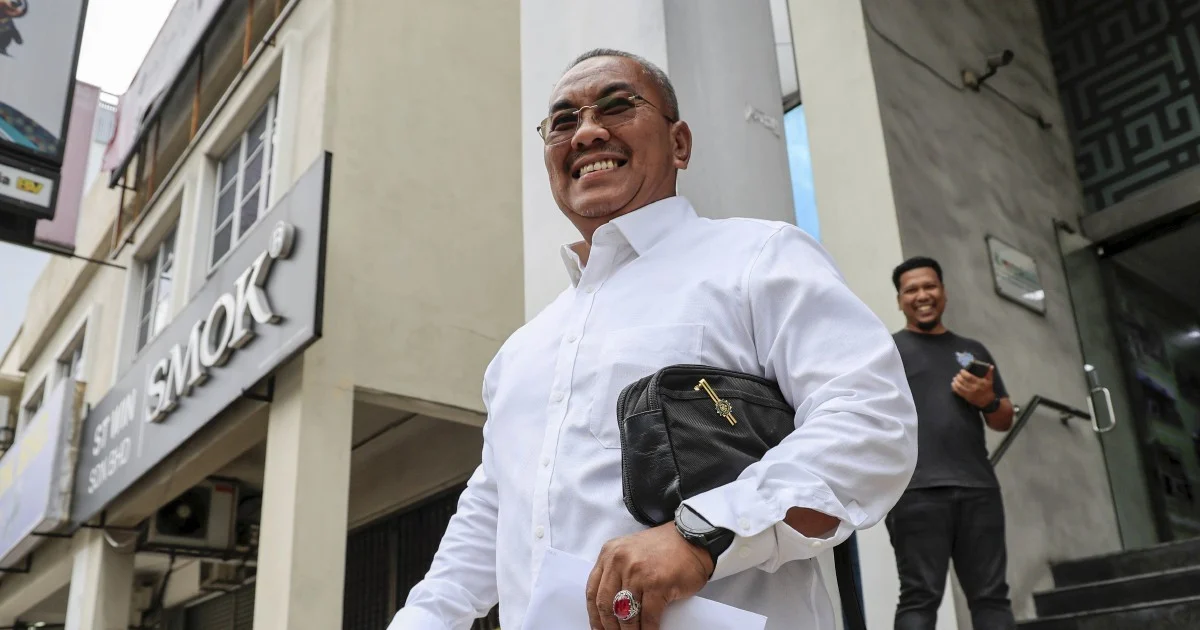
Perikatan Nasional's election machinery has moved past a critical hurdle in its preparation for the upcoming Johor state election, with coalition election director Datuk Seri Sanusi Md Nor announcing that all seat allocation discussions among component parties have reached conclusion. The breakthrough comes after the coalition successfully navigated a complex negotiation process centred on 34 constituencies where multiple parties within the bloc had staked territorial claims, highlighting the intricate work required to maintain unity within Malaysia's second-largest opposition grouping.
The settlement of overlapping seat claims represents a significant achievement for PN's organizational leadership, as such negotiations frequently become flashpoints for inter-party tension within multi-component coalitions. Each of the 34 contested constituencies had presented a scenario where two or more coalition members submitted competing demands for candidacy rights, forcing senior party officials to broker compromises that balance factional interests while maintaining the bloc's overall electoral strategy. The resolution process would have involved detailed discussions about candidate viability in each seat, historical performance metrics, and the relative strength of each party's grassroots machinery in particular areas.
For the coalition's smaller component parties, the negotiation outcomes carry particular significance. These organizations rely heavily on seat allocations to retain relevance within the larger political structure and to demonstrate to their membership base that participation in the broader alliance generates tangible benefits. The successful conclusion of talks suggests that PN's leadership successfully convinced parties that the negotiated settlements adequately reflected their contributions to the coalition while prioritizing overall victory prospects in the state election. This balance is essential for maintaining the cohesion that has enabled PN to operate as a functional alternative government model in recent years.
Johor's electoral importance within Malaysia's political landscape cannot be understated. As the nation's second-largest state by population and a historically competitive political battleground, Johor elections frequently function as bellwethers for broader national sentiment. The state has traditionally alternated political control between major coalitions, and the upcoming contest will test whether PN can expand its footprint beyond states where it already dominates, such as Kedah and Terengganu. A strong performance in Johor would substantially enhance PN's credentials as a viable national governing alternative, while a poor showing would raise questions about the coalition's ability to compete effectively in Malaysia's most populous urban centres.
The resolution of seat disputes also speaks to the mechanical efficiency of PN's organizational structure. Unlike Barisan Nasional, which operates through longer-established institutional frameworks and historical power-sharing agreements, PN remains a relatively newer coalition that continues developing its decision-making processes and negotiation protocols. The successful conclusion of these talks demonstrates that the coalition has matured sufficiently to manage the complex logistics of multi-party electoral coordination, a prerequisite for any organization seeking to present itself as a credible government-in-waiting.
Sanusi's role as coalition election director positions him as a crucial figure in PN's strategic planning beyond seat allocation. As a former Kedah Menteri Besar and respected figure within PAS, Sanusi brings substantive political experience and inter-party credibility to the position. His public announcement of negotiation completion serves multiple purposes: it provides internal reassurance to party members that leadership is functioning effectively, it signals to the electorate that PN possesses organizational discipline, and it establishes a clear timeline for candidate announcement and campaign commencement.
The timing of the negotiation completion carries strategic implications for campaign momentum. With seat allocations finalized, PN can now move forward with candidate announcement and ground-level campaign activity without the distraction of ongoing internal disputes. This allows the coalition to present a unified public face during the critical period when voter attention begins focusing on the impending election, whereas delayed resolution would have invited media scrutiny and voter scepticism about coalition stability.
For Malaysian political observers, the settlement offers insight into how PN manages the perpetual tension between maintaining component party autonomy and exercising unified coalition direction. PAS, as PN's largest component by parliamentary seats, would have held substantial influence in negotiations, while DAP's participation in discussions reflects its growing importance to the coalition despite lingering sensitivities about PAS-DAP cooperation at the grassroots level. Bersatu's presence in negotiations underscores the continuing relevance of Muhyiddin Yassin's party despite its reduced parliamentary contingent compared to earlier configurations.
The coalition's ability to manage these negotiations successfully without public acrimony suggests that PN leadership has effectively communicated the broader electoral strategy to component parties and convinced them that compromise serves collective interests better than protracted wrangling. This represents a maturation of the coalition's political culture, as earlier incarnations of opposition alliances frequently collapsed when seat allocation discussions exposed irreconcilable differences between partners with incompatible territorial ambitions or ideological expectations.
Looking forward, the settled seat allocations establish the framework within which PN will contest the Johor election, but implementation challenges remain. Candidate quality, campaign execution, and voter sentiment will ultimately determine outcomes regardless of which party fields candidates in particular constituencies. Nevertheless, the resolution of logistical obstacles positions PN to focus its strategic energy on substantive campaign messaging and grassroots mobilization activities that directly influence electoral results.