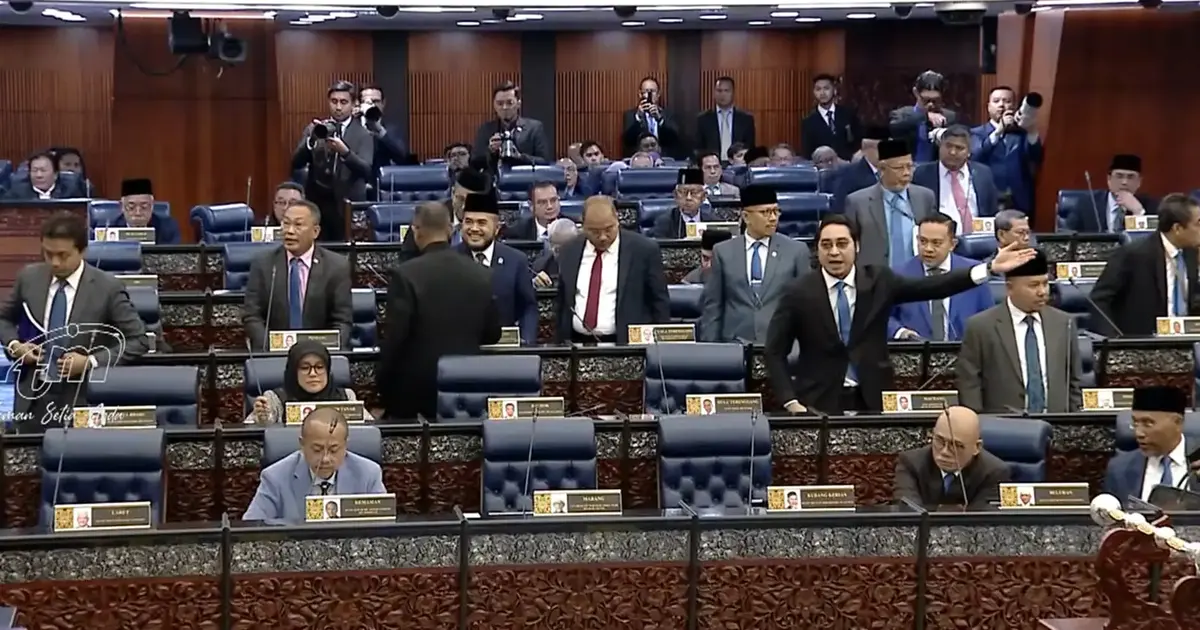
Members of Perikatan Nasional staged a coordinated walkout from the Dewan Rakyat after the speaker declined their appeal to postpone a special sitting scheduled without the prime minister in attendance. The move highlighted mounting tensions within Malaysia's coalition politics as opposition lawmakers attempt to assert procedural authority in parliamentary business.
The PN bloc's position reflects a strategic interpretation of parliamentary convention, with party leaders contending that sessions of particular significance warrant the presence and participation of the head of government. By framing their objection around this constitutional principle rather than merely obstructing proceedings, PN sought to establish a principled stance on matters of parliamentary protocol and executive engagement with the legislature.
However, the walkout proved incomplete and demonstrated fissures within the opposition alliance. Bersatu, despite its formal membership in the PN coalition, opted not to participate in the protest. This absence underscores the complex dynamics within opposition ranks, where constituent parties often pursue divergent strategic calculations. Bersatu's decision to remain in the chamber while its coalition partners departed suggests either tactical disagreement over the efficacy of the protest or a distinct reading of the parliamentary situation's urgency.
The refusal by the speaker to accede to PN's request reflects the government's control over parliamentary business and the speaker's role as custodian of procedural rules rather than political advocate. Speakers in Westminster-derived parliaments occupy a constitutionally ambiguous position, nominally neutral yet wielding considerable discretion over the agenda and rhythm of legislative sessions. The speaker's determination that the sitting should proceed as scheduled asserts executive primacy in scheduling parliamentary business.
This episode carries implications for Malaysia's broader political stability and the evolution of post-14th general election governance. The willingness of PN to stage parliamentary theatrics, even with incomplete coalition support, signals persistent dissatisfaction with the governing arrangement. For Malaysian observers tracking institutional health, such confrontations reveal how opposition parties test procedural boundaries to register protest without triggering constitutional crises.
The timing and nature of the special sitting remain consequential details. When legislatures convene in special sessions, the agenda typically involves matters deemed urgent or exceptional—ranging from confidence votes to substantive policy initiatives. PN's insistence on prime ministerial attendance suggests the opposition views the business at hand as sufficiently weighty to demand executive participation, rather than relegating it to routine parliamentary housekeeping conducted by government representatives.
The incomplete walkout also illustrates the challenges facing PN as a coalition entity. Maintaining unity across constituent parties with distinct constituencies, leadership structures, and strategic interests remains perpetually difficult. Bersatu's non-participation, whether tactical or principled, complicates PN's narrative power when staging protest actions. Opposition effectiveness relies substantially on demonstrable unity; fractures undermine the symbolic force of parliamentary resistance.
From a regional perspective, Malaysian parliamentary dynamics merit attention as a case study in how multiethnic, multi-party democracies manage executive-legislative relations. Unlike Westminster's traditional two-party confrontation, Malaysia's parliament comprises numerous parties spanning ethnic and ideological divides. This complexity makes procedural disputes more intricate, as seemingly technical questions about sitting schedules become proxies for broader contests over legitimacy and authority.
The speaker's stance also reflects the government coalition's numerical security in the Dewan Rakyat. When ruling coalitions command comfortable majorities, they exercise greater latitude in parliamentary scheduling and procedure. Opposition objections, however principled, carry limited procedural weight when the government controls the legislative calendar. This dynamic incentivises opposition parties toward dramatic gestures—like walkouts—rather than relying on parliamentary procedure to secure outcomes.
Looking forward, such incidents establish precedent and expectation regarding parliamentary conduct during periods of coalition government fragility or contested legitimacy. Observers of Malaysian politics will monitor whether PN continues escalating procedural resistance or whether the incomplete walkout signals declining willingness to sustain such protest tactics. The involvement or non-involvement of coalition partners in future opposition actions may also signal shifting calculations about post-election positioning and the viability of the PN alliance.
The episode ultimately reflects Malaysia's evolving parliamentary culture, where traditional deference to executive scheduling increasingly coexists with opposition assertions of legislative prerogatives. How these tensions resolve will shape institutional norms governing parliament's role in Malaysian democracy for years ahead.

