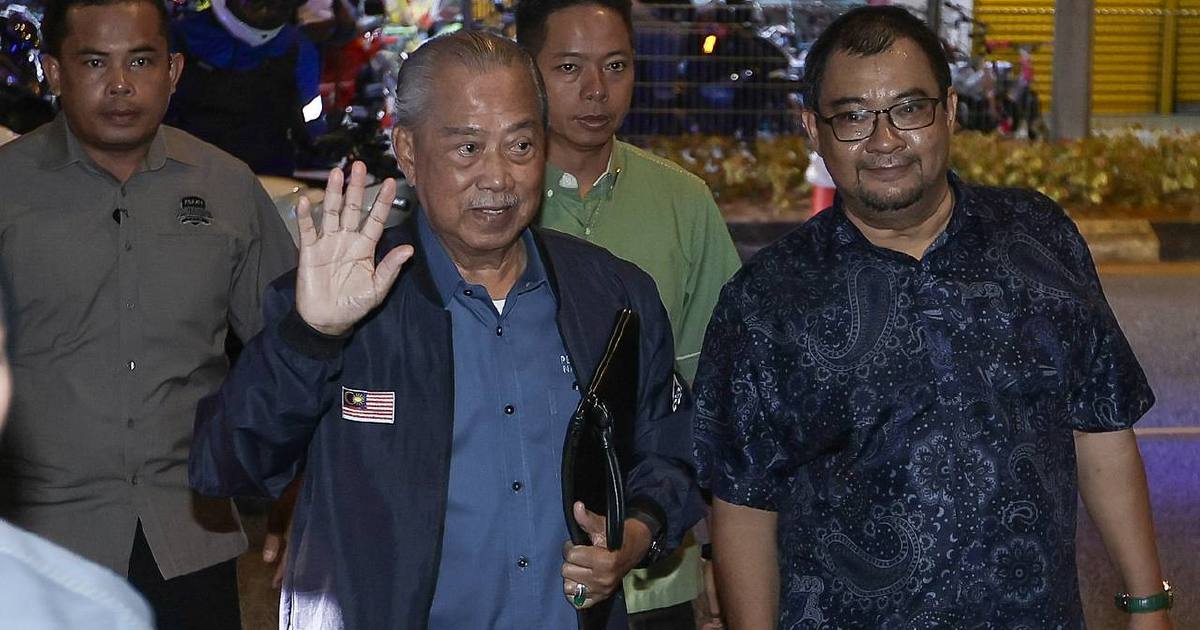
An emergency Supreme Council meeting convened by Perikatan Nasional on Wednesday night deliberately circumnavigated the question of Bersatu's standing within the opposition coalition, according to coalition chief Muhyiddin Yassin. The gathering in Kuala Lumpur, called on short notice, occupied itself with wider structural questions affecting the alliance while notably refraining from any formal deliberation on the status of Bersatu itself—a move that observers interpret as either a tactical delay or a calculated avoidance of internal fractures.
The decision to table Bersatu's membership position signals the coalition's preference for managing its public face while tensions simmer beneath the surface. By concentrating instead on prospective recruitment and overarching alliance strategy, PN appears to be buying time as it navigates competing demands from its constituent parties. This selective agenda-setting reflects common practice in Malaysian opposition politics, where coalitions often defer contentious matters to avoid triggering public disputes that could weaken their overall standing.
Bersatu's status within PN has become increasingly precarious over recent months as internal disagreements over direction, leadership, and electoral strategy have mounted. The party's continued participation in the coalition depends on numerous unresolved issues, from resource allocation to decision-making authority. By avoiding explicit discussion of Bersatu's membership during a specially convened meeting, PN's leadership appears to be signalling that formal resolution remains distant, even as informal conversations likely continue.
The focus on potential new recruits instead suggests PN may be exploring ways to strengthen its position regardless of Bersatu's future trajectory. Coalition politics in Malaysia have long depended on parties' ability to attract defectors or negotiate entry of splinter groups. The meeting's concentration on this dimension hints that PN is considering defensive measures or expansion strategies independent of its current composition. For observers tracking opposition dynamics, this emphasis on incoming membership rather than existing member status indicates a shifting calculation about the coalition's future shape.
Muhyiddin's public statement that no discussion of Bersatu's position occurred raises questions about what substantive business was actually conducted during the late-evening session. Emergency meetings of this nature typically signal urgency or crisis, yet the reported agenda appears bland enough to suggest the emergency label may have served other purposes—perhaps consolidating support among anxious coalition members or projecting unity ahead of potential scrutiny. The opacity surrounding the actual deliberations reflects the secretive nature of PN's decision-making processes.
For Malaysian political observers and Bersatu party members, the non-discussion of Bersatu's membership carries unmistakable implications. It suggests that PN's senior leadership, including Muhyiddin, may be waiting for further developments before forcing a confrontation or resolution. This holding pattern allows each side to maintain public positions while preserving negotiating room. Meanwhile, Bersatu's membership base continues operating in ambiguity about the party's medium-term future within the opposition framework.
The broader coalition landscape has shifted dramatically since PN's formation. What began as a compact opposition alliance comprising Bersatu, PAS, and others has faced successive tests and reorganisations. Bersatu's specific role and weight within this structure has fluctuated considerably, particularly following internal party developments and changing electoral calculations. The choice to avoid discussing Bersatu's position during an emergency summit suggests these questions remain deeply contested and difficult to resolve through formal mechanisms.
From a Southeast Asian perspective, PN's dynamics reflect broader patterns of coalition instability across the region's democracies. Opposition alliances frequently struggle with durability because member parties prioritise their organisational survival and leadership autonomy over collective goals. Malaysia's experience illustrates how coalitions designed to challenge incumbents often collapse or fracture under the weight of their internal contradictions. Whether PN avoids this trajectory may depend substantially on how it manages the Bersatu question that it was notably not discussing this week.
The implications for Malaysian politics extend beyond PN's internal mechanics. A weakened or fractured opposition bloc potentially strengthens the ruling coalition's position, altering the electoral arithmetic for national and state contests. Conversely, if PN can resolve its membership tensions and consolidate around a coherent platform, the opposition's competitive capacity improves significantly. The choice to defer discussion of Bersatu's status therefore carries consequences stretching far beyond the coalition's internal balance.
Moving forward, observers should monitor whether subsequent PN meetings finally engage the Bersatu question or whether the pattern of calculated avoidance continues. The answer will likely reveal PN's true assessment of Bersatu's utility to the opposition project and whether leadership sees the party as essential, expendable, or negotiable depending on circumstances. For now, the Wednesday night meeting's most revealing aspect may be what was deliberately left off the agenda.