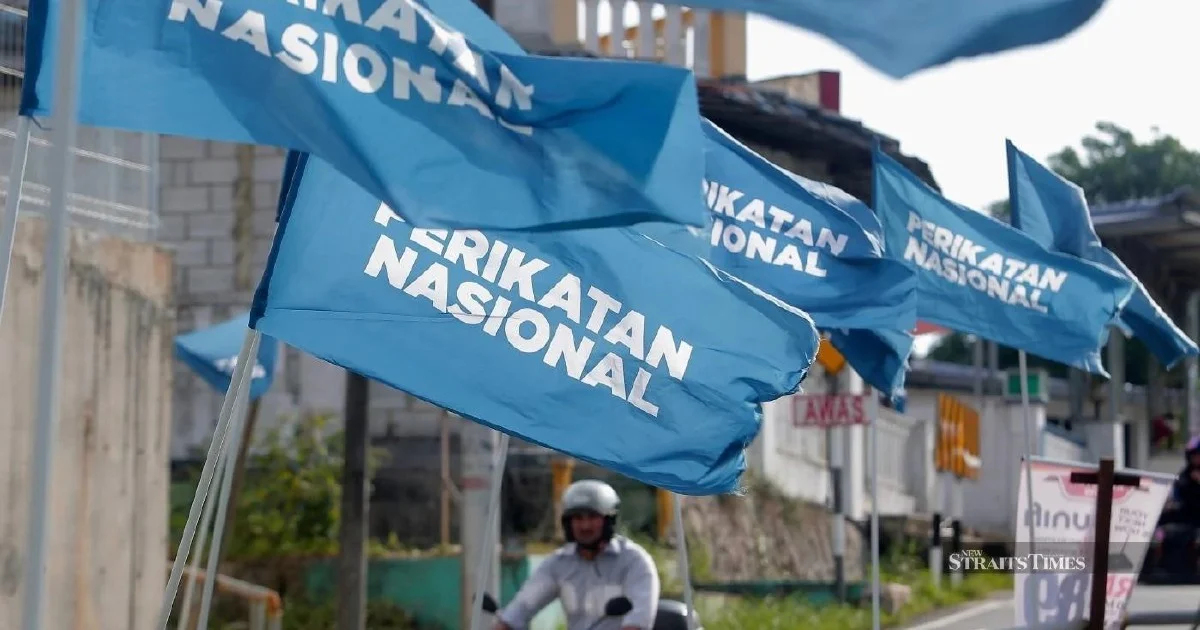
Perikatan Nasional (PN) has moved swiftly to extinguish speculation that the opposition coalition intends to refrain from contesting the forthcoming Johor state election, with senior leadership dismissing circulating online statements as fabrications lacking any factual basis. Deputy chairman P. Punithan took to public channels to categorically deny the claim, underscoring the coalition's commitment to full participation in the electoral contest despite the viral nature of the false assertion gaining traction across social media platforms.
The emergence of such misinformation highlights ongoing vulnerabilities within Malaysia's political landscape, where unverified claims can rapidly spread during periods of heightened electoral activity. False narratives regarding major political movements' intentions risk undermining public confidence in formal political communication channels and create unnecessary confusion among voters attempting to assess the genuine positioning of competing coalitions. For PN, which has been working to consolidate its standing as a credible opposition force, such fabricated statements pose particular challenges to its messaging strategy and public credibility.
The timing of this particular rumour is noteworthy given the significance of state-level elections within Malaysia's federal system. Johor holds particular strategic importance for any national political coalition, as one of the nation's most populous and economically significant states. The state's electoral outcomes carry implications extending far beyond its borders, often signalling broader shifts in voter sentiment that reverberate through subsequent national electoral cycles. For PN, maintaining a visible and competitive presence in Johor elections is essential to its broader political narrative and position within the opposition landscape.
The denial represents a clear reassertion of PN's electoral ambitions at the state level during a period when political competition remains fluid and contested. By swiftly countering the false claim through authoritative party channels, PN sought to prevent the misinformation from calcifying into accepted conventional wisdom among sections of the electorate. The incident underscores how quickly unverified political claims can gain momentum in the digital age, requiring political organizations to maintain constant vigilance regarding their public representation.
For Malaysian voters and political observers, the episode serves as a reminder of the importance of verifying political claims through official party statements rather than accepting social media narratives at face value. The proliferation of false information during election periods has become an recurring challenge for Malaysian democracy, with voters increasingly exposed to competing claims that lack verification. Political coalitions across the spectrum have periodically fallen victim to deliberate misinformation campaigns designed to sow confusion or undermine their electoral positioning.
PN's explicit rejection of the boycott claim carries broader implications for understanding the current state of opposition politics in Malaysia. The coalition, which consolidated from the earlier Perikatan Nasional alliance and subsequent realignments, continues pursuing a comprehensive electoral strategy aimed at contesting in multiple constituencies and states. Withdrawing from Johor elections would have represented a significant strategic retreat inconsistent with PN's stated objective of positioning itself as a credible national alternative to the Pakatan Harapan-led government.
The incident also reflects the broader challenge facing Malaysian political parties in an era of sophisticated digital communication and social media. The speed with which information—accurate or otherwise—spreads across platforms has fundamentally altered the dynamics of political contestation. Parties must now devote considerable resources to rapid response mechanisms designed to counter false narratives before they achieve widespread acceptance. The traditional approach of allowing misinformation to fade gradually has become increasingly untenable in the current media environment.
From a Southeast Asian perspective, Malaysia's experiences with political misinformation during electoral periods parallel challenges faced across the region. Thailand, Indonesia, and the Philippines have all grappled with similar phenomena whereby unverified political claims spread rapidly during periods of electoral activity. The region's experience demonstrates that digital literacy and institutional mechanisms for countering false information remain underdeveloped relative to the velocity at which such claims propagate.
For PN specifically, maintaining clear lines of communication with party members and the broader electorate becomes increasingly essential given the circulation of false narratives purporting to represent party positions. The coalition's ability to definitively establish what its actual electoral strategy entails—in this case, full participation in Johor elections—remains critical to maintaining coherence and preventing internal speculation from undermining organizational discipline. Public clarity on major strategic decisions thus serves both external electoral purposes and internal party management.
The denial also underscores PN's calculation that contesting comprehensively across Malaysia's states remains essential to its political viability. Any suggestion of strategic withdrawal from significant state elections would provide opponents with propaganda opportunities to characterize the coalition as lacking confidence or commitment. By emphatically rejecting the false claim, PN reasserted its intention to compete seriously in Johor, signalling to both supporters and doubters that the coalition remains a serious electoral contender willing to contest across the full breadth of Malaysian electoral geography.