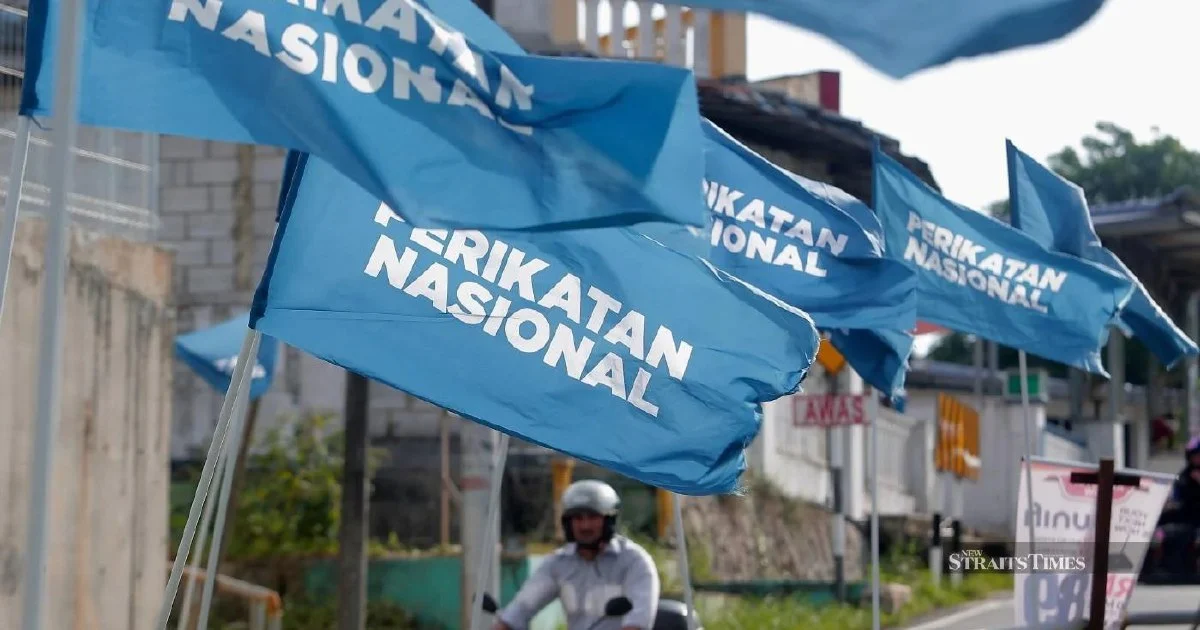
Perikatan Nasional (PN) appears intent on preserving its partnership with Bersatu despite mounting tensions within the political alliance, as observers believe the coalition leadership recognises the electoral risks of internal conflict during a crucial campaign season. With Johor and Negri Sembilan slated for state elections, party analysts contend that PN's decision-making reflects a pragmatic calculus: maintaining coalition discipline outweighs settling internal grievances for now.
The timing of these upcoming elections places acute pressure on PN's internal stability. Both states represent battlegrounds where the coalition's credibility and organisational capacity will face direct voter scrutiny. A fractured alliance would signal weakness to the electorate and potentially undermine campaign messaging across both state contests. Coalition partners understand that public displays of discord—leadership spats, defections, or public recriminations—translate into lost votes and demoralised party machinery.
Bersatu's position within the PN framework has grown increasingly complex over the past two years. The party, which formed the backbone of the coalition's Malay-Muslim voter appeal, has experienced internal rifts and leadership transitions that tested its unity. Yet despite these challenges, PN cannot afford to sideline Bersatu without substantially weakening its electoral prospects in states where Bersatu commands grassroots support and party machinery. In Johor particularly, where PN made gains in the 2022 general election, Bersatu's organisational network remains valuable.
From a strategic perspective, retaining Bersatu also provides PN with insulation against opposition charges that the coalition is fragmenting. The DAP-PKR-Amanah opposition alliance has already sought to portray PN as inherently unstable, arguing that Malay-Muslim support remains split across competing blocs. By keeping Bersatu visibly within the coalition fold, PN's leadership projects cohesion and durability—messaging particularly important when contesting against opponents who paint PN as a temporary arrangement vulnerable to collapse.
For Malaysian voters in these two states, the coalition's apparent unity carries practical implications. A stable PN means consistent policy direction, clear campaign platforms, and coalition candidates who can campaign without the distraction of internal party warfare. Conversely, should PN fracture before or during the campaign, it could create confusion about which candidates represent which interests and complicate the electorate's ability to make informed choices.
The electoral calendar itself imposes discipline on PN's internal management. The party likely recognises that attempting to purge or marginalise Bersatu before the Johor and Negri Sembilan elections would trigger precisely the kind of public conflict that damages campaign efforts. Any move to reduce Bersatu's influence would provoke retaliation, possibly defections, and accusations of unfair treatment—all undesirable publicity weeks before voting. This suggests PN's leadership has essentially postponed deeper coalition restructuring until after these contests conclude.
Analysts also point to the broader dynamics of Malaysian coalition politics, where minor partners cannot be easily discarded without reshuffling the entire political equation. Bersatu's departure from PN would leave PN reliant primarily on PAS and smaller partners, a narrower base than the current arrangement provides. The coalition would lose representation among certain Malay-Muslim constituencies and lose the Bersatu brand's residual appeal among voters nostalgic for Bersatu's relatively technocratic image, even if tarnished by recent controversies.
Regional stability matters too. Johor and Negri Sembilan are not peripheral states; Johor especially remains PN's strongest state enclave outside of Terengganu and Kelantan. Losing Johor control would represent a significant symbolic and political setback. Retaining PN-Bersatu unity maximises the coalition's chances of holding or expanding representation in both states, outcomes essential for rebuilding PN's credential after mixed performance in the 2023 by-elections.
The calculated restraint suggests PN's top leadership understands the cost of intra-coalition warfare during election season. While tensions over party positions, candidate selection, and resource allocation will persist, these disputes are being managed quietly rather than allowed to explode publicly. This approach prioritises the short-term goal of winning elections, even if it defers resolution of longer-term coalition architecture questions.
For Bersatu specifically, the electoral cycle provides temporary insurance against marginalisation. The party's leaders understand that PN cannot spare them before these elections, which paradoxically gives Bersatu some leverage in internal coalition negotiations. The party can negotiate candidate allocations, campaigning resources, and political messaging with greater confidence that PN will accommodate its interests rather than risk a coalition breakdown.
As both states move toward their polling days, all coalition partners face pressure to demonstrate unity and forward momentum. The degree to which PN and Bersatu successfully project cohesion—and convince voters of their shared vision for these states—will significantly influence election outcomes. Should PN fail to consolidate Bersatu's support effectively, it risks not just electoral losses but also the credibility of its broader claim to represent stable, forward-looking governance. The coalition's maintenance of Bersatu reflects this hard political reality: electoral success now takes precedence over settling old scores.