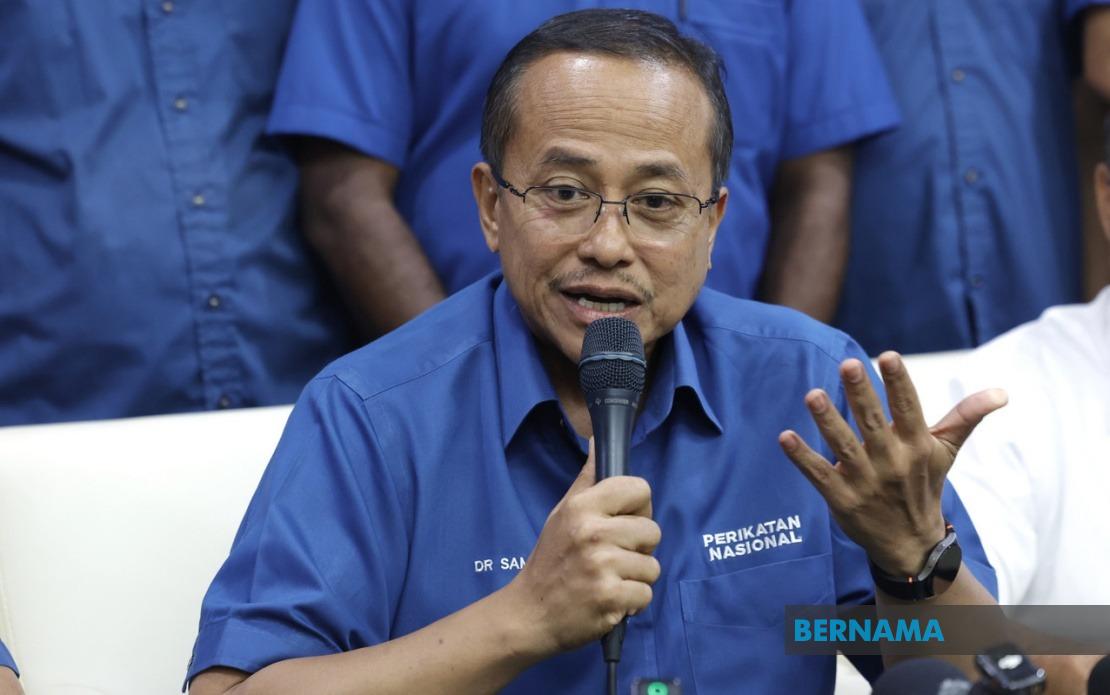
The Perikatan Nasional coalition took a decisive step towards the 16th Negeri Sembilan state election on July 16, when its Supreme Council formally approved the distribution of seats among its member parties and confirmed that all candidates would contest under the unified PN logo. The decision represents an important consolidation of the coalition's campaign strategy, though it has simultaneously exposed underlying tensions within the broader opposition alliance.
Datuk Seri Dr Ahmad Samsuri Mokhtar, PN chairman, announced that the allocation involved four component parties: PAS, Gerakan, Wawasan, and MIPP. By requiring all candidates to bear the coalition logo rather than their individual party symbols, PN seeks to project a unified front to Negeri Sembilan voters. This approach contrasts sharply with past election campaigns where coalition partners sometimes retained their own party insignias, potentially fragmenting voter messaging and brand recognition.
The unified logo strategy carries significant implications for PN's electoral prospects in the state. In Negeri Sembilan, where voting patterns have historically been competitive and fluid, projecting cohesion matters considerably for persuading swing voters that the coalition presents a stable, coordinated alternative to the incumbent government. The decision signals that PN leadership believes its brand identity has strengthened sufficiently to subsume individual party logos without alienating core supporters of each component party.
Dr Ahmad Samsuri's statement additionally emphasized that all preliminary negotiations with other parties, as well as discussions regarding potential cooperation with Barisan Nasional, proceeded under his explicit oversight and received formal endorsement from the PN Supreme Council. This clarification appears directed at addressing questions about the transparency of coalition decision-making processes, a recurring concern among party members and the broader political establishment in Malaysia.
However, the announcement immediately collided with the stance of Bersatu, a party that has maintained an ambiguous relationship with PN despite sharing opposition credentials. Tan Sri Muhyiddin Yassin, Bersatu president, countered that his party was excluded from discussions on seat allocations and any BN cooperation arrangements. Asserting Bersatu's independence, Muhyiddin declared that the party would field candidates under its own logo, fragmenting the opposition challenge in Negeri Sembilan.
Bersatu's decision to contest independently represents a significant setback for PN's consolidation efforts. The defection reveals fissures within the opposition bloc that extend beyond simple policy disagreements. Bersatu's position as a party that has oscillated between opposing and accommodating the ruling coalition means that its separate campaign could either strengthen opposition diversity or dilute anti-government vote concentration, depending on electoral circumstances in specific constituencies.
The timing of Bersatu's announcement is particularly noteworthy. By breaking ranks publicly and immediately after PN's formal approval, Muhyiddin has signaled that his party will not be bound by coalition discipline or hierarchical decision-making. This reflects deeper power dynamics within Malaysian opposition politics, where no single coalition has achieved the organizational cohesion necessary to enforce party-line compliance across all member formations.
For Negeri Sembilan voters, the coalition's fracturing presents both opportunities and complications. Voters genuinely seeking opposition alternatives will face a more complex choice landscape, with multiple non-BN options appearing on ballot papers. However, fragmented opposition presence also risks allowing the incumbent government to consolidate support by exploiting divisions among challengers, a dynamic that has historically benefited ruling coalitions in competitive state contests across Malaysia.
The seat allocation process itself, though formally concluded, may yet prove contentious. The involvement of four distinct political parties—each with separate organizational structures, regional bases, and political ambitions—suggests potential disagreements over seat distribution, particularly in constituencies where multiple parties claim grassroots strength. The eventual publication of candidate names, promised for the day of the announcement, would provide concrete clarity on whether the allocation satisfies all component parties or generates further internal friction.
Regionally, PN's approach carries significance for Southeast Asian opposition politics more broadly. In countries with competitive electoral systems but fragmented opposition movements, the capacity to coordinate and consolidate messaging significantly influences electoral outcomes. PN's strategic decision to enforce a single coalition logo represents an attempt to address this coordination challenge, yet Bersatu's refusal to comply illustrates the persistent difficulty opposition coalitions face when attempting to maintain discipline across ideologically diverse membership.
For Malaysian observers, the Negeri Sembilan election will serve as an important indicator of whether PN has genuinely resolved its internal cohesion problems or whether the coalition remains vulnerable to defection and fragmentation. The state's relatively small electorate makes it a manageable testing ground for opposition coalition strategies before larger federal elections that may determine Malaysia's political trajectory in coming years.
The broader context suggests that Malaysian opposition politics continues to prioritize party autonomy and leadership prerogatives over collective electoral strategy. Until coalitions develop mechanisms to enforce internal discipline while respecting member party concerns, such fractures are likely to recur, ultimately disadvantaging coordinated opposition efforts against incumbent BN administrations at state and federal levels.

