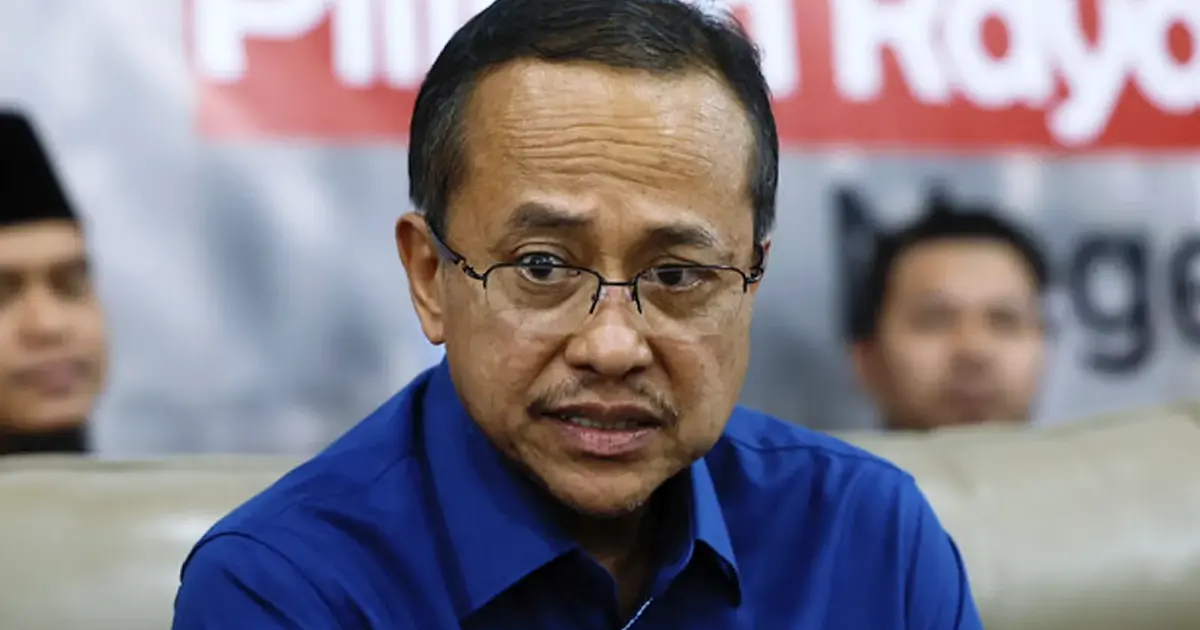
Perikatan Nasional coalition chairman Samsuri Mohamad has moved to reassure political observers and the voting public that the arrangement allowing both PAS and Bersatu to contest under the PN logo presents no risk of voter confusion or electoral irregularities. The assurance comes at a time when the opposition coalition is positioning itself as a cohesive political force ahead of critical regional contests, having adopted a streamlined branding approach in which multiple component parties share a unified electoral symbol.
The crux of Samsuri's position rests on the fundamental distinction between shared visual identity and contested electoral territory. Unlike scenarios where multiple parties bearing the same symbol might compete for overlapping voter bases or identical constituencies, the PN framework establishes clear geographical boundaries for each component party's candidacy. By maintaining a strict non-overlapping seat allocation, the coalition ensures that voters in any given constituency will encounter only one PN-branded candidate, thereby eliminating the practical concerns that typically arise when different political entities operate under identical logos.
This structural arrangement reflects a deliberate strategic choice by PN leadership to present a unified front to the electorate whilst preserving the distinct organisational identities and political machinery of its constituent parties. The shared logo functions as a coalition banner rather than as evidence of party merger or consolidation. For Malaysian voters accustomed to the clear distinctions between Barisan Nasional, Pakatan Harapan, and PN symbols, the visual consistency under the PN branding potentially streamlines recognition whilst the seat-sharing mechanism ensures there is no internal competition that might confuse or alienate supporters.
The significance of this arrangement extends beyond mere electoral mechanics. By demonstrating capacity to coordinate and present a unified image, PN signals organisational maturity and political discipline—qualities that voters typically associate with readiness for governance. The coalition's ability to negotiate and enforce seat-sharing agreements without public acrimony suggests internal cohesion that contrasts with periodic tensions visible in larger, more sprawling coalitions. For regional observers, the efficiency with which PN manages its branding and candidacy allocation offers insight into how the coalition might function as a governing entity should electoral fortunes prove favourable.
However, the arrangement does carry implications worth examining through a Malaysian electoral lens. The consolidation of multiple parties under a single symbol, even with coordinated seat allocation, represents a meaningful shift in how coalition politics operates in the country. Historically, each major coalition component has maintained its own distinct logo and branding, allowing voters to express specific party preferences within the broader coalition framework. The PN model, by contrast, emphasises unity over component-level differentiation, potentially affecting how party members mobilise their grassroots bases and how candidates communicate their individual party affiliations to voters.
For PAS and Bersatu specifically, the shared-logo strategy carries distinct implications. Bersatu, which emerged as a breakaway faction from larger coalitions and has worked to establish independent political credibility, gains the institutional weight and reach of the broader PN framework. Conversely, PAS—the most established component with the deepest voter base and organisational reach—benefits from association with PN's expanding political footprint without sacrificing its established brand recognition at the grassroots level. Both parties maintain their separate party machinery, grassroots networks, and cadre structures whilst projecting unified messaging through the shared electoral symbol.
The practical mechanics of this arrangement require sophisticated coordination mechanisms. Determining which party contests which seat involves intricate negotiations weighing factors such as incumbent strength, demographic composition, historical party performance, and geographical considerations. Election Commission verification procedures must accommodate the unusual circumstance of multiple parties legitimately using the same symbol in different constituencies. Campaign materials, candidate vetting, and internal party discipline all operate through dual frameworks—the specific party structure and the broader coalition coordination.
From a voter perspective, the arrangement presents both clarity and potential ambiguity. A voter recognising the PN logo knows they are supporting the coalition's preferred candidate in their constituency, reinforcing coalition solidarity. Yet they may experience some uncertainty about whether they are voting for PAS, Bersatu, or another component, particularly if campaign messaging emphasises coalition unity over party-specific credentials. For voters accustomed to using their ballot to express preference among coalition components—a traditional feature of Malaysian electoral behaviour—this represents a meaningful change in how coalition elections function.
Samsuri's reassurance addresses these concerns by emphasising the methodical, non-overlapping nature of candidate placement. The PN chairman's confidence rests on the premise that clear seat allocation prevents the confusion that would emerge if voters encountered multiple PN-branded candidates competing for the same office. This logic appears sound from an administrative perspective, though it somewhat sidesteps the subtler question of how voters unfamiliar with the specific seat-allocation details will understand which party component stands behind the shared logo in their particular constituency.
The success of this approach ultimately depends on execution at the ground level. Party machinery must ensure that candidates and grassroots campaigners clearly communicate their specific party affiliation whilst advancing coalition messaging. Election officials must smoothly process the logistics of multiple parties using identical symbols across different constituencies. Perhaps most critically, voters must accurately understand the seat-sharing framework and identify their candidate's party affiliation without confusion.
Looking forward, the PN logo-sharing arrangement offers a template for how Malaysian coalitions might evolve. Whether this model proves successful or generates unforeseen complications could influence coalition structures in future electoral cycles. For now, Samsuri's assurance represents PN's confidence that coordination and clarity can coexist, and that voters will navigate this comparatively novel arrangement with minimal difficulty.

