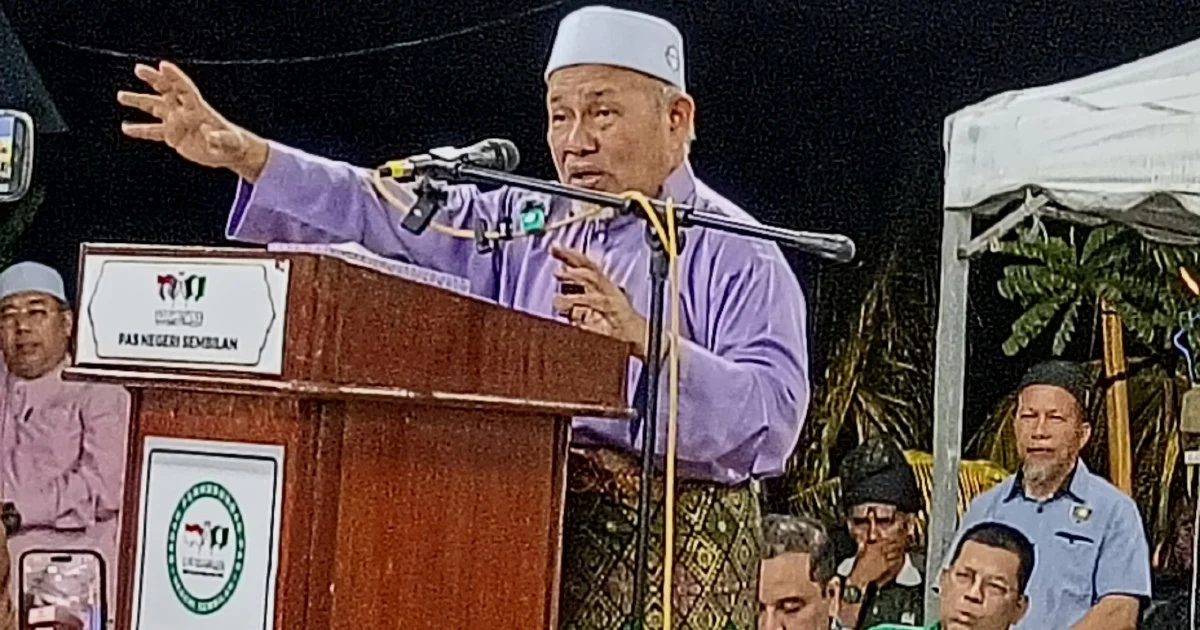
A dispute over the fundamental governance structure of Perikatan Nasional has surfaced, with PAS leadership asserting that the opposition coalition operates as a shared enterprise rather than as territory controlled by any single party. Datuk Seri Tuan Ibrahim Tuan Man, deputy president of Parti Islam Se-Malaysia, made this assertion in response to recent remarks questioning the coalition's ownership and direction, underscoring tensions within an alliance that has become increasingly central to Malaysian politics.
The disagreement highlights deeper concerns about how power is distributed and exercised within PN, which has grown in prominence since its formation. Different stakeholders within the coalition have occasionally sent conflicting signals about strategic decisions, internal appointments, and policy direction, raising questions about whether all members truly have equal standing or whether one party wields disproportionate influence. Tuan Ibrahim's intervention appears designed to reassert PAS's voice and stake in the coalition, suggesting friction over recent decisions or public statements attributed to PN leadership.
Penikatan Nasional currently comprises multiple parties with distinct ideological bases and electoral constituencies. Beyond PAS and Bersatu, the coalition includes other significant political entities with their own grassroots support and historical constituencies. This multi-party structure, while potentially strengthening PN's electoral appeal across different demographic segments, also creates management challenges when consensus-building becomes necessary on contentious issues. The allegation that one party unilaterally controls the coalition's agenda would fundamentally undermine confidence among smaller coalition members and raise questions about whether their participation represents a genuine partnership or subordinate arrangement.
PAS, as the largest component by parliamentary representation and membership numbers, has historically wielded considerable influence within Malay-Muslim political spaces. The party's assertion of collective ownership over PN reinforces its importance to the coalition's functioning and electoral viability, particularly in rural and semi-urban constituencies where PAS maintains strong traditional support networks. Tuan Ibrahim's statement thus serves multiple purposes: defending PAS's institutional interests, clarifying to party members and supporters that their voice remains relevant within PN's decision-making architecture, and potentially countering any perception that PAS has become a junior partner in the alliance.
Bersatu's role within the coalition has been contested since its inception. The party, founded more recently than PAS, entered PN with significant grassroots mobilisation capability and leadership with prominent profiles in recent Malaysian politics. However, Bersatu's smaller parliamentary footprint and contested internal unity have occasionally invited questions about its leverage within the broader alliance. Claims that Bersatu effectively controls or dominates PN could be interpreted as a challenge to the party's legitimacy or an attempt to sideline competing voices, making Tuan Ibrahim's correction timely from a coalition maintenance perspective.
The specific context of this exchange remains important for understanding its implications. Whether triggered by a recent controversial statement, appointment, or policy pronouncement by someone identified with Bersatu's leadership, the public disagreement signals that PN's internal mechanisms for resolving differences may require strengthening. Coalitions thrive when all members feel heard and respected, and public correction—while sometimes necessary—can indicate underlying governance gaps that may resurface in future disagreements over strategic direction.
For Malaysian voters and observers, the clarification carries practical significance. How PN allocates ministerial portfolios, influences policy priorities, and coordinates election strategies depends fundamentally on whether it operates as a genuinely federated alliance or functions with one dominant force making decisions others merely implement. Transparency about governance arrangements helps stakeholders evaluate PN's stability and likely performance as a potential governing coalition, particularly given Malaysia's parliamentary system where coalition management directly affects governmental stability and policy implementation capacity.
The broader Malaysian political landscape has increasingly emphasised coalition politics, with most governments now requiring multiple-party arrangements to secure parliamentary majorities. PN's model of shared governance, if functioning effectively, could provide lessons for other coalition arrangements contemplating similar structures. Conversely, persistent internal disputes over ownership and authority could undermine PN's attractiveness to swing voters and wavering coalition partners who seek assurance of coherent, decisive leadership.
Tuan Ibrahim's rebuttal also signals PAS's commitment to maintaining its independence and voice within the alliance despite pressures that might otherwise concentrate power. This assertion of institutional autonomy, while essential for coalition health, must be balanced against the need for unified messaging on critical issues affecting the entire alliance's public credibility and electoral prospects. The challenge facing PN leadership, whether from Bersatu, PAS, or other components, involves reconciling the legitimate interests of constituent parties with the operational requirements of functioning as a single political force competing for national power.
Moving forward, PN's institutional architecture may require formalized mechanisms addressing inter-party disputes, decision-making protocols, and power-sharing arrangements that prevent similar public disagreements from recurring. Malaysia's experience with previous coalitions, particularly Barisan Nasional's long governance tenure, demonstrates that explicit clarity about decision-making authority and party prerogatives, while potentially constraining individual parties, ultimately strengthens coalition cohesion and public confidence. How PN resolves the current disagreement will offer early indications of whether the coalition possesses the institutional maturity necessary for sustained electoral competitiveness and, if successful, stable governance.