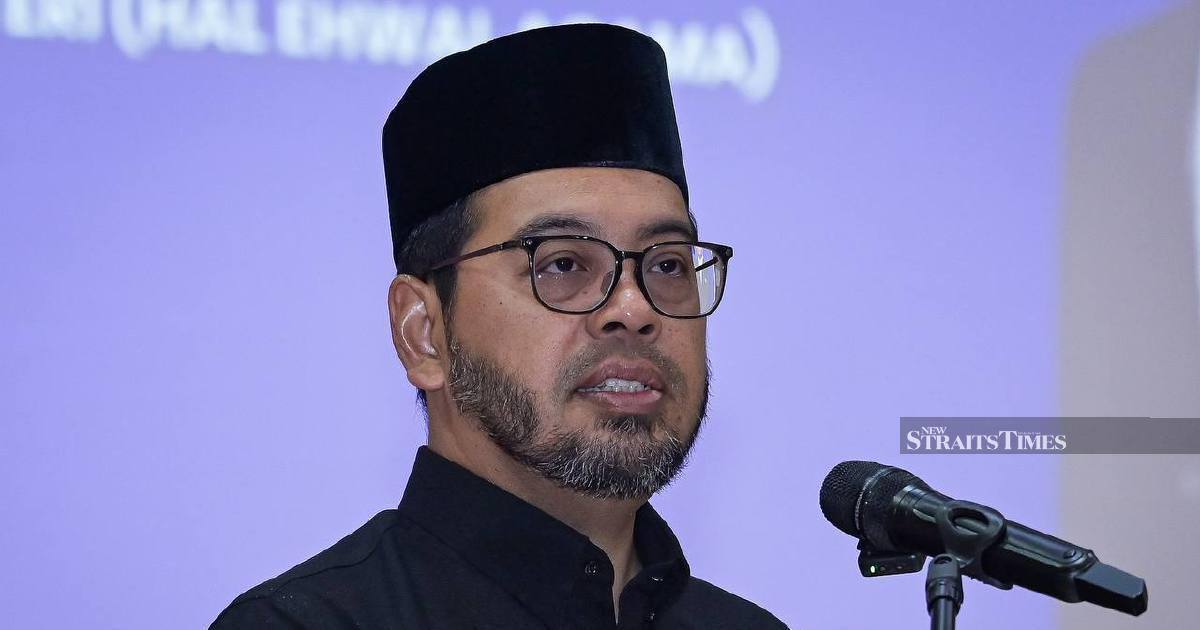
The Prime Minister's Department handling religious affairs has publicly aligned itself with a royal directive from His Majesty Sultan Ibrahim, King of Malaysia, demanding that investigations stemming from the Royal Commission of Inquiry into Lembaga Tabung Haji be executed with full rigour, complete transparency, and unwavering integrity. This statement of support signals the federal government's commitment to addressing concerns raised through the formal commission process, which had examined the management and operations of the institution responsible for administering the Islamic pilgrimage savings scheme.
The backing from the department represents an important institutional acknowledgement that the kingdom's highest office has set expectations for how authorities must handle the investigation phase that follows the RCI's formal findings. By explicitly endorsing the monarch's three-part condition—thoroughness, transparency, and uncompromising standards—the religious affairs apparatus underscores that there will be no shortcuts or political interference in the subsequent probe. Such a public declaration carries particular weight in Malaysia's constitutional framework, where the sovereign plays a custodial role over Islam and Islamic institutions.
Lembaga Tabung Haji has been central to Malaysia's Islamic financial ecosystem for decades, holding in trust the savings of millions of Malaysians saving for the Hajj pilgrimage. The institution's management practices, investment decisions, and governance structures had become subjects of public scrutiny and concern prior to the RCI's establishment, with various stakeholders questioning how funds were being deployed and whether they were being safeguarded adequately. The Royal Commission's investigation into these matters represented a formal state mechanism for examining the facts and circumstances surrounding the institution's operations.
The RCI process itself would have involved extensive testimony, document review, and formal findings about what transpired within the organization. Once that commission concluded its work and released its findings, the question of what happens next becomes critical—how will authorities act on what the commission discovered? Will there be prosecutions, reforms to governance structures, or restitution to affected parties? The royal directive and the government department's endorsement suggest that these subsequent investigations will not be conducted halfheartedly or subject to political pressure to minimize findings.
Transparency in such matters carries particular significance for the Malaysian public, especially given that Tabung Haji's customers are predominantly Muslim Malaysians from diverse socioeconomic backgrounds who have entrusted their savings to the institution. Many pilgrims are working-class and middle-class Malaysians for whom missing or mismanaged funds could represent substantial personal financial loss. When their money is at stake, public confidence in the integrity of the investigation process becomes paramount to restoring faith in both the institution and the government's oversight mechanisms.
The constitutional relationship between the monarchy and the government in Malaysia means that when His Majesty issues such directives, they carry both symbolic and practical weight. The sovereign's involvement in calling for rigorous investigation lends authority to the process and sends a signal that no powerful interests should expect preferential treatment or leniency. By publicly backing this stance, the Prime Minister's Department aligns the executive branch with the palace's position, creating institutional consistency that should discourage any behind-the-scenes attempts to obstruct or minimize findings.
For Southeast Asian observers, Malaysia's handling of the Tabung Haji matter offers a case study in how Islamic-majority democracies address governance failures and financial irregularities within religious institutions. The involvement of the monarchy in overseeing the investigation process reflects the distinctive constitutional position of Islam and Islamic institutions in Malaysia's system of government. The commitment to transparency and thoroughness suggests policymakers recognize that public trust in Islamic financial institutions—increasingly important across the region—depends on demonstrated accountability and integrity.
The investigation's scope could extend across multiple areas: whether funds were invested prudently, whether conflicts of interest existed among decision-makers, whether proper approval processes were followed for major transactions, and whether customers were adequately informed about investment risks. The department's endorsement implies that investigators will pursue these questions fully without fear or favour, examining the conduct of individuals and institutions that may have been involved in questionable decisions.
Moving forward, the credibility of the investigation will depend on visible progress in the coming months. Public announcements about investigative steps, timely action against any wrongdoing uncovered, and reform initiatives aimed at preventing recurrence will all contribute to restoring confidence. The religious affairs department's public support for the king's directive essentially places that institution's reputation behind the promise of rigorous scrutiny, creating accountability both upward toward the monarchy and outward toward the Malaysian public whose savings are at stake.

