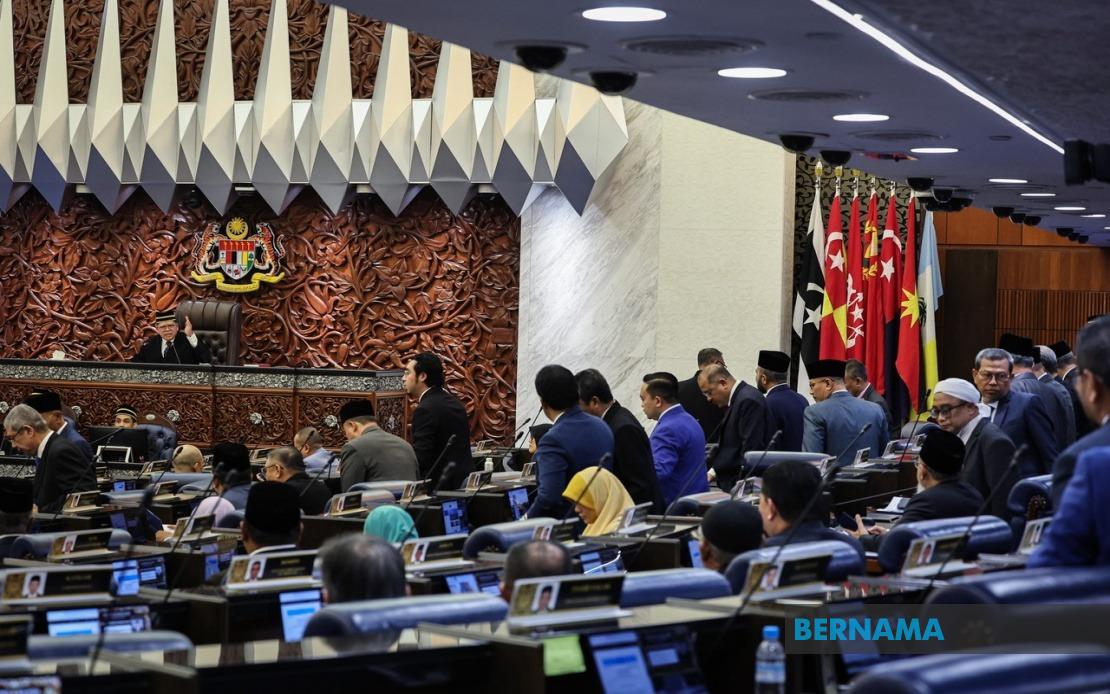
Parliament's special sitting to examine the Royal Commission of Inquiry report on Tabung Haji proceeded on August 11 without the Prime Minister present, prompting criticism from the government side over opposition lawmakers' decision to boycott the proceedings. Tengku Datuk Seri Zafrul Tengku Abdul Aziz, serving as Senior Political Adviser to the Prime Minister, took to social media to challenge the legitimacy of the absent opposition members' protest, framing the debate as fundamentally about protecting the interests of Malaysian Muslims rather than a partisan political forum.
The debate centred on a comprehensive 211-page RCI report detailing the management and operations of Lembaga Tabung Haji covering the period from 2014 to 2020. Released publicly on July 29 following a government decision to increase transparency, the report represents a significant examination of one of Malaysia's most important Islamic financial institutions. The special sitting offered lawmakers a formal opportunity to question, analyse, and discuss the commission's findings and recommendations regarding an organisation that holds the savings of millions of Malaysian Muslims and Malays across diverse socioeconomic backgrounds.
Tengku Zafrul's intervention highlighted a fundamental tension within Malaysia's parliamentary culture. He contended that the absence of any single government figure, regardless of rank, should not serve as justification for legislators to disengage from substantive policy discussions. The adviser emphasised that parliament's core function involves scrutinising matters of national importance, and that the Tabung Haji situation qualified as among the most significant issues touching Malaysia's Muslim and Malay economic interests in the nation's history. His comments implicitly criticised what he viewed as performative politics that prioritised theatrical opposition over constructive engagement.
Notably, the walkout involved senior opposition figures including Datuk Seri Hamzah Zainudin, who holds the position of Opposition Leader as part of the Perikatan Nasional coalition. Accompanying him were PN chief whip Datuk Seri Takiyuddin Hassan and PN chairman Datuk Seri Dr Samsuri Mokhtar. The coordinated departure of these prominent parliamentarians signalled a deliberate strategic choice rather than individual disenchantment, suggesting deeper disagreements between the government and the PN-led opposition regarding either the RCI's findings, the government's handling of the inquiry, or broader political grievances.
Tengku Zafrul reframed parliamentary duty in terms that appealed to principle over personality. He argued that legislators possessed multiple legitimate avenues for engaging critically with government: they could pose pointed questions, engage in substantive debate, or launch fact-based criticism if they identified errors or policy disagreements. The adviser's rhetoric suggested that intellectual engagement and principled opposition were not only compatible with parliamentary decorum but essential to it. However, he drew a distinction between legitimate political contestation and what he characterised as displays of apparent indifference toward constituent interests.
The Tabung Haji inquiry itself carries significant weight within Malaysian politics and society. The institution manages savings accounts for millions of Malaysians intending to perform the Hajj pilgrimage, making its governance a matter touching both religious significance and household financial security. Any inquiry into its operations necessarily engages questions about fiduciary responsibility, investment decisions, and accountability to a vulnerable and trusted segment of the population. The RCI report's public release acknowledged this importance by prioritising transparency with ordinary Malaysians rather than restricting findings to government internal review.
Minister in the Prime Minister's Department (Religious Affairs) Dr Zulkifli Hasan assumed responsibility for tabling the RCI report within parliament, positioning the government as facilitating rather than obstructing scrutiny. This approach contrasted with the opposition's apparent determination to avoid participating in the discussion. For Malaysian observers, the divergence raised questions about the nature of accountability: whether opposition parties viewed the RCI process itself as compromised, whether they sought to avoid difficult truths in the report, or whether they employed the boycott as leverage for other political objectives.
The timing and scope of the inquiry reflected broader questions about institutional governance in Malaysia. The examination of a fourteen-year operational period suggested substantial issues had accumulated over time, potentially implicating multiple administrations and decision-makers. The breadth of the report and its public release indicated the government's assessment that transparency would ultimately serve legitimacy better than containment. Tengku Zafrul's intervention framed public trust as depending on parliament's willingness to engage seriously with findings rather than perform partisan theatrics.
For Malaysian citizens, particularly those with Tabung Haji accounts, the parliamentary debate represented an opportunity for their representatives to extract accountability and pursue improvements. The opposition's absence meant that a significant segment of parliamentary voices—those claiming to speak for the PN-aligned constituencies—chose not to participate in that process. Tengku Zafrul's critique suggested this represented a failure of representation, an abandonment of constituent interests for political positioning.
The underlying disagreement also reflects tension within Malaysia's broader governance culture regarding how institutions should balance transparency, accountability, and political contestation. The government's decision to make the RCI report public and allow parliamentary debate signalled openness to scrutiny. The opposition's response suggested either distrust in the report's integrity or concern that engagement would legitimise findings they opposed. These competing approaches to institutional accountability remain unresolved within Malaysian political practice.
Looking forward, the Tabung Haji inquiry episode demonstrates how even technical governance questions become enmeshed in partisan conflict. The willingness of opposition MPs to engage or abstain from parliamentary business sends signals about their confidence in institutions, their assessment of government motives, and their strategic priorities. Tengku Zafrul's challenge implicitly questions whether such boycotts ultimately serve constituent interests or whether they represent avoidance of difficult accountability questions. The resolution of Malaysia's ongoing governance challenges likely depends on parliament's ability to transcend such divisions and engage seriously with substantive policy matters affecting millions of ordinary Malaysians.

