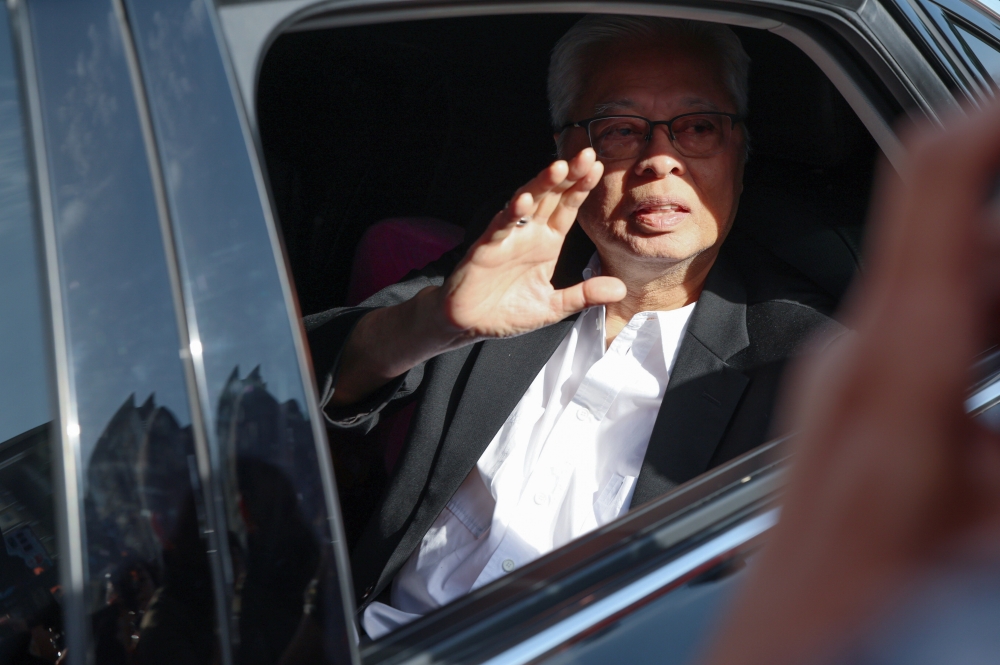
Prime Minister Datuk Seri Anwar Ibrahim made a personal visit to the National Heart Institute (Institut Jantung Negara) on August 9, stopping by to check on Deputy Prime Minister Datuk Amar Fadillah Yusof and former Prime Minister Ismail Sabri Yaakob. The gesture underscored the cross-factional nature of Malaysia's current political landscape, where leaders from different coalitions have maintained cordial relations despite ongoing electoral competition and policy disagreements.
The visit carried symbolic weight in Malaysian political circles, demonstrating that regardless of partisan affiliations, leaders maintain protocols of mutual respect when senior figures face health challenges. Anwar's decision to personally attend both patients—rather than sending a delegation or issuing a statement—reflected the seriousness with which the Prime Minister regarded their conditions and his commitment to maintaining the civility expected of high office in a multiethnic democracy.
Deputy Prime Minister Fadillah, who hails from Sarawak and leads the Gabungan Parti Sarawak (GPS), has been a crucial coalition partner in Anwar's government. His absence from public duties due to health reasons creates potential operational challenges for the administration, particularly in coordinating federal-state relations and maintaining the delicate balance of the coalition that Anwar has painstakingly assembled. The Deputy Prime Minister's portfolio encompasses multiple critical areas of governance, making his recovery timeline a matter of national significance.
Ismail Sabri, who served as Prime Minister from August 2021 to November 2022, leads the United Malays National Organisation (UMNO). Despite their political rivalry and the competitive dynamics between their respective parties within Malaysia's coalition framework, Anwar's hospital visit acknowledged the former leader's stature and contribution to national governance. The gesture also reflects an unwritten tradition in Malaysian politics whereby personal misfortune transcends political divides, at least in terms of public courtesy and formal recognition.
The National Heart Institute represents Malaysia's most advanced facility for cardiovascular care and serves patients from across Southeast Asia. That both figures required admission to this facility suggests the seriousness of their respective health concerns. The IJN's reputation for excellence has made it a destination for regional and international patients, though the hospitalization of two prominent political figures simultaneously drew heightened public attention to healthcare systems and medical protocols in Malaysia.
Anwar's visit occurred during a period of heightened political activity within Malaysia's legislative calendar. With Parliament convening regularly and various policy initiatives under active consideration, the simultaneous absence of both Fadillah and prominent UMNO figures creates management challenges across the political spectrum. The Prime Minister's personal engagement with both patients signaled continuity of governance and reassurance to their respective constituencies and coalition partners.
The political coalition that supports Anwar's government comprises diverse ethnic, religious, and regional interests that require careful management. GPS's continued participation remains essential for maintaining parliamentary numbers, particularly when legislation requires broad consensus. Fadillah's health situation therefore carries implications beyond personal concern, affecting the government's ability to advance its legislative agenda and maintain stability in Sarawak, where GPS holds substantial political influence.
UMNO's position within Malaysia's political configuration has evolved substantially since Anwar's government took office in November 2022. Though not formally part of the ruling coalition at the federal level, UMNO maintains complex relationships with various government entities and participates in consensus-building on matters of national concern. Ismail Sabri's prominence within UMNO means his health directly impacts party dynamics and the broader balance of power within Malaysia's three-party political framework comprising the government, UMNO-led opposition, and Perikatan Nasional.
The timing of hospitalizations among senior figures drew attention to workplace stress, healthcare access among political leaders, and the demanding nature of high public office in Malaysia. Public figures operate under sustained pressure from legislative duties, constituent engagement, party management, and the constant scrutiny of media and civil society. The visible engagement of the Prime Minister with both patients' recovery represented acknowledgment of these pressures and their human toll.
Anwar's expressed hopes for speedy recovery reflected standard diplomatic language while carrying genuine significance in Malaysia's political context. Both Fadillah and Ismail Sabri represent institutional knowledge and political experience that remain valuable regardless of coalition positioning. Their swift return to public duties would restore full capacity to their respective portfolios and reduce speculation about succession scenarios or internal party repositioning.
The incident illustrated how Malaysian politics, despite vigorous competition during elections and on policy matters, maintains underlying protocols of civility when dealing with personal misfortune or health crises among senior figures. This tradition, rooted partly in Malaysia's multiethnic composition and partly in Islamic and Asian cultural norms emphasizing elder respect, continues to shape the nation's political discourse and interactions among leaders from competing parties.

