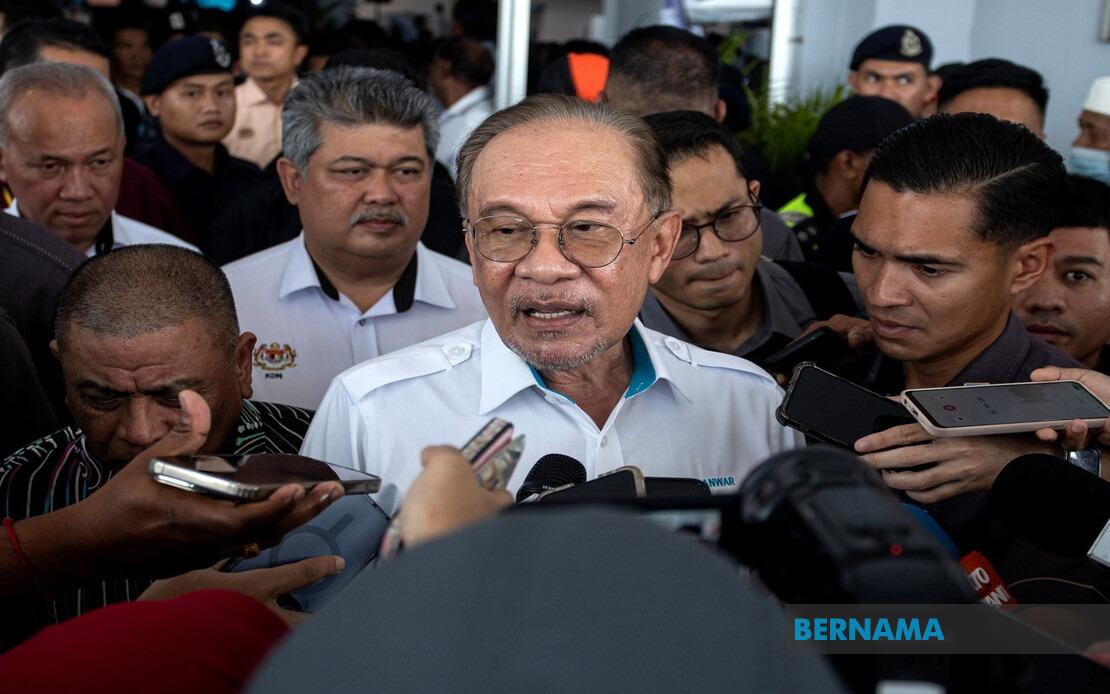
Prime Minister Datuk Seri Anwar Ibrahim has issued a firm directive to government officials and political leaders within the Unity Government coalition to maintain discipline and restraint when campaigning in state elections, cautioning that attacks on the federal administration would damage Malaysia's political environment. Speaking after a community engagement programme in Ipoh, the Prime Minister emphasised that individuals holding ministerial, parliamentary, or agency positions bear a particular responsibility to uphold standards of conduct that reflect their status as representatives of government.
The warning comes as Malaysia navigates a complex political landscape where coalition partners must compete against one another at the state level while maintaining the federal alliance that underpins the current government structure. This tension between collaboration and competition is characteristic of Malaysia's multi-layered electoral system, where parties allied at the federal level frequently contest separate elections at state and local levels. Anwar's intervention suggests that the delicate balance sustaining the Unity Government coalition—which comprises Pakatan Harapan, Barisan Nasional, and other partners—requires constant management to prevent intra-coalition friction from escalating into destabilising disputes.
In articulating his position, Anwar drew a distinction between legitimate state-level campaigning and conduct that breaches the boundaries of acceptable political behaviour. He affirmed that candidates, including those serving in government, retain the right to campaign on matters specific to state governance and advancement. However, he made clear that this freedom comes with a condition: elected officials and appointed administrators cannot simultaneously attack the federal government while drawing salary and authority from it. This principle establishes a straightforward framework—those unwilling to observe such discipline should resign from their positions rather than attempt to operate under contradictory loyalties.
The Prime Minister's remarks reflect broader concerns about maintaining governmental coherence and public confidence in state-federal coordination. Malaysia's development and delivery of public services depend significantly on cooperation between federal and state administrations, particularly in areas such as infrastructure, education, health, and social welfare. When political leaders at the state level undermine the federal government's credibility or policies, they inadvertently compromise the effectiveness of programmes that transcend state boundaries and require coordinated implementation.
Anwar revealed that he had already discussed these expectations with his two deputies, Datuk Seri Dr Ahmad Zahid Hamidi and Datuk Seri Fadillah Yusof, signalling that the directive emanates from the highest levels of government and carries the weight of executive resolve. The involvement of both deputies—who represent different coalition partners—underscores the need for unified messaging across the political spectrum. Their role in communicating these expectations to their respective party structures demonstrates that the Prime Minister's caution is not directed at a single party but represents a collective obligation binding all participants in the ruling coalition.
Beyond the immediate context of state elections, Anwar's intervention addresses a structural challenge facing multi-party coalitions in Westminster-influenced systems. The tension between inter-party competition and intra-coalition loyalty has historically destabilised governments when leaders prioritise partisan advantage over collective responsibility. By establishing clear boundaries early in the electoral cycle, the Prime Minister seeks to prevent the emergence of patterns whereby government officials use their official platforms to advance state-level partisan interests at the expense of federal credibility.
The Unity Government's sustainability depends on partners perceiving benefits from coalition membership that outweigh the costs of competitive restraint. If state-level competitions become venues for wholesale attacks on federal policy or administration, coalition partners may conclude that the advantages of federal participation no longer justify electoral compromises at the state level. Anwar's approach attempts to preserve the coalition's internal equilibrium by establishing that competitive campaigns remain permissible provided they do not venture into personal attacks or systematic delegitimisation of the federal government.
Anwar also emphasised that coalition parties had been encouraged to strengthen rather than strain their relationships across federal and state levels. This positive formulation—focusing on what parties should build rather than merely what they should avoid—offers a constructive framework for competition. Parties can campaign vigorously for state-level seats and policies while simultaneously demonstrating, through collaborative conduct in federal forums and joint service delivery initiatives, that competitive differences do not translate into administrative dysfunction.
The practical implications for Malaysian politics are significant. State elections in coming months will test whether coalition partners can internalise these expectations or whether competitive pressures will override the Prime Minister's directives. The accountability mechanism Anwar articulated—that those unwilling to observe discipline should resign—provides a clear enforcement tool, though its actual application will depend on the severity of any breaches and the political consequences of enforcing it. For ordinary Malaysians, the outcome of this internal coalition management will influence the quality of state and federal governance and the degree to which political competition translates into improved public services or merely into partisan gridlock.
Looking forward, the Prime Minister's statement establishes a precedent that may require reinforcement as campaigns intensify and electoral pressures mount. The success of the Unity Government in maintaining this discipline will demonstrate whether Malaysia's political leaders can manage the inherent tensions between coalition partnership and electoral competition—a capability that will prove increasingly important as the nation faces complex governance challenges requiring sustained federal-state coordination and cross-party cooperation.

