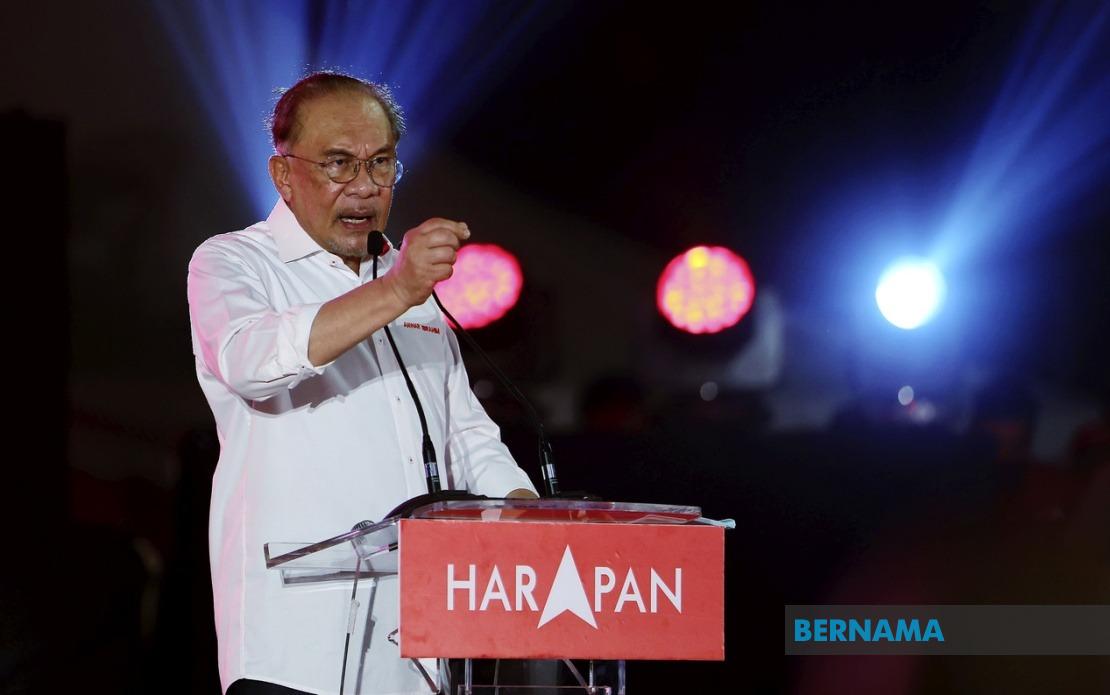
Prime Minister Datuk Seri Anwar Ibrahim has called for political maturity and restraint from all contestants in the upcoming 16th Negeri Sembilan State Election, specifically cautioning against weaponising sensitive constitutional and institutional issues during the campaign period. Speaking at a candidate announcement ceremony in Kuala Pilah on July 14, the Pakatan Harapan chairman stressed that while competitive political engagement remains fundamental to democratic practice, such activity must be conducted with integrity and awareness of its potential social consequences.
Anwar's intervention signals the federal government's concern that state-level campaigns could veer into territory that destabilises the delicate institutional consensus underpinning Malaysian governance. The monarchy occupies a unique position within Malaysia's constitutional framework, particularly in Negeri Sembilan where the Yamtuan Negeri holds ceremonial significance. By explicitly flagging royal institutions as out-of-bounds territory for campaign rhetoric, Anwar sought to establish clear guardrails that prevent electoral competition from spilling into debates about constitutional supremacy or the status of the crown, areas where sentiment runs deep across diverse Malaysian communities.
The Prime Minister articulated a distinction between legitimate policy disagreements and corrosive partisan attacks. He acknowledged that political parties must and should contest ideas, challenge records, and offer contrasting visions for Negeri Sembilan's development. However, he underlined that such contests cannot extend to slander, character assassination, or statements designed to erode public confidence in foundational state institutions. This framing positions responsible opposition as an asset to democracy rather than a threat, provided it operates within defined boundaries.
Anwar's emphasis on institutional integrity reflects broader concerns within federal leadership about how state elections can create cascading effects across the national political system. Negeri Sembilan, with its blend of urban and rural constituencies and its position within central Malaysia's economic corridor, carries symbolic weight beyond its nine state assembly seats. A fractious campaign season could establish precedents that influence conduct in other state elections and feed into calculations about federal-level coalition stability.
The announcement of 36 Pakatan Harapan candidates showcased a deliberate strategy of combining incumbent experience with fresh political talent. Menteri Besar Datuk Seri Aminuddin Harun will contest the Linggi seat, while DAP secretary-general Anthony Loke will seek the Chennah seat. This arrangement reflects the coalition's confidence in retaining power while also attempting to refresh its image in a state where PH has governed since the 2018 general election. The presence of senior figures from PKR, DAP, and Amanah at the announcement underscored the coalition's unity heading into the contest.
Anwar's characterisation of Aminuddin as a cooperative leader who works effectively with federal authorities carried implicit reassurance to investors and civil society that Negeri Sembilan would continue pursuing coordinated development strategies with the national government. This messaging is particularly significant given that state elections can create political complications when opposition parties assume power, leading to tensions over resource allocation, infrastructure projects, and policy harmonisation. By publicly endorsing Aminuddin's collaborative approach, Anwar signalled that a PH victory would maintain administrative continuity and predictability.
The timing of the PH campaign launch comes amid Malaysia's broader political realignment, where federal coalitions remain fragile and state elections can shift momentum between competing blocs. Negeri Sembilan's outcome carries implications for how smoothly the PH-led federal government can function, given that state governments control land matters, local administration, and developmental priorities that federal initiatives depend upon for effective implementation. A PH victory would consolidate the coalition's territorial stronghold in the peninsula's interior, whereas opposition gains would introduce new power brokers into negotiations over federal-state resource distribution.
For Malaysian readers, Anwar's intervention also highlights the persistent tension between democratic competition and institutional respect that characterises governance in the country. Unlike some democracies where constitutional change and institutional reconfiguration become routine election topics, Malaysian politics operates within an implicit understanding that certain institutions—the monarchy, Islam's constitutional position, the special status of Bumiputeras, and parliamentary sovereignty—remain largely beyond electoral contestation. Anwar's statement reaffirmed this understanding while acknowledging that elections themselves test these boundaries.
The inclusion of women and younger candidates in the PH slate reflects efforts to modernise the coalition's image and appeal to demographic cohorts whose voting patterns have become increasingly volatile. Negeri Sembilan's electorate, concentrated in towns like Seremban and Kuala Pilah alongside rural constituencies, exhibits the heterogeneity increasingly common across Malaysian states. Younger, urban voters tend toward greater issue-specificity and skepticism of institutional deference, whereas rural and older voters often prioritise stability and respect for established systems. The PH candidate mix attempted to bridge these divides.
Opposition parties contesting the election will face implicit pressure to accept Anwar's framework without appearing to capitulate on legitimate policy grounds. This dynamic reflects the PM's considerable rhetorical authority as the nation's chief executive. When he frames certain topics as off-limits, opposition parties risk being portrayed as irresponsible if they breach these boundaries, yet may also feel constrained from raising popular grievances if those grievances touch on sensitive areas. Such structural constraints on campaign discourse can affect election dynamics in ways difficult to predict.
The broader context involves Malaysian voters' evident concern about economic opportunity, cost-of-living pressures, and quality of state services—issues that should theoretically dominate campaign discussions across all competing parties. By establishing clear guardrails around institutional questions, Anwar created conceptual space for campaigns to focus on performance metrics, economic vision, and administrative competence. Whether opposition parties and candidates will respect these informal boundaries remains to be seen, but their violation would risk public backlash in a state where traditional respect for institutions remains deeply rooted.
For Southeast Asian observers monitoring Malaysian political development, Anwar's statement illustrates how established democracies with constitutional monarchies negotiate the tension between electoral competition and institutional stability. The approach differs markedly from purely majoritarian systems where electoral outcomes reshape constitutional arrangements, yet also preserves genuine competitive politics rather than enforcing consensus through authoritarian suppression. As Negeri Sembilan heads toward polling day, the test will be whether all parties genuinely internalise the PM's message about responsibility or whether campaign dynamics override his appeals for restraint.

