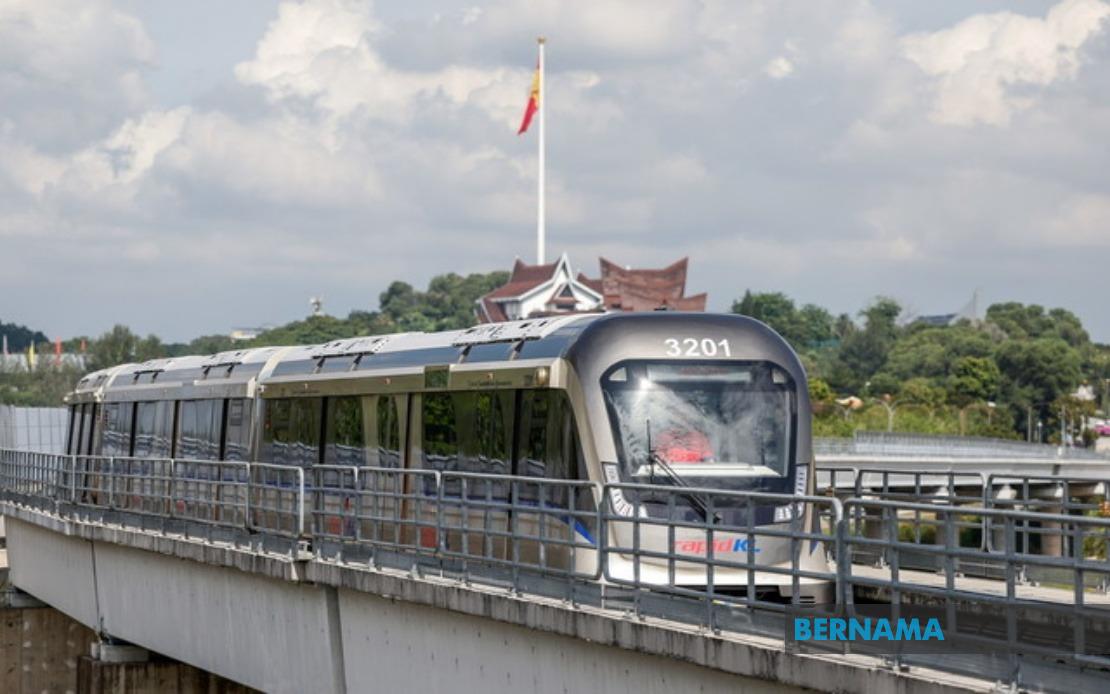
Prime Minister Datuk Seri Anwar Ibrahim will officiate the opening of the Light Rail Transit 3 (LRT3) Shah Alam Line tomorrow, marking a significant milestone in Selangor's public transportation infrastructure. The 37.8-kilometre transit corridor, which extends from Bandar Utama to Johan Setia, has completed all construction works and stands ready to welcome its first passengers. During the ceremonial launch on June 28, the Prime Minister is expected to reveal the commercial service commencement date, paving the way for daily operations along what officials project will become a critical commuter artery for the sprawling Klang Valley region.
The Shah Alam Line represents an ambitious expansion of Malaysia's light rail network, with planners estimating the route will ultimately serve approximately two million people living and working along its corridor. The corridor traverses some of Selangor's most densely populated areas, including both established residential neighbourhoods and emerging commercial zones. According to Mohd Ariffin Idris, the line's chief, the infrastructure demonstrates Prasarana Malaysia Berhad's commitment to alleviating traffic congestion while providing an environmentally conscious alternative to private vehicles across the metropolitan Klang Valley.
The network encompasses 20 stations strategically positioned to maximise accessibility and coverage. The first ten stations—Bandar Utama, Kayu Ara, BU 11 (Bandar Utama 11), Damansara Idaman, Subang, Glenmarie 2, Kerjaya, Stadium Shah Alam, Dato' Menteri, and UiTM Shah Alam—serve the northern and central sections of the line. The remaining ten stations—Seksyen 7 Shah Alam, Bandar Baru Klang, Pasar Klang, Jalan Meru, Jambatan Kota, Taman Selatan, Seri Andalas, Klang Jaya, Bandar Bukit Tinggi, and Johan Setia—extend coverage southward through Shah Alam and Klang. This distribution reflects careful urban planning to ensure the line captures demand from residential clusters, commercial hubs, and institutional facilities across the region.
Intermodal connectivity forms a cornerstone of the Shah Alam Line's design philosophy. The network provides seamless connections to the existing Kajang Line at Bandar Utama and links with the Kelana Jaya Line at Glenmarie 2. These intersections create a more comprehensive transit network, enabling passengers to access distant destinations without relying on private vehicles. By integrating with established rapid transit corridors, the Shah Alam Line enhances the overall utility of Klang Valley's public transportation ecosystem, reducing the friction passengers previously experienced when attempting to combine different modes of transport.
Comprehensive feeder systems complement the core light rail infrastructure, addressing the critical last-mile connectivity challenge that has traditionally limited Malaysian rapid transit adoption. Prasarana operates 40 feeder buses across 13 dedicated routes with 323 stops, each charging just RM1 per journey. These services operate from 6 am to 11:30 pm, framing the window during which commuters can rely on integrated public transport. Additionally, the operator has deployed 44 Rapid On-Demand vans serving 20 zones at RM2 per trip during identical operating hours. This multi-modal approach acknowledges that residents across sprawling suburban areas require flexible transportation options to reach stations conveniently, transforming light rail from an inaccessible resource to a practical commuting solution for diverse geographic zones.
Parking facilities at six designated stations address the needs of park-and-ride commuters, a critical demographic in car-dependent Malaysian suburbs. The Kayu Ara, Damansara Idaman, Pasar Besar Klang, Sri Andalas, Bandar Bukit Tinggi, and Johan Setia stations collectively provide 2,300 parking bays. This infrastructure acknowledges transportation realities in suburban Malaysia, where residents often prefer driving to stations rather than depending entirely on feeder buses. By incorporating substantial parking capacity, Prasarana removes a significant barrier to transit adoption among drivers currently locked into private vehicle dependency for entire journeys.
Operational projections reveal ambitious expectations for ridership growth. Prasarana targets 67,000 daily passengers during the Shah Alam Line's inaugural year of operations. This figure is projected to escalate to 117,708 passengers daily within five years as the line becomes embedded in commuters' travel routines and surrounding land development intensifies. These conservative estimates suggest the operator expects a gradual uptake trajectory, potentially reflecting the historical pattern of Malaysian rapid transit systems requiring time to shift ingrained driving habits. Achieving these targets will require sustained marketing efforts and reliable, frequent service delivery.
Environmental sustainability underpins the Shah Alam Line's operational design, reflecting Malaysia's broader commitment to reducing transportation-sector emissions. The light rail vehicles are equipped with inverter-based air conditioning systems that optimise energy efficiency compared with conventional cooling mechanisms. Station architecture incorporates passive design principles, with layouts maximising natural ventilation and daylighting to minimise mechanical climate control requirements. These features collectively reduce the operational energy footprint while demonstrating that rapid transit expansion can align with Malaysia's sustainability objectives. For residents concerned about environmental degradation from transport sector activity, the Shah Alam Line offers tangible evidence of greener infrastructure investment.
Accessibility provisions ensure the Shah Alam Line serves the broader community rather than privileging able-bodied commuters. All 20 stations incorporate wheelchair-accessible ramps and disability-compliant toilet facilities. Every light rail carriage includes reserved seating designated for persons with disabilities, recognising that mobility restrictions affect transit accessibility. These design choices represent a departure from earlier Malaysian transit infrastructure that sometimes neglected disabled users' needs. By embedding accessibility from inception rather than retrofitting later, Prasarana signals that inclusive transportation design constitutes a priority rather than an afterthought.
Phased station reconstruction work will extend the line's eventual coverage and capacity. Five additional stations—Tropicana, Raja Muda, Temasya, Bukit Raja, and Bandar Botanik—are scheduled for construction commencing by year-end. This sequential development approach allows the operator to commission the main corridor first while planning subsequent network expansion. The reconstruction timeline suggests a pragmatic strategy prioritising early revenue generation from the primary 20-station route while advancing incremental network growth. For residents in areas served by future stations, the development roadmap indicates transit accessibility improvements within an achievable timeframe.
The Shah Alam Line's activation represents a watershed moment for Selangor's transportation landscape. Commuters currently trapped in congested roadways will gain a rapid, affordable alternative connecting residential neighbourhoods with employment centres, educational institutions, and commercial districts. The integrated feeder bus and van networks acknowledge that suburban geography demands comprehensive solutions rather than isolated transit corridors. By combining light rail infrastructure with supporting connectivity, competitive pricing, and accessibility provisions, the Shah Alam Line demonstrates that Malaysian transit planning has matured beyond simple rail construction toward holistic mobility ecosystem development. The route's success will likely shape future rapid transit expansion across the Klang Valley and provide evidence regarding whether Malaysian cities can gradually transition from automobile-dependent transport patterns toward more sustainable, equitable public transit systems.

