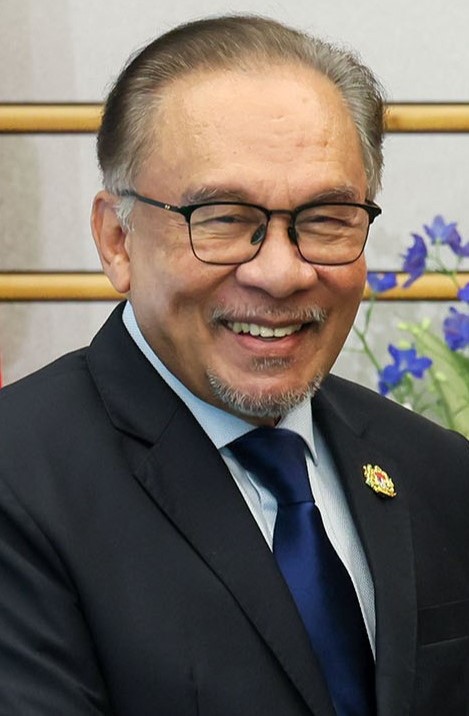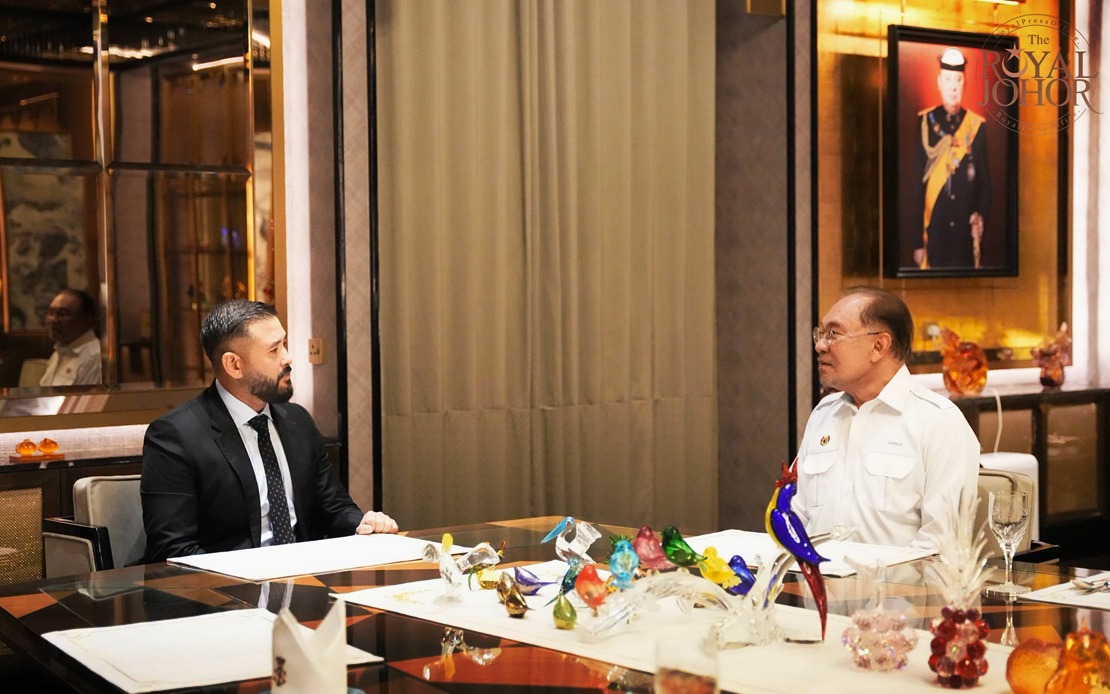
Prime Minister Datuk Seri Anwar Ibrahim seized the opportunity at a Pakatan Harapan candidate announcement ceremony in Tangkak on Saturday to publicly acknowledge the Regent of Johor, Tunku Mahkota Ismail, for what he characterised as an important gesture of goodwill. The appreciation extended beyond mere courtesy, serving as a statement about how Malaysia's political leadership should interact with the country's constitutional monarchy during contentious electoral periods.
Anwar's remarks came as Pakatan Harapan unveiled its slate of candidates for the 16th Johor state election at Padang Bukit Gambir Extreme Park. The gathering brought together senior coalition figures including DAP secretary-general Anthony Loke Siew Fook and Amanah president Datuk Seri Mohamad Sabu, underscoring the significance Anwar attached to the royal engagement.
The Prime Minister drew a sharp distinction between his own approach to engaging with the Malay Rulers and what he characterised as the tactics of opposition parties. He pointedly criticised politicians who invoke the names and authority of the monarchy in campaign materials and rhetoric while simultaneously refusing to engage directly with the royal institution. Anwar presented his acceptance of the audience from Tunku Mahkota Ismail as a direct rebuttal to such "petty political campaigns," suggesting that transparent, respectful engagement with royalty exposes the hypocrisy of those who merely weaponise royal prestige for electoral gain.
During the meeting with Tunku Mahkota Ismail, Anwar explained that he used the occasion to brief the Regent on federal government development initiatives specifically benefiting the people of Johor. This framing positions the royal consultation not as a ceremonial formality but as a substantive policy discussion, demonstrating how the Prime Minister seeks to ground his administration's actions in regular dialogue with state-level royalty. The move reflects a broader strategy of maintaining institutional harmony while demonstrating tangible returns from federal investment.
Anwar articulated a philosophy of royal engagement that acknowledges the delicate balance inherent in Malaysia's constitutional monarchy system. He noted that while his administration maintains regular consultations with the Malay Rulers, including Sultan Ibrahim as King of Malaysia, disagreements inevitably arise. Rather than viewing such tensions as breakdowns in relationship, Anwar framed them as natural components of respectful governance where the executive branch receives views, offers counter-perspectives, and ultimately acts on advice offered in good faith.
The Prime Minister's insistence that Pakatan Harapan, as the party leading the federal government, will maintain positive relations with the Malay Rulers while accepting their guidance, reprimands, and advice appears calibrated to address lingering concerns among traditional constituencies that Harapan might diminish royal prerogatives. This explicit commitment could prove significant in Johor, where the sultanate commands considerable cultural and political weight among Malay-Muslim voters.
Anwar's statement implicitly contrasts his coalition's approach with the handling of royal relationships during previous administrations. By emphasising consultation, transparent communication, and a willingness to accept regal counsel across different policy domains, he positions Harapan as institutionally respectful and constitutionally conscious. This rhetorical positioning becomes particularly important in state-level elections where voters often evaluate federal leadership partly through the lens of how respectfully it treats established royal institutions.
The broader context reveals Anwar's concern that election campaigns increasingly blur the boundaries between legitimate political advocacy and the inappropriate politicisation of constitutional institutions. His warning that "you do not even dare engage in political fights" while simultaneously invoking royal authority suggests specific recent incidents where opposition figures have strategically deployed references to the monarchy without establishing direct engagement or seeking formal consultation.
For Malaysian readers, Anwar's emphasis on maintaining institutional boundaries carries practical implications. Elections in constitutional monarchies succeed when political actors respect the formal and symbolic roles that royalty occupies within the system. The Prime Minister's public acknowledgment of the Johor Regent's courtesy, combined with his criticism of those who exploit royal prestige without similar formal engagement, stakes out a claim that his administration operates within more rigorous constitutional parameters than its competitors.
The timing of Anwar's remarks, delivered during Pakatan Harapan's candidate announcement in Johor, suggests the coalition views royal support, or at minimum royal neutrality, as strategically important for the upcoming state election. By highlighting his respectful engagement with the Regent, Anwar provides evidence to voters that the federal government maintains healthy relationships with Johor's traditional power structures, potentially addressing concerns that a Harapan-led administration might marginalise state-level institutions.
Anwar's consistent emphasis on consultation and advice-seeking reflects a governance philosophy that understands Malaysia's constitutional order as fundamentally dependent on regular, respectful interaction between the executive and the monarchy. His willingness to accept reproof from the royal institution, and his assertion that disagreement need not rupture relationships, offers a model of federal-royal relations that emphasises institutional maturity rather than dominance.
As Malaysian politics becomes increasingly contentious and election campaigns grow more aggressive in their tactics, Anwar's articulated commitment to keeping the royal institution separate from partisan contestation represents a countervailing institutional voice. Whether such appeals can effectively constrain the politicisation of royalty during electoral periods remains to be seen, but they at least place on record the stated position of the Prime Minister that constitutional monarchy requires boundaries that all parties ought to respect.