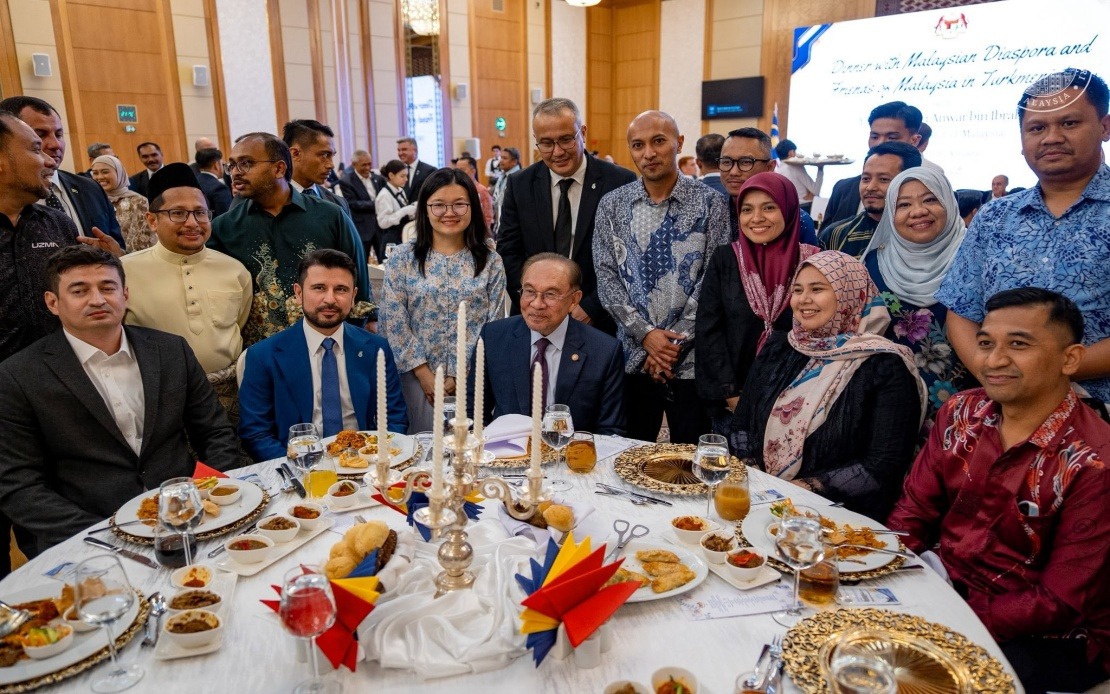
Prime Minister Datuk Seri Anwar Ibrahim has used his official visit to Turkmenistan as an opportunity to connect with Malaysians living abroad, meeting with members of the diaspora community in the capital city of Ashgabat. The gathering reflected the MADANI Government's broader strategic approach to maintaining meaningful engagement with Malaysian citizens and professionals scattered across the globe, particularly in regions where Malaysia's diplomatic footprint is expanding.
During the meeting, Anwar emphasized the government's ongoing dedication to deepening connections with Malaysians overseas and encouraged them to maintain active links with their home country. He stressed the importance of staying informed about Malaysia's progress and development initiatives, positioning diaspora members as vital stakeholders in the nation's continued growth narrative. This approach recognizes that overseas Malaysians represent a significant soft power asset, capable of projecting the country's image and advancing national interests through their professional networks and personal relationships in host countries.
In a Facebook post reflecting on the engagement, Anwar characterized the diaspora gathering as an unexpectedly warm and connected experience, describing the atmosphere as reminiscent of a domestic gathering despite the physical distance from Kuala Lumpur. His remarks underscored the emotional and cultural bonds that transcend geography, acknowledging that Malaysians abroad maintain strong psychological connections to their homeland even while pursuing opportunities in foreign markets. This sentiment resonates particularly in Southeast Asia, where regional integration and professional mobility have created substantial communities of Malaysians working across the ASEAN bloc and beyond.
The Prime Minister identified diaspora members as what he termed "unofficial ambassadors," individuals who actively contribute to building Malaysia's international reputation through their professional conduct, business activities, and cultural representation. This framing elevates the status of overseas Malaysians beyond simple expatriates, recognizing them instead as deliberate actors in Malaysia's soft power strategy. Their role in expanding networks, establishing business connections, and demonstrating Malaysian values and competence in host countries creates tangible benefits for the nation's standing and influence globally.
Anwar's visit to Turkmenistan marks his first official engagement with the Central Asian nation, following a reciprocal visit by Turkmenistan President Serdar Berdimuhamedov to Malaysia in December 2024. The two-day official mission represents part of Malaysia's broader diplomatic strategy to diversify partnerships and establish meaningful engagement beyond traditional Asian markets. Turkmenistan's strategic location along trade corridors connecting Europe, Asia, and the Middle East positions it as a potentially significant partner for Malaysian businesses and investors seeking to expand into Central Asia and beyond.
In articulating the purpose of his Turkmenistan visit, Anwar explained that the engagement encompasses dimensions extending well beyond conventional economic and trade considerations. While commercial cooperation, investment opportunities, and economic partnerships remain important components, the Prime Minister emphasized that the visit fundamentally aims to cultivate genuine friendship between Malaysia and Turkmenistan, foster deeper mutual understanding, and create new collaborative frameworks that benefit both nations. This holistic approach to bilateral relations reflects contemporary diplomatic thinking that views economic ties as one component within a broader relationship encompassing cultural exchange, educational collaboration, and shared regional interests.
The timing of Anwar's Central Asian engagement carries significance for Malaysia's positioning within regional geopolitics. As major powers compete for influence across Asia, Malaysia's efforts to expand relationships with countries like Turkmenistan demonstrate the nation's independent foreign policy approach and commitment to building bridges across diverse regions. For Malaysian readers, this engagement signals the government's ambition to open new economic opportunities and professional pathways in emerging markets, potentially creating business prospects and employment avenues for Malaysian companies and professionals.
The broader context of Malaysia-Turkmenistan relations reveals an emerging partnership with considerable potential. Turkmenistan's energy resources, particularly its significant natural gas reserves, alongside Malaysia's expertise in petrochemical industries, liquefied natural gas production, and energy-related technologies, suggest natural areas for commercial collaboration. Beyond energy, Malaysia's experience in Islamic finance, halal industry development, and Southeast Asian market integration could offer valuable insights for Turkmenistan's economic diversification efforts.
For the Malaysian diaspora specifically, the Prime Minister's visit carries particular significance as it demonstrates official recognition of their contributions and ongoing government interest in their welfare and development. Many Malaysians abroad operate in professional capacities where government support and diplomatic backing can prove valuable in navigating complex business environments and accessing international opportunities. The MADANI Government's explicit commitment to strengthening diaspora relations suggests potential future initiatives including improved consular services, professional networking platforms, and targeted support programs for Malaysian entrepreneurs and professionals abroad.
The engagement also reflects evolving approaches to diaspora management within the Southeast Asian region. As countries increasingly recognize that overseas populations represent valuable economic and diplomatic assets, governments are developing more sophisticated strategies for maintaining connections with diaspora communities. Malaysia's proactive engagement, demonstrated through high-level ministerial participation in diaspora gatherings, positions the nation as forward-thinking in leveraging this often-underutilized resource for national development and international influence.
Looking forward, Anwar's Turkmenistan visit and diaspora engagement establish foundations for potential long-term relationships that could benefit Malaysia across multiple dimensions. The cultivation of strong ties with Malaysian communities abroad, combined with simultaneous expansion of bilateral relationships with new partner nations, reflects a comprehensive approach to positioning Malaysia as a dynamic regional player with far-reaching international connections and influence.