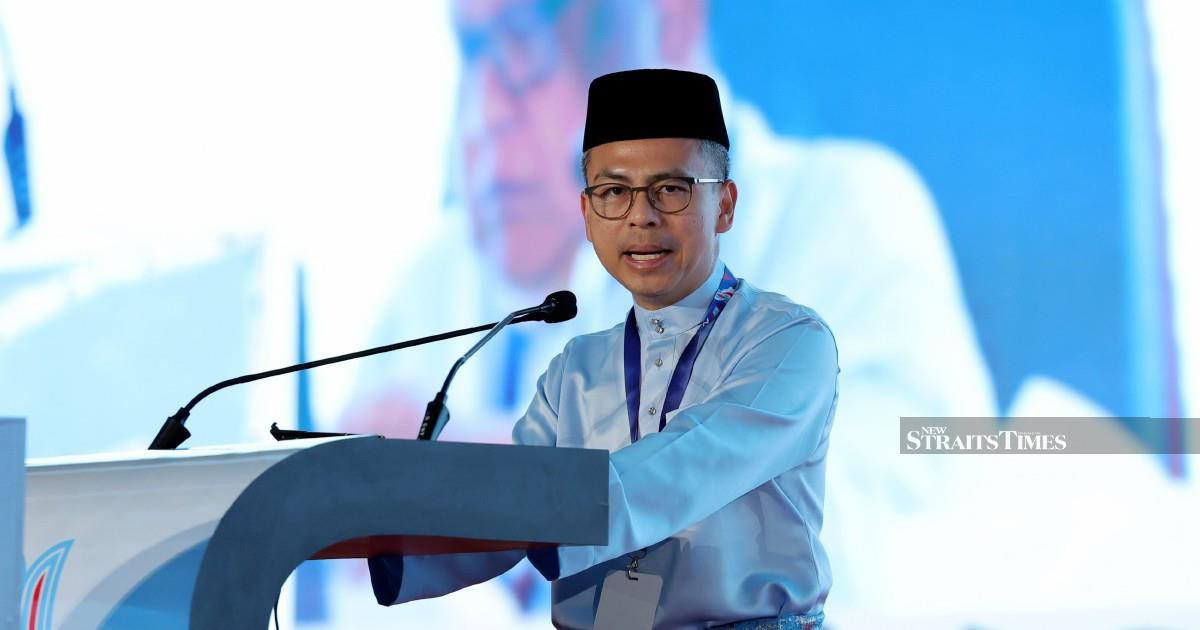
Prime Minister Datuk Seri Anwar Ibrahim appears positioned to make several significant announcements within the next 24 hours, according to signals from his party leadership. Datuk Seri Fahmi Fadzil, who serves as the People's Justice Party's (PKR) information chief, indicated during remarks at Ayer Keroh that the Prime Minister may unveil multiple developments imminently. The precise nature of these announcements remains unspecified, though the timing and emphasis suggest matters of governmental consequence.
Fahmi's comment carries weight given his position as a senior party functionary tasked with communicating PKR's messaging to the public and media. His role places him within the Prime Minister's inner circle, making his statements regarding Anwar's intentions particularly noteworthy. The indication of multiple announcements rather than a single declaration suggests a coordinated rollout of policy or administrative decisions, rather than routine ministerial business.
This development occurs within the broader context of Malaysia's coalition government dynamics, where the ruling Pakatan Harapan alliance manages numerous moving parts across federal administration and state-level politics. Anwar's administration has faced various pressures ranging from economic policy implementation to personnel adjustments within ministerial portfolios. Any fresh announcements would likely address these accumulated matters or represent strategic initiatives intended to reshape governance priorities.
The timing of Fahmi's remarks carries significance for political observers and policy stakeholders across Malaysia and the region. Cabinet reshuffles, policy pivots, or economic announcements from the Prime Minister's office typically influence market sentiment, investor confidence, and institutional planning across both public and private sectors. The Malaysian business community and international observers often calibrate their expectations based on such early signals from ruling party spokespersons.
Announcements emerging from the Prime Minister's office typically touch on areas including ministerial appointments, economic initiatives, infrastructure projects, or administrative reforms. Given the current national context, observers are attentive to potential developments regarding government restructuring, responses to economic challenges, or adjustments to implementation timelines for major policy commitments. The breadth of possible subjects means various stakeholder groups—from business chambers to civil society organisations—maintain heightened attention to such signals.
PKR's positioning as the anchor party within the ruling coalition invests particular significance in statements from its senior communicators regarding the Prime Minister's intentions. Fahmi's forecast of imminent announcements demonstrates that the party leadership remains actively engaged in coordinating messaging and preparing public reception for incoming developments. This coordinated approach reflects professional political management, particularly important given the complex dynamics of Malaysia's multi-party coalition government.
The Malaysian public and media landscape has demonstrated sustained interest in developments regarding the Prime Minister's agenda and cabinet composition. Previous reshuffles and announcements have generated extensive discussion, with various political factions and interest groups responding quickly to changes in ministerial portfolios or policy directions. The prospect of fresh announcements therefore activates attention across political commentators, civil society, and ordinary citizens seeking clarity on government direction.
For Malaysian business stakeholders and investors, signals regarding impending announcements from the Prime Minister carry implications for decision-making timelines and strategic planning. Particularly if announcements touch on economic policy, taxation, infrastructure spending, or regulatory frameworks, corporate planning processes may pause pending clarity. The regional business community and foreign investors similarly monitor such developments, as Malaysian policy decisions often have spillover effects across Southeast Asia's interconnected economies.
The week ahead therefore presents a critical juncture for political observers and institutional planners across Malaysia. Whether announcements address cabinet appointments, policy reforms, economic measures, or strategic initiatives, their rollout will shape media narrative and political calculation for the subsequent period. The careful pre-signalling by PKR's information chief suggests deliberate preparation for public reception, indicating that whatever emerges carries significance sufficient to warrant coordinated communication strategy.
As Malaysia navigates contemporary challenges—spanning economic recovery, fiscal management, institutional strengthening, and coalition governance—the stream of announcements anticipated by Fahmi's comments will likely reflect administration efforts to demonstrate dynamism and responsiveness. Whether such announcements achieve their intended impact depends partly on their substantive content and partly on broader economic and political context. Observers across Malaysia and the region will be watching closely as the Prime Minister's office delivers on signals of imminent developments.

