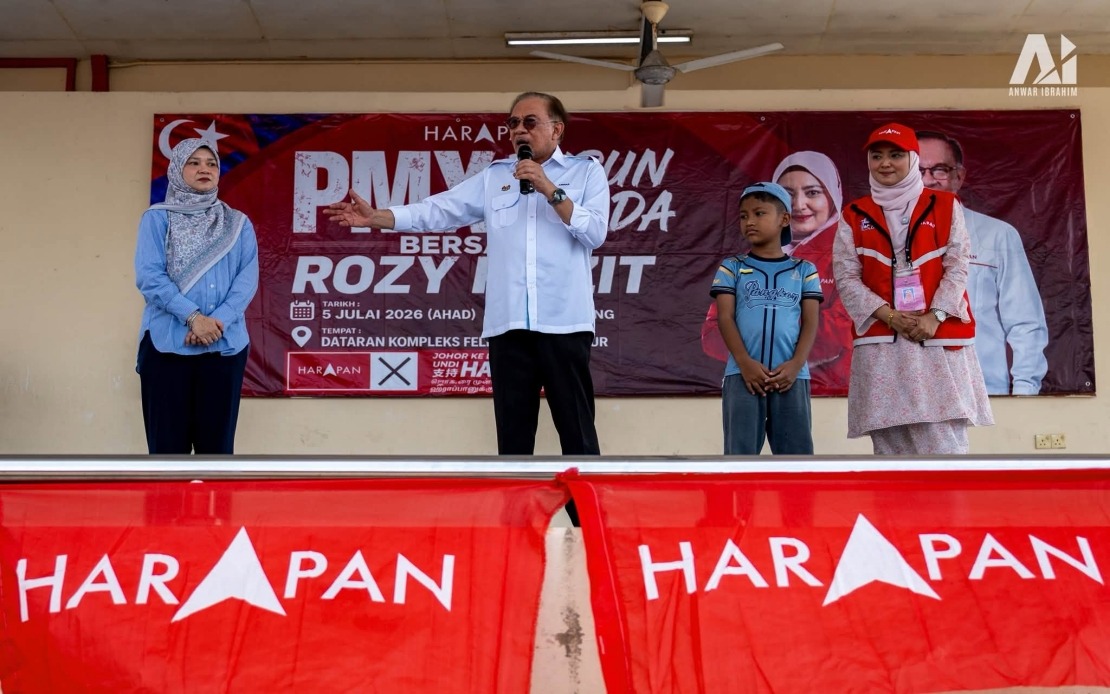
Prime Minister Datuk Seri Anwar Ibrahim has reflected on a poignant moment that unfolded during an official engagement in Johor, describing how the determination of a nine-year-old boy and his elderly grandmother left an indelible mark on his perspective as the nation's leader. Muhammad Afif Ikhwan, accompanied by his grandmother Rosimah Mohammad, navigated through oil palm plantation terrain on a motorcycle with a single purpose: to catch a glimpse of the Prime Minister. What might have seemed like an ordinary exchange during a programme at Felda Palong Timur in Segamat became something far more significant, prompting Anwar to reflect publicly on the incident through a Facebook post and even arrange a subsequent gift for the boy.
The grandmother's extraordinary effort underscores a common reality in rural Malaysia, where access to national figures often requires substantial sacrifice from ordinary families. At 58 years old, Rosimah made the deliberate choice to ride her motorcycle along plantation access roads—a journey that presented both practical and safety challenges—simply to afford her grandson this opportunity. The willingness of a senior citizen to undertake such a venture speaks volumes about the aspirations Malaysian families hold regarding their children's futures and the symbolic importance they attach to personal connection with leadership. For many in rural communities, such encounters represent more than mere curiosity; they embody hope and inspiration that transcends the immediate moment.
Anwar's recounting of the handshake itself, where "his little hand reached through the crowd," carries emotional weight that resonates with the broader theme of accessibility and human connection in governance. The decision to bring the boy onto the stage during the event reflected the Prime Minister's inclination to acknowledge and elevate such genuine expressions of aspiration. This gesture, seemingly spontaneous yet deliberately documented, represents a calculated effort to humanise political leadership and demonstrate responsiveness to citizen engagement, regardless of how unconventional the approach might be.
The follow-up action—dispatching an emissary to deliver a bicycle to Muhammad Afif—transforms the narrative from a fleeting encounter into a sustained gesture of goodwill. Bicycles carry practical significance in rural Malaysian contexts, often serving as essential transport for school attendance and community mobility. By providing this gift, Anwar's office moved beyond symbolic recognition to offer material support that could tangibly improve the boy's daily life. This two-stage response, combining immediate stage presence with subsequent material assistance, demonstrates a more comprehensive approach to what could have remained a transactional political moment.
Anwar's public reflection emphasises the philosophical dimension of the encounter, noting that what appears insignificant to those accustomed to privilege may represent something transformative for others. His statement that "such a brief moment would carry such great meaning for Afif" acknowledges the outsized impact that recognition from authority figures can exert on young people in less privileged circumstances. This observation carries particular relevance in Malaysia's context of regional inequality, where educational and economic opportunities remain heavily concentrated in urban areas.
The Prime Minister's broader commentary on maintaining compassion amid the demanding responsibilities of national leadership offers implicit commentary on the pressures and distractions of high office. By publicly acknowledging that busy schedules and significant challenges cannot serve as justifications for diminished humanity, Anwar articulates a standard for political engagement that extends beyond routine administrative functions. This framing positions such encounters not as distractions from governance but as integral components of effective and legitimate political leadership.
The story also illuminates the aspirational dimensions of rural Malaysian life, where direct access to national leadership remains a noteworthy event worthy of considerable effort. The fact that Rosimah's motorcycle journey through plantation territory made news reflects both the rarity of such access and the enduring symbolic importance of proximity to power in Malaysian political culture. For families in communities like Kampung Pudu in Segamat, such opportunities represent rare intersections of their daily reality with the machinery of national governance.
Anwar's hope that the encounter would inspire Muhammad Afif toward academic achievement and eventual contribution to society frames the interaction as investment in human capital and social mobility. This forward-looking perspective suggests that the Prime Minister views such moments as potential catalysts for transforming individual trajectories, particularly for young people in rural areas who may experience limited exposure to formal mentorship or inspiration from national figures. The explicit mention of the boy's studies indicates prioritisation of education as a pathway for advancing both individual and collective welfare.
The incident also reflects evolving expectations around political accessibility in contemporary Malaysia. That a family would undertake such effort to secure a brief encounter with the Prime Minister demonstrates persistent demand for direct engagement with leadership, even as communication technologies offer alternative channels for political interaction. This desire for physical presence and personal acknowledgment suggests that Malaysian voters, particularly in rural constituencies, continue to value tangible evidence of their leaders' awareness and appreciation.
From a broader governance perspective, the story exemplifies how carefully managed human-interest narratives can reinforce political messaging about leadership values and priorities. The documented nature of the encounter, combined with the gift provision and Prime Minister's public reflection, creates a compelling narrative about inclusive governance and attention to ordinary citizens. Such storytelling, when authentic and proportionate, can strengthen public perceptions of leadership responsiveness without requiring substantial policy shifts or resource reallocation.

