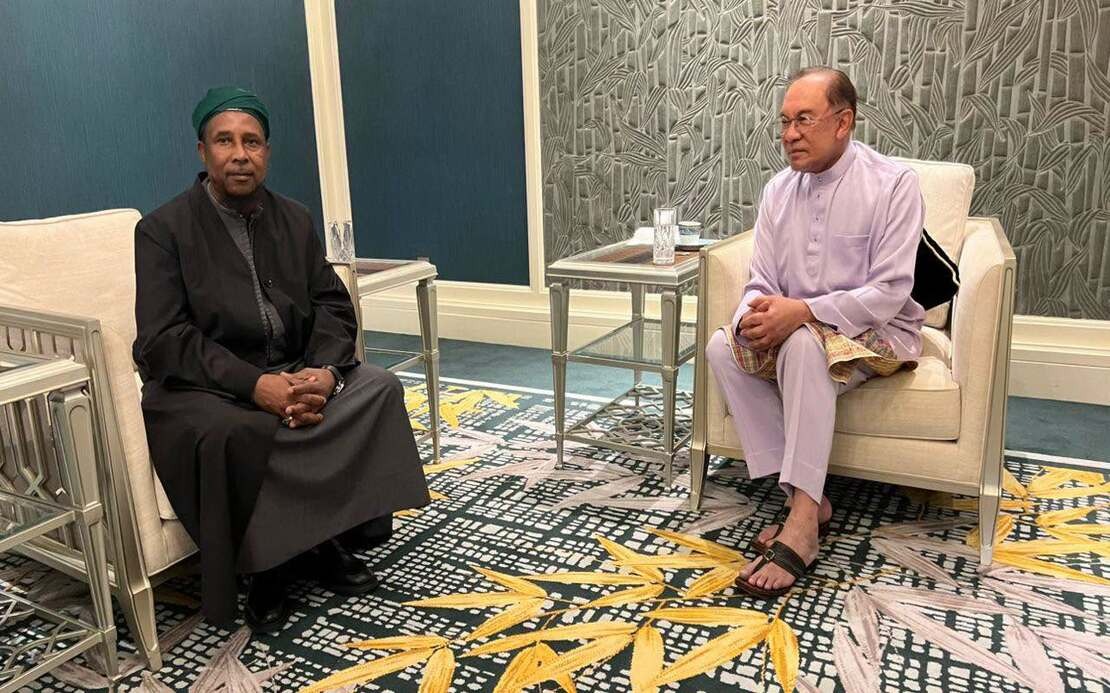
Prime Minister Datuk Seri Anwar Ibrahim hosted a farewell reception for prominent Gambian Islamic scholar Sheikh Muhammad Haydara Al-Jilani on June 26, concluding a significant month-long educational tour that took the respected Islamic figure across multiple locations throughout Malaysia. The meeting, held at a time of particular spiritual significance in the Islamic calendar, reflected the government's commitment to fostering interfaith dialogue and international Islamic scholarship exchange.
The scholar's departure marked the end of an extensive dakwah initiative centred on knowledge dissemination and spiritual enrichment among Malaysian Muslim communities. Throughout his stay, Sheikh Muhammad Haydara Al-Jilani conducted numerous gatherings focused on religious education and dhikr sessions, drawing participants from diverse backgrounds seeking deeper engagement with Islamic teachings. His programmes represented a form of soft diplomacy, strengthening ties between Malaysia and the West African nation of Gambia through cultural and religious channels.
Anwar highlighted the symbolic timing of the meeting, which coincided with the Day of Ashura falling on a Friday—a combination Muslims regard as particularly auspicious for spiritual practices and supplication. The Prime Minister used the occasion to request the scholar's prayers for Malaysia's collective prosperity and national stability, underscoring the government's recognition of the role Islamic scholars play in promoting social cohesion and spiritual well-being across the country.
In public remarks shared on his official Facebook page, Anwar expressed gratitude for the scholar's contributions to Malaysia's religious landscape, emphasizing that the visit had provided valuable opportunities for knowledge exchange among local Muslim communities. The extended tour demonstrated Malaysia's openness to hosting international Islamic figures and its position as a regional hub for Islamic scholarship and discourse.
Sheikh Muhammad Haydara Al-Jilani's visit comes within the broader context of Malaysia's efforts to position itself as a centre for moderate Islamic learning and practice. By welcoming established scholars from across the Muslim world, the country reinforces its commitment to inclusive Islamic scholarship that bridges regional and cultural divides. Gambia's contribution to this exchange, through one of its respected scholars, illustrates the interconnectedness of the global Islamic community and the importance Southeast Asia places on these transnational relationships.
The dakwah programmes conducted during the scholar's month in Malaysia served multiple purposes beyond religious instruction. They facilitated cross-cultural understanding, provided platforms for discussing contemporary Islamic perspectives on modern challenges, and strengthened Malaysia's diplomatic relationships within the broader Muslim-majority world. Such initiatives help position the country as a bridge between diverse Islamic traditions and interpretations.
The spiritual element of the farewell meeting—with Anwar specifically requesting prayers for national well-being, peace, and divine blessing—reflected traditional diplomatic practices within Islamic contexts, where religious blessing is sought as a complement to conventional state functions. This approach resonates deeply within Malaysian society, where Islam and governance maintain integrated roles in national consciousness and policy-making.
Malaysia's engagement with international Islamic scholars also serves strategic domestic purposes. By facilitating visits from respected religious figures and ensuring their teachings reach Malaysian communities, the government reinforces narratives around moderate, knowledge-based Islam that align with its broader social cohesion objectives. Such programmes help counter polarizing religious rhetoric and demonstrate the diversity of Islamic scholarly thought available to Malaysian audiences.
The conclusion of Sheikh Muhammad Haydara Al-Jilani's tour represents not an endpoint but rather a continuation of ongoing relationships between Malaysia and Islamic scholar networks across the African continent. The connections established during his month-long stay are likely to generate further exchanges, invitations for return visits, and expanded collaborative opportunities in religious education and research. Such sustained engagement strengthens Malaysia's soft power in Islamic intellectual circles globally.
Looking forward, the success of this visit may encourage similar initiatives involving scholars from other regions, further cementing Malaysia's reputation as an accommodating host for international Islamic discourse. As the country navigates complex questions around Islamic identity, modernization, and social pluralism, access to diverse scholarly perspectives becomes increasingly valuable for informing national religious policy and community engagement strategies.

