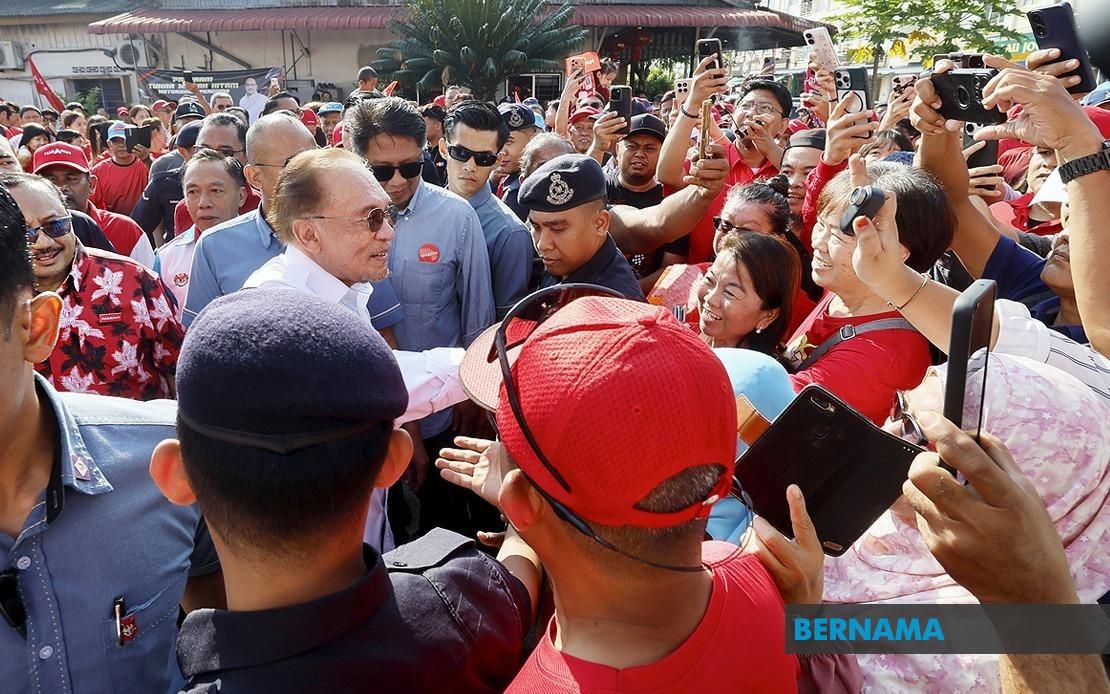
Prime Minister Datuk Seri Anwar Ibrahim reconnected with an elderly couple whose determination to meet him has resonated with voters across the country. During a campaign programme in Senggarang on Wednesday, Anwar took time to personally greet Abdul Razak Pelangga, aged 86, and his wife Jamilah Samsudin, 64, who became widely recognised after their unconventional journey to see him just days earlier.
The couple's story gained traction after Abdul Razak pedalled a trishaw for nearly one kilometre to fulfil his wife's heartfelt wish of meeting the Prime Minister face-to-face. What began as a private family mission last Sunday evolved into a symbol of grassroots political participation in Malaysia. The incident underscores how personal, human moments can transcend the usual machinery of political campaigns, creating genuine connections between leaders and constituents.
At the "Yok! Meriahkan Johor! Undi Harapan" event in Senggarang, the Prime Minister engaged in a light-hearted exchange with Abdul Razak, playfully commenting on the octogenarian's impressive physical capability to propel the trishaw himself. The interaction captured the warmth that Anwar brought to the encounter, acknowledging not just the couple's presence but their meaningful sacrifice to support his leadership.
Anwar's gesture of personally seeking out the couple to thank them for their support carries significance beyond electoral optics. In an era where political engagement increasingly occurs through digital platforms and mass rallies, the Prime Minister's decision to honour this elderly pair emphasises the importance of individual voters and their stories. The moment reflects a conscious effort to remind Malaysians that their commitment to the democratic process—no matter how small it may seem—matters to their national leadership.
The broader context is crucial: Johor has been a testing ground for Pakatan Harapan's appeal among voters since the 2022 general election. The state, with its mixed urban and rural demographics, represents the coalition's ability to maintain momentum and build deeper connections with communities beyond urban centres. An 86-year-old willing to pedal a trishaw in the heat symbolises enthusiasm that transcends typical voter mobilisation efforts, suggesting genuine grassroots support rather than manufactured enthusiasm.
The campaign event itself drew several prominent figures from the Pakatan Harapan coalition. Datuk Fahmi Fadzil, the Communications Minister and PH Communications director, was present alongside three PH candidates: Onn Abu Bakar for Senggarang, Mohd Khuzzan Abu Bakar for Semerah, and Felicia Poh Rui Ling for Penggaram. Their collective presence underscored the coalition's investment in retaining and expanding its foothold in Johor, a state that has historically shifted between different political alignments.
The timing of this reunion matters considerably. The Johor state election is scheduled for Saturday, with early voting having already concluded last Tuesday. In the final stretch of campaigning, moments of authentic human connection become particularly valuable. They provide campaign narratives that extend beyond policy announcements and political rhetoric, offering voters stories they can relate to and remember when casting their ballots.
For Malaysian observers and analysts, the Abdul Razak and Jamilah incident illustrates a broader trend in contemporary politics: the power of unexpected, unscripted moments that demonstrate a leader's accessibility and willingness to engage with ordinary citizens. Unlike carefully choreographed photo opportunities, the trishaw couple's journey emerged organically from their personal motivation, lending it credibility that manufactured encounters cannot replicate.
The story also carries regional implications. In an era where populism and anti-establishment sentiment have reshaped electoral outcomes across Southeast Asia, Anwar's approach of acknowledging individual contributions—even those as humble as an elderly couple's trishaw ride—addresses a common grievance that ordinary people feel disconnected from political power structures. It suggests a model where national leadership remains grounded in personal accountability to citizens.
For Pakatan Harapan, the broader election contest in Johor will test whether these moments of authentic connection translate into sustained electoral support. The state has 56 state seats, and the coalition's performance here will provide crucial indicators about its viability for future national elections. An 86-year-old pedalling a trishaw encapsulates the kind of voter motivation that campaigns depend upon.
Beyond the election cycle, Abdul Razak and Jamilah's story serves as a reminder that political engagement in Malaysia remains deeply personal for many citizens. Despite modernisation and digital connectivity, face-to-face meetings with leaders retain profound symbolic value, particularly in communities where traditional forms of political participation remain important.
The reunion between the Prime Minister and this elderly couple concludes one chapter of a narrative that began spontaneously in Senggarang. Whether Saturday's election results will determine if this moment becomes a memorable turning point in Johor's political trajectory, or simply a touching anecdote from the campaign trail, remains to be seen. What is clear is that for Abdul Razak and Jamilah, their trishaw journey succeeded in its original aim—creating a direct connection with Malaysia's leader.

