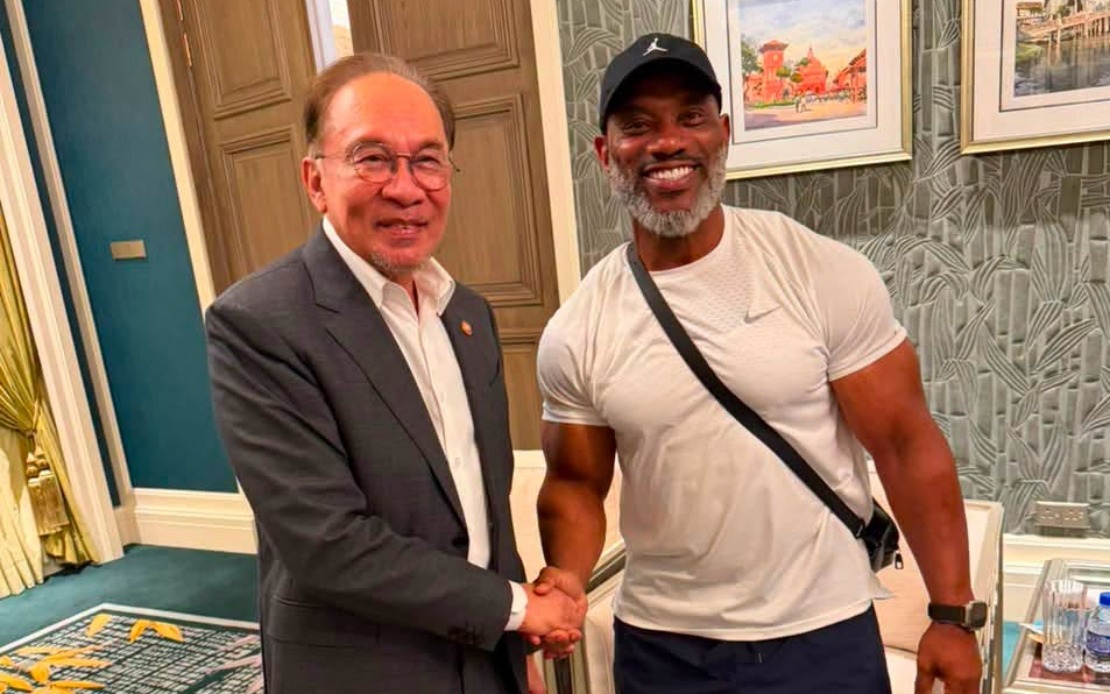
Prime Minister Datuk Seri Anwar Ibrahim took to social media on July 1 to chronicle an encounter with one of professional bodybuilding's most decorated athletes, Dexter Jackson, capturing a moment that blended political leadership with the world of competitive fitness. The meeting, documented through a photograph showing the two men shaking hands, offered a rare glimpse into Anwar's personal interests and his engagement with international sporting figures beyond Malaysia's borders.
Jackson's credentials in the bodybuilding world are formidable and span more than three decades of competition at the highest levels. The 56-year-old athlete claimed the prestigious Mr Olympia title in 2008, cementing his place among the sport's elite. Beyond that singular achievement, Jackson has become synonymous with consistent excellence, particularly demonstrated through his dominance in the Masters Mr Olympia category, which he won in 2012 at an age when most competitors have already retired from professional competition.
Perhaps Jackson's most impressive record lies in his relationship with the Arnold Classic, the second-most prestigious bodybuilding competition globally. With nine victories at this event, Jackson holds the all-time record for Arnold Classic titles, a distinction that underscores his longevity and adaptability across different competitive formats and judging criteria. This accomplishment is particularly noteworthy given that the Arnold Classic attracts the world's most elite bodybuilders and has been held annually since 1989, making Jackson's nine wins a testament to sustained excellence across nearly two decades of peak competition.
Anwar's response to meeting Jackson carried a distinctly informal and self-deprecating tone, particularly in his Facebook post where he acknowledged the inspiration drawn from the athlete's physique and achievements. His comment about the meeting being a prompt to "hit the gym" reflected the kind of lighthearted engagement that has increasingly characterized social media interactions by Malaysian political figures seeking to appear approachable and relatable to their constituents. Such moments, while seemingly trivial in the broader context of governance, serve to humanize leadership and demonstrate engagement with diverse aspects of popular culture and international personalities.
The context of this meeting, though not explicitly detailed in available information, raises interesting questions about Jackson's visit to Malaysia and the nature of his engagement with Malaysian leadership. International sporting figures often visit countries for promotional events, speaking engagements, or fitness expos, creating opportunities for high-profile meetings with government officials. Such encounters frequently serve mutual purposes: they provide international athletes with diplomatic recognition and media coverage within the host nation, while offering political leaders opportunities to demonstrate cultural awareness and connection to global phenomena that resonate with their constituents.
Bodybuilding and fitness culture have experienced significant growth across Southeast Asia in recent years, particularly among younger demographics seeking alternative career paths and lifestyle pursuits. Malaysia, as a regional economic hub with a growing fitness industry, has naturally become a destination for international fitness personalities looking to expand their influence and commercial opportunities. The presence of world-class competitors like Jackson in the region signals the maturation of bodybuilding as both a sporting discipline and a commercial enterprise capable of attracting international talent.
Anwar's public acknowledgment of his meeting with Jackson, coupled with his self-aware humor about his own fitness regimen, demonstrates a political communication strategy increasingly common among contemporary leaders worldwide. By engaging with popular culture and international figures in accessible ways, political leaders create content that circulates beyond traditional news channels, reaching audiences through social media platforms where younger voters and internationally-minded citizens congregate. This approach to political communication reflects the evolving expectations of modern electorates regarding their leaders' public personas and engagement styles.
The broader significance of such meetings extends beyond the immediate photo opportunity. International athlete visits often catalyze discussions about Malaysia's hosting capabilities for major sporting events, the state of the nation's fitness infrastructure, and the country's ability to attract world-class talent and competitions. When coupled with visits from prominent political figures, these interactions signal governmental support for the sports and fitness sectors, potentially influencing investment decisions and event hosting considerations by international sporting organizations.
Jackson's career trajectory also reflects broader trends in professional bodybuilding, where athletes are increasingly competing at elite levels well into their fifties and sixties, challenging traditional age-related retirement assumptions in sport. His Masters Mr Olympia victory in 2012, achieved at age 46, demonstrated that elite-level bodybuilding had evolved to accommodate competitive categories for aging athletes, allowing them to remain active competitors rather than transitioning exclusively into commentary or coaching roles. This evolution has profound implications for how fitness and athleticism are understood across different age groups globally.
From a Malaysian perspective, the encounter highlights the nation's growing role as a destination for international sporting personalities and the increasing intersection between government, sports, and popular culture. As Malaysia continues developing its reputation as a regional center for various sporting and fitness-related activities, such high-profile meetings serve as informal endorsements of the country's capacity to host international-caliber events and attract world-renowned personalities. The informal nature of Anwar's public commentary also underscores how political leadership in the digital age frequently engages with the electorate through humor and relatability rather than purely formal protocols.

