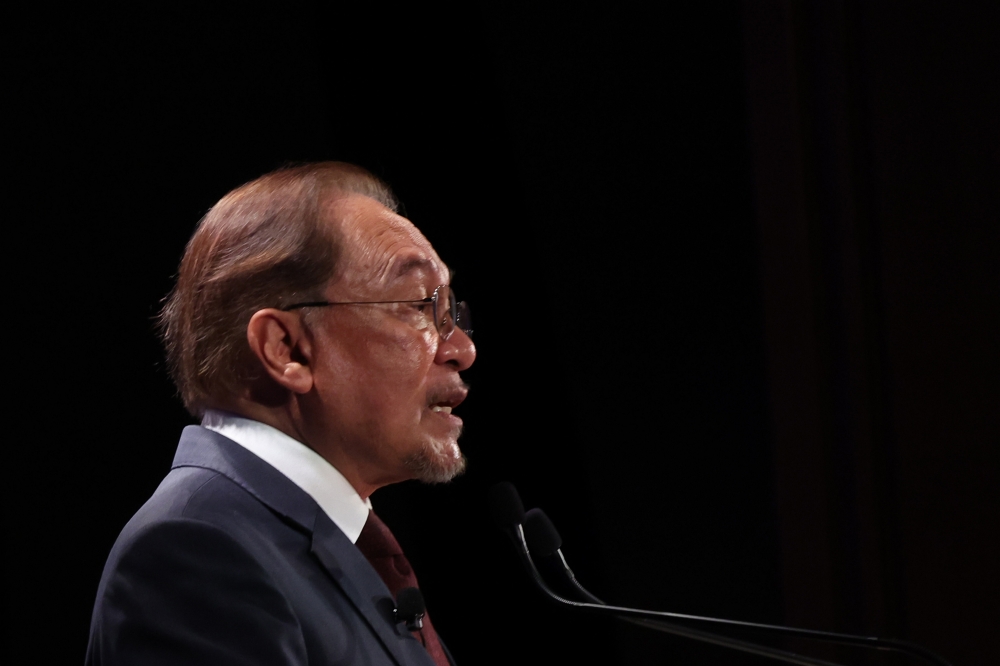
Prime Minister Datuk Seri Anwar Ibrahim has taken legal action against Parti Islam Se-Malaysia (PAS) deputy president Tuan Ibrahim Tuan Man, initiating a high-profile defamation suit that underscores mounting tensions within Malaysia's political establishment. The lawsuit, filed on August 11 in Kuala Lumpur, marks an escalation in the simmering dispute between the prime minister and senior figures within the opposition Islamic party, raising questions about the direction of political discourse during a period when Malaysia's government navigates significant policy challenges and international scrutiny.
The decision to pursue court action represents a departure from the typical political theatre of parliamentary exchanges and public statements, suggesting that Anwar considers the remarks sufficiently grave to warrant formal legal remedies. Such litigation carries substantial implications beyond the immediate parties involved, setting precedents for how political figures are held accountable for public statements and establishing parameters for acceptable discourse within Malaysia's polarized political environment. The case also highlights the precarious state of inter-party relations, particularly between the government coalition and PAS, which has maintained an increasingly vocal opposition stance since the 2022 general election.
Tuan Ibrahim, who serves as one of the most prominent voices within PAS, has been instrumental in shaping the party's messaging and public positioning. His role as deputy president places him among the Islamic party's top leadership hierarchy, making the legal confrontation significant for party dynamics and internal decision-making processes. The alleged defamatory remarks reportedly targeted Anwar's personal integrity and public standing, assertions that the prime minister has deemed sufficiently damaging to pursue judicial intervention rather than relying solely on political rebuttal or media responses.
From a legal perspective, defamation suits filed by public figures operate under distinct frameworks in Malaysian law, requiring demonstration of false statements made with knowledge of their falsity or reckless disregard for truth. The burden of proof becomes particularly stringent when the plaintiff is a prominent political figure, reflecting judicial recognition of the heightened public interest in political commentary and the necessity of preserving robust democratic discourse. Courts must balance protecting individual reputations against safeguarding the public's right to scrutinize and criticize political leaders, a tension that characterizes democracies worldwide.
The timing of the lawsuit warrants consideration within the broader context of Malaysian politics. Recent years have witnessed declining institutional trust and increasing polarization, with opposition parties frequently levelling criticism at the government on various fronts including economic management, governance, and policy implementation. PAS has positioned itself as an ideological alternative to the ruling coalition, and disputes between the prime minister's faction and the Islamic party often reflect deeper philosophical differences regarding Malaysia's constitutional framework and religious affairs.
Political analysts note that such legal proceedings can reshape political narratives and create tactical advantages or disadvantages depending on public perception and judicial outcomes. For Anwar, pursuing defamation action sends a signal that he will defend his reputation through legal channels, potentially deterring similar comments from other political opponents. Conversely, critics might argue that litigation represents an attempt to restrict political opposition and suppress legitimate criticism, framing the case as an example of power being wielded to silence dissenting voices.
The case will likely draw significant media attention and public discourse, with both the government and opposition mobilizing their respective support bases. PAS supporters may view the lawsuit as political persecution, reinforcing narratives of systemic bias against the party, while government supporters may interpret it as appropriate recourse against alleged character assassination. Such polarized reactions reflect Malaysia's fractured political landscape, where events are typically interpreted through partisan lenses rather than assessed on narrower legal or factual merits.
For Malaysian civil society and democratic institutions, the lawsuit raises important questions about the boundaries of political speech. While defamation laws exist to protect individuals from false and harmful statements, excessive reliance on litigation as a political tool can create a chilling effect on legitimate criticism and public debate. Journalists, activists, and opposition politicians may face heightened caution when commenting on government figures, potentially narrowing the scope of democratic discourse and weakening mechanisms of political accountability that depend upon open, vigorous debate.
The outcome of the defamation suit will carry implications extending beyond Anwar and Tuan Ibrahim. If successful, the case could establish precedent for other political figures similarly aggrieved by remarks they consider defamatory, potentially leading to a cascade of litigation within political circles. Conversely, if dismissed or decided against Anwar, it might be interpreted as judicial validation of opposition parties' rights to vigorously criticize government leadership, reinforcing protections for political speech even when statements prove uncomfortable or unwelcome to those in power.
Regionally, Malaysia's political dynamics remain closely watched by observers in Southeast Asia, where democratic transitions and inter-party relations continue evolving across the region. The lawsuit between the prime minister and PAS deputy president offers insights into how Malaysian institutions manage political competition and resolve disputes when party politics becomes deeply personal. The case exemplifies broader regional challenges regarding democratic governance, institutional independence, and the preservation of meaningful political competition in an environment where religious and ideological divisions frequently intersect with questions of political power and leadership legitimacy.

