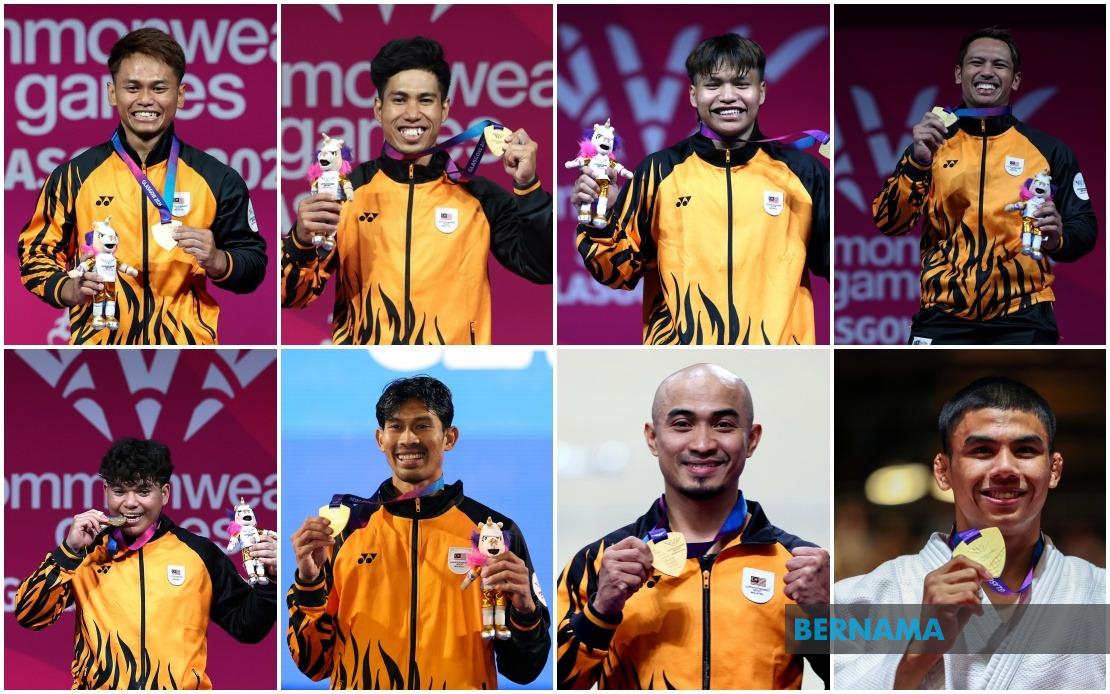
Prime Minister Datuk Seri Anwar Ibrahim has extended formal congratulations to Malaysia's entire sports delegation for their determined performances at the 2026 Glasgow Commonwealth Games, celebrating the nation's athletes for competing with distinction on the international stage. In remarks shared through social media, the premier acknowledged the collective effort that resulted in Malaysia finishing 10th in the overall medal standings with a haul of 16 medals from the Scottish host city.
The Prime Minister's statement underscores the significance the government places on sporting achievement as a reflection of national pride and capability. By specifically commending the "fighting spirit" demonstrated by Malaysian competitors, Anwar signalled that Malaysia views sporting participation not merely as a quest for medals, but as an opportunity to showcase the nation's resolve and competitive character to the global community. This framing aligns with Malaysia's broader aspirations to establish itself as a serious contender in regional and international sporting competitions.
Beyond the athletes themselves, Anwar's message encompassed a wider ecosystem of support that underpins competitive sports. He explicitly thanked coaches who provide technical expertise and strategic direction, officials who manage competitions and ensure fair play, and support staff whose behind-the-scenes contributions often go unrecognized. This comprehensive acknowledgement reflects a modernised understanding of sports administration that recognizes individual talent alone cannot deliver results without robust institutional backing and professional support systems.
The Prime Minister also extended gratitude to the Malaysian public, specifically referencing those who offered prayers and well-wishes for the contingent's success. This invocation of spiritual and community support demonstrates how Malaysia, as a Muslim-majority nation with diverse religious communities, channels collective goodwill through multiple channels towards shared national objectives. The reference to prayers highlights how sports competition in Malaysia transcends secular dimensions and incorporates spiritual dimensions that resonate with the population's values.
Malaysia's 10th-place finish at Glasgow represents a particular benchmark in the nation's Commonwealth Games trajectory. The medal tally of 16 reflects consistent competitiveness across multiple sporting disciplines, suggesting that Malaysia's sports development programmes have achieved a degree of stability and effectiveness. Commonwealth Games participation remains a cornerstone of Malaysia's sporting calendar, offering valuable experience for athletes preparing for Olympic campaigns and other major international events.
The timing and tone of the Prime Minister's statement carry political significance within Malaysia's domestic context. By visibly celebrating sporting achievement, the government reinforces narratives of national progress and effective governance. Sports diplomacy and public recognition of athletes serve as soft power tools, allowing nations to build international goodwill while simultaneously galvanizing domestic support for sports investment and development initiatives.
For Malaysian athletes, such high-level recognition provides validation and encouragement essential for sustaining motivation in competitive sports careers. The acknowledgement from the nation's highest political office signals that sporting excellence aligns with broader national priorities and receives state backing. This visibility can enhance sponsorship opportunities and public profile for successful athletes, contributing to their sustainability as sports professionals.
The Commonwealth Games framework itself holds particular relevance for Malaysia and other participating nations in the region. Unlike the Olympics, which demand enormous infrastructure investments and organizational capacity, the Commonwealth Games maintains a more accessible scale while preserving international prestige. For emerging sporting nations in Southeast Asia, including Malaysia, these Games provide a more realistic pathway to competitive success and medal accumulation compared to global events dominated by wealthy, heavily-subsidized sporting superpowers.
Malaysia's performance at Glasgow 2026 also warrants consideration within the Southeast Asian sporting context. As the region's largest economy by nominal GDP and a nation with established sports infrastructure and talent identification systems, Malaysia traditionally competes strongly within Asia. The 10th-place Commonwealth Games finish reflects Malaysia's positioning within a global competitive hierarchy that extends beyond regional comparisons, indicating the nation's athletes operate at competitive levels recognizable internationally.
Looking ahead, the government's formal recognition of Glasgow's performances establishes a platform for advocating continued investment in sports development. Anwar's statement implicitly underscores the argument that Malaysian sports require sustained financial commitment, talent nurturing programmes, and infrastructure development to maintain and improve competitive standings. The message appeals to policymakers and budget allocators to view sports funding not as discretionary expenditure but as essential investment in national capability and international standing.
The statement also reflects Malaysia's broader engagement with Commonwealth Games as a network of shared sporting values and competition. Commonwealth participation connects Malaysia with other English-speaking nations and former British Commonwealth members, creating diplomatic and cultural linkages through sport. These Games serve as forums where Malaysia's athletes represent not merely their nation but participate in a global sporting community with common institutional frameworks and shared historical traditions.

