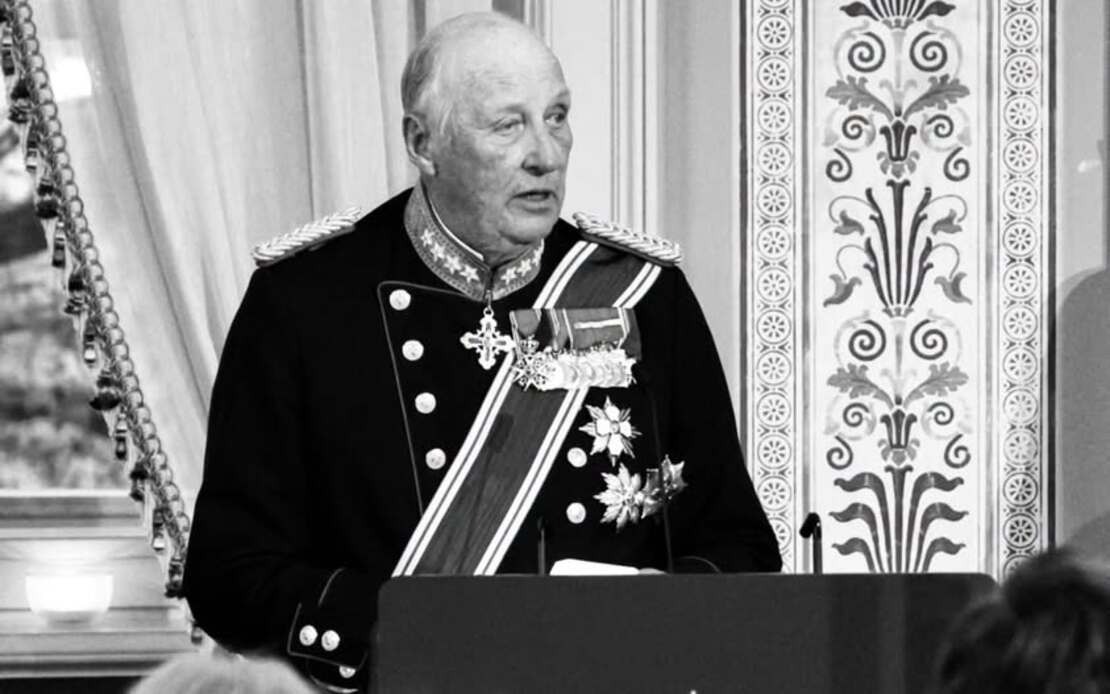
Prime Minister Datuk Seri Anwar Ibrahim has expressed Malaysia's deepest condolences to the Norwegian people following the death of King Harald V, who passed away on Friday at the age of 89. The Malaysian leader, speaking through a statement posted on social media, acknowledged the significant role the late monarch played in shaping modern Norway and highlighted qualities that resonate across nations committed to pluralistic governance.
King Harald V succumbed to his illness at Oslo's National Hospital, where he had been receiving medical treatment since mid-August. The Norwegian sovereign was undergoing cortisone therapy for hemolytic anemia, a blood disorder that ultimately contributed to his death. His extended hospitalisation had prompted widespread concern across Scandinavia and among international observers who recognised his symbolic importance to the Nordic kingdom.
In his condolence message, Anwar emphasised the late king's distinctive understanding of Norwegian national identity. Rather than defining the country through narrow ethnic or cultural parameters, Harald V had consistently championed a more expansive vision that encompassed citizens whose ancestries traced to Afghanistan, Pakistan, Poland, and numerous other nations. This inclusive philosophy represented a deliberate choice to reinforce social cohesion during periods of significant demographic change across Europe.
The Prime Minister drew particular attention to the late monarch's articulation of belonging and citizenship. Anwar highlighted how King Harald V had explicitly affirmed that Norwegians of diverse backgrounds possessed equal claims to national membership and dignity, rejecting any hierarchical ordering of who truly constituted Norwegian society. This stance carried profound implications for how established democracies navigate immigration, integration, and questions of national belonging—matters equally pertinent to Malaysia as a multiethnic, multireligious federation.
Anwar's framing of these remarks suggests deliberate resonance with Malaysia's own constitutional framework and national philosophy. The Prime Minister appears to have drawn a parallel between King Harald V's commitment to recognising the equal standing of all citizens and Malaysia's founding principles of shared civic identity transcending communal boundaries. Both nations, despite their different governance structures and historical trajectories, have grappled with the ongoing challenge of building cohesive polities from diverse populations.
Beyond questions of diversity and inclusion, Anwar specifically acknowledged King Harald V's personal commitment to constitutional duty and fidelity to oath. The late king's decades-long reign demonstrated consistent adherence to his coronation vows and the solemn responsibilities inherent in constitutional monarchy. This observation carries significance in Malaysia's political context, where debates about institutional integrity and the faithful execution of formal obligations regularly feature in national discourse.
The Prime Minister's emphasis on the weight of oath and the importance of honouring commitments appears targeted at both domestic and international audiences. Domestically, it reinforces expectations that holders of high office—whether monarchical, executive, or legislative—must demonstrate unwavering dedication to their mandates and to the constitutional frameworks that circumscribe their authority. Internationally, it signals Malaysia's regard for traditional institutions and principled governance that transcend partisan considerations.
Norway's royal family occupies a distinctive position within contemporary European politics. The Scandinavian kingdom, though not a member of the European Union, maintains close economic and security ties throughout the region and beyond. King Harald V's seven-decade reign witnessed Norway's transformation into a major oil producer and energy exporter, while the nation simultaneously developed comprehensive social welfare systems and democratic institutions. His personal stewardship during this period of profound national change earned him considerable respect both domestically and internationally.
The death of Harald V marks a significant transition in Nordic governance, with Crown Prince Haakon now positioned to assume the throne. The succession occurs amid broader questions about the role of constitutional monarchies in the twenty-first century and their capacity to embody national unity amid polarisation and social fragmentation. Malaysia's Prime Minister's invocation of these themes suggests ongoing diplomatic attention to how different governance models address contemporary challenges.
From a broader Southeast Asian perspective, Anwar's statement reflects Malaysia's consistent engagement with established democracies and constitutional frameworks beyond the region. The expression of sympathy for Norway's loss, coupled with substantive reflection on the late king's contributions to inclusive governance, demonstrates how Malaysia positions itself within networks of pluralistic nations committed to balancing tradition with progressive values. Such diplomatic gestures, while often ceremonial in nature, carry cumulative significance in building relationships based on shared commitments to dignity, inclusion, and constitutional legitimacy.
The passing of King Harald V closes a chapter in European history and prompts reflection on the qualities that enable societies to navigate profound social transformation while maintaining institutional stability and popular legitimacy. Anwar's focus on these dimensions suggests that Malaysian policymakers continue to study international examples of democratic governance and institutional longevity, particularly as Malaysia itself navigates complex questions of political reform and national reconciliation.

