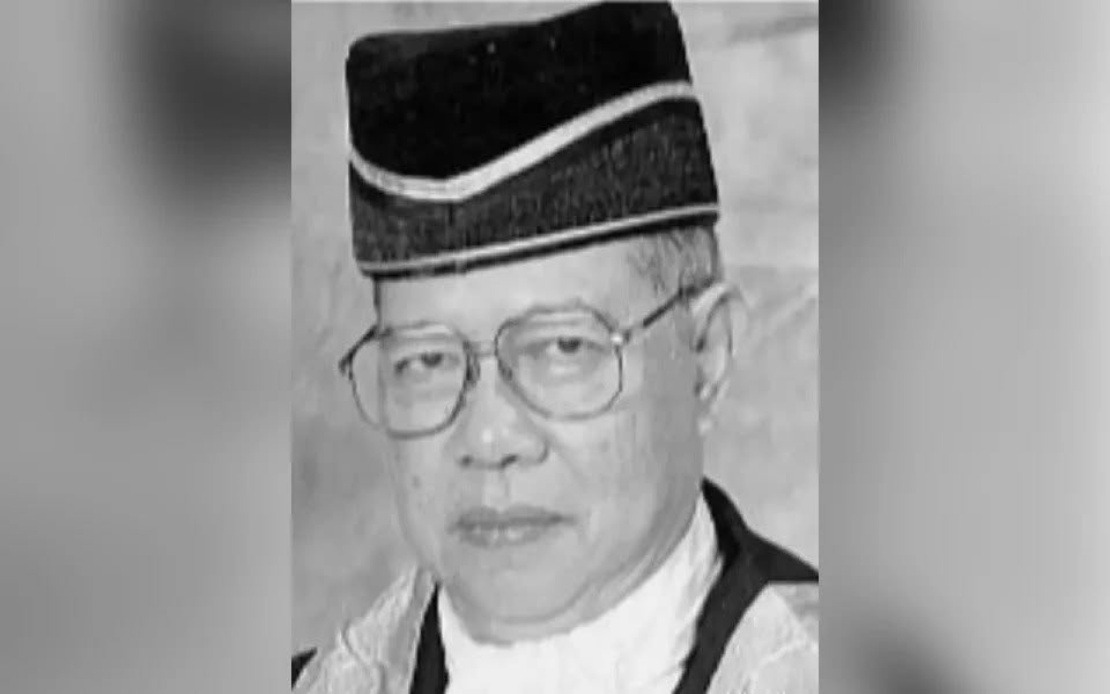
Prime Minister Datuk Seri Anwar Ibrahim has paid his respects to the family of former Chief Justice Tun Mohamed Eusoff Chin, who passed away on Wednesday morning. The distinguished jurist, who reached the age of 91, was subsequently laid to rest at the Section 9 Muslim Cemetery in Kota Damansara, concluding a lifetime of service to Malaysia's legal establishment.
Anwar took to social media to commemorate the former Chief Justice's legacy, highlighting the pivotal role Mohamed Eusoff played in advancing the nation's judicial institutions over decades of distinguished service. The Prime Minister's remarks underscore the respect accorded to one of Malaysia's most senior judicial figures, whose tenure at the apex of the judiciary spanned a transformative period for the nation's legal system.
Mohamed Eusoff held the position of Chief Justice from September 1994 through December 2000, making him Malaysia's second-highest judicial officer to occupy that office. His six-year mandate encompassed a critical juncture in the country's constitutional history, during which the judiciary faced considerable scrutiny and underwent significant structural reforms. His appointment and subsequent tenure represented an important chapter in the development of Malaysia's legal framework and institutional governance.
In his condolence message, Anwar emphasized that Mohamed Eusoff's enduring contributions to strengthening Malaysia's courts and legal apparatus would remain etched in the nation's collective memory. The Prime Minister noted that the former Chief Justice's work in consolidating judicial independence and institutional resilience had lasting implications for Malaysia's rule of law and constitutional development. Such recognition reflects the broader acknowledgment within Malaysia's political establishment of the judiciary's foundational role in democratic governance.
The passage of Mohamed Eusoff represents the gradual transition of Malaysia's senior judicial generation, many of whom served during the nation's formative decades as an independent state. His career trajectory through the legal profession and ultimately to the Chief Justice's office exemplifies the pathway undertaken by several prominent Malaysian jurists who shaped the country's constitutional jurisprudence and legal precedents during the late twentieth century.
Anwar concluded his public tribute by offering a traditional Islamic prayer on behalf of the deceased, specifically invoking divine forgiveness and mercy for Mohamed Eusoff and requesting that his soul be placed among the righteous. This gesture, common within Malaysian political practice when mourning prominent Muslim figures, reflected the customary observance of respect and religious propriety accorded to departed national figures of standing.
The death of former Chief Justice Mohamed Eusoff marks the conclusion of a professional trajectory that witnessed Malaysia's legal system navigate significant constitutional challenges, institutional reforms, and evolving standards of judicial practice. His era as Chief Justice coincided with increased public discourse surrounding judicial independence, constitutional interpretation, and the appropriate balance between the bench and executive branches of government. The institutional legacy he left behind continues to influence Malaysian jurisprudence and judicial philosophy.
For Southeast Asian observers and legal scholars, Mohamed Eusoff's passing represents the end of an important era within Malaysia's institutional development. The former Chief Justice's tenure occurred during a period when regional courts were increasingly asserting independence and establishing frameworks for judicial review that would influence legal development throughout the association. His contributions to Malaysian jurisprudence extended beyond national boundaries, as the principles established during his tenure informed legal discussions across the region.
The broader significance of recognizing Mohamed Eusoff's judicial service lies in understanding how Malaysia's legal establishment has evolved over recent decades. The transition from his generation of jurists to contemporary judicial leadership reflects shifting approaches to constitutional interpretation, human rights jurisprudence, and the judiciary's institutional role within Malaysia's governmental structure. Contemporary legal discourse in Malaysia continues to reference and build upon foundations established during periods of stewardship such as his.

