Prime Minister Datuk Seri Anwar Ibrahim has expressed his profound sadness over a fatal traffic accident that claimed six lives along Jalan Karak Lama in Bentong, Pahang. Speaking through a statement posted on social media, Anwar conveyed his sympathies alongside those of his wife, Datuk Seri Dr Wan Azizah Wan Ismail, to the grieving families affected by the tragedy. The gesture, though customary in such circumstances, underscored the gravity of road safety issues that continue to plague Malaysian highways.
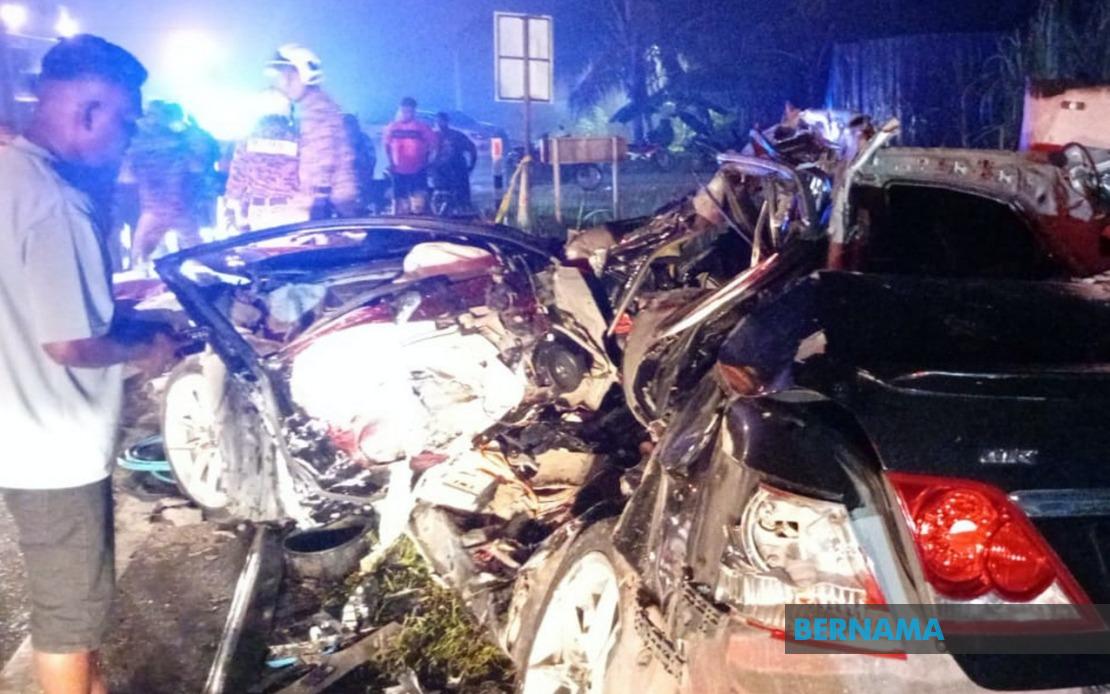
The fatal collision occurred early in the morning at approximately 4 am, when a Toyota Vios travelling from Kuantan towards Kuala Lumpur collided with a one-tonne lorry near Klink Desa Jambu Rias on the route heading to Temerloh. All six occupants of the car—the driver and five passengers—were pronounced dead at the scene. The victims have been identified as V. Mugilan, 25, the vehicle's driver, alongside passengers K. Dineshvaran, 22, K. Alaganathan, 21, A. Kanabati Raja, 19, S. Kiisven, 17, and M. Paranthaman, 16. The lorry driver, a 31-year-old man, sustained serious injuries and remains under medical care.
According to preliminary police investigation findings, the sequence of events leading to the collision suggests that the Toyota Vios veered across the centre line while descending a hill on Jalan Karak Lama. This sudden change of trajectory brought the car into direct contact with the oncoming lorry. The precise circumstances that caused the vehicle to drift across lanes—whether due to driver fatigue, mechanical failure, weather conditions, or other factors—remain under official scrutiny as investigators piece together the incident.
In his statement, Anwar directed attention toward the broader implications of such tragedies. He emphasised that incidents of this nature serve as sobering reminders that road safety cannot be regarded as a peripheral concern but must be prioritised across all segments of society. The Prime Minister's invocation of the incident as a cautionary moment reflects an ongoing tension in Malaysia's approach to highway safety—acknowledging dangers through high-profile statements while grappling with systemic challenges that continue to produce casualties year after year.
The Bentong corridor, situated along the Kuantan-Kuala Lumpur route, represents a critical transportation artery for both commercial and personal travel. The stretch of Jalan Karak Lama in this region is notorious among regular users for its challenging terrain, including steep descents and curves that demand heightened driver attention. The frequency of accidents on this particular route has long been a matter of concern for transport authorities and safety advocacy groups, who have repeatedly called for enhanced maintenance, improved signage, and stricter enforcement of speed limits.
The ages of the victims, ranging from 16 to 25 years, add a particularly tragic dimension to this incident. The presence of a teenager among the deceased underscores how road accidents affect not only individual families but also represent a broader loss of young lives in Malaysia. Statistics on fatal road accidents involving young drivers and passengers have remained stubbornly high, reflecting gaps in driver education, vehicle safety standards, and compliance with traffic regulations among younger road users.
Preliminary investigations have not yet disclosed whether speed, road conditions, vehicle maintenance, or driver state represented the primary contributing factor. However, the apparent loss of vehicle control while navigating a downhill section suggests that understanding the precise trigger will be essential for informing preventive measures. Such investigations typically examine factors including brake condition, tyre quality, road surface conditions, visibility, and driver alertness—each of which could have played a role.
Anwar's call for renewed commitment to road safety aligns with broader government initiatives, though implementation and enforcement have remained inconsistent. Malaysia continues to rank among nations with elevated road fatality rates relative to its development status, a problem exacerbated by a combination of infrastructure challenges, driver behaviour patterns, and vehicle-related issues. The loss of six lives in a single incident represents a statistically significant event that demands serious attention from policymakers and enforcement agencies.
The incident also highlights the vulnerability of passengers who have no direct control over vehicle operation. Five of the six victims were passengers who placed their trust in the driver's competence and judgment. This dimension underscores why road safety must be understood not merely as an individual responsibility but as a collective obligation—infrastructure must be designed safely, vehicles must be maintained properly, and drivers must be adequately trained and monitored for compliance with regulations.
Moving forward, this tragedy will likely prompt renewed calls for infrastructure improvements on the Jalan Karak Lama corridor, including enhanced safety barriers, improved visibility measures, and potentially revised speed restrictions in high-risk zones. The involvement of both a passenger vehicle and a commercial lorry also raises questions about whether separate safety protocols for different vehicle types might be warranted. Emergency response capabilities along remote highway sections will similarly come under scrutiny as authorities assess whether faster medical intervention could have altered outcomes.

