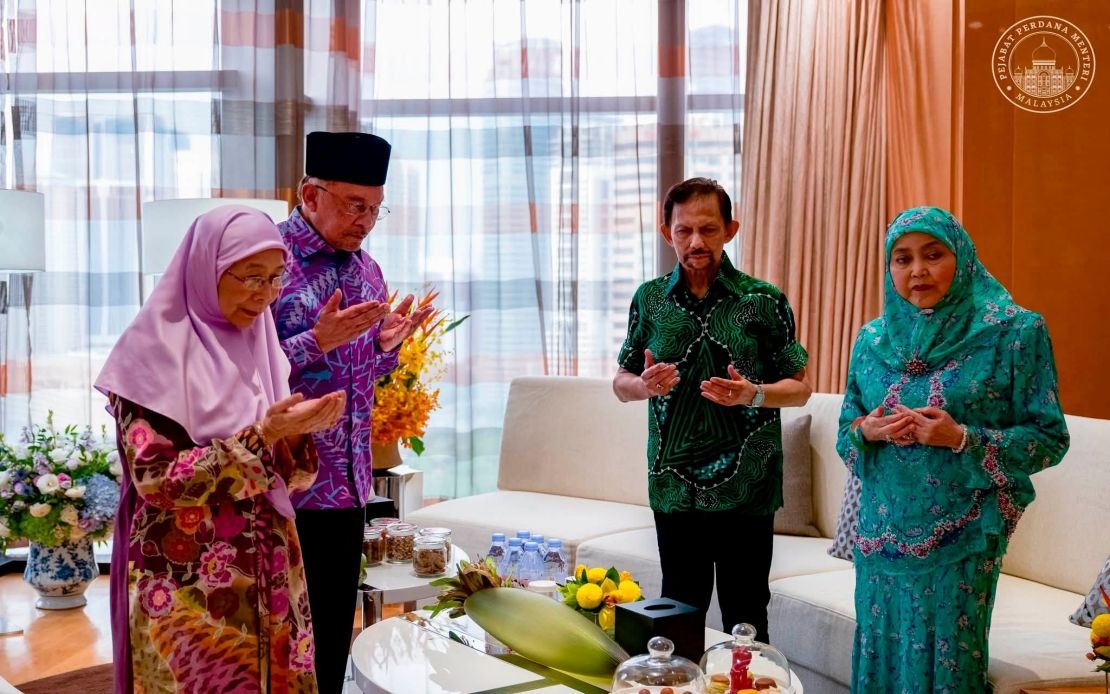
Prime Minister Datuk Seri Anwar Ibrahim has extended warm birthday greetings to Sultan Hassanal Bolkiah of Brunei as the monarch reached his 80th milestone on July 15, marking a significant occasion in the annals of Brunei's royal history. Through a Facebook message released on behalf of the Malaysian Government and its people, Anwar conveyed heartfelt wishes for the Brunei ruler's continued health and prosperity.
The Prime Minister's tribute underscores the diplomatic importance Malaysia places on its relationship with its smaller neighbour. Anwar articulated the hope that Sultan Hassanal Bolkiah would continue to lead Brunei Darussalam with the wisdom and prudence that have long characterised his reign, emphasising the spiritual dimension of the sentiment through his invocation of "Insya-Allah". This ceremonial acknowledgment reflects the protocol observed between neighbouring Southeast Asian nations, where leaders regularly mark significant milestones in each other's public lives.
Sultan Hassanal Bolkiah's tenure as Brunei's sovereign represents one of the region's longest continuous reigns. Born on July 15, 1946, in Bandar Brunei, now known as Bandar Seri Begawan, he ascended to the throne in 1967 as the 29th Sultan of Brunei, having inherited the position through the nation's constitutional monarchy system. His seven decades of life span a transformative period not only for Brunei itself but for the entire Southeast Asian region, witnessing dramatic shifts in geopolitics, economics, and social development.
The Sultan's status has evolved considerably in recent years. Following the death of Queen Elizabeth II in September 2022, Sultan Hassanal Bolkiah obtained a remarkable distinction: he became the world's longest-reigning monarch currently serving on any throne. This accolade positions Brunei, a small oil-rich sultanate with a population of around 450,000, at the centre of an unusual historical moment. The transition elevated the Brunei monarch to a position of symbolic significance within global monarchical circles, even as the nation itself maintains a relatively low international profile.
The bilateral relationship between Malaysia and Brunei carries both historical depth and contemporary relevance. The two nations share Islamic heritage, maritime boundaries in the South China Sea, and overlapping economic interests centred on energy and regional trade. Brunei's strategic location along critical shipping lanes and its hydrocarbon reserves make it geopolitically significant despite its modest size. Malaysia, as the larger and more economically diversified neighbour, has long sought to maintain cordial relations with Brunei, recognising the sultanate's role in regional stability and the Association of Southeast Asian Nations (ASEAN) framework.
Anwar's message specifically invoked the enduring partnership between the two countries, expressing the desire that "ties and cooperation between Malaysia and Brunei Darussalam continue to be strengthened for the benefit of both countries and their people". This phrasing suggests an intentional diplomatic strategy to reinforce connections across multiple dimensions, whether economic, cultural, or security-related. For Malaysian policymakers, maintaining stable relations with all ASEAN members remains essential to the nation's regional position.
The 80th birthday celebration also provides a moment for reflection on Sultan Hassanal Bolkiah's significant contributions to regional affairs. Throughout his reign, he has navigated Brunei through periods of economic transformation, particularly managing the complexities of oil dependency and pursuing economic diversification through initiatives like the vision to develop a halal industry. His longevity on the throne has provided continuity to Brunei's governance during an era marked by considerable global instability and regional realignments.
For Malaysia specifically, the gesture of public recognition through a high-level government communication serves multiple purposes. It reinforces Kuala Lumpur's commitment to multilateral cooperation within ASEAN, signals respect for established institutions and leadership, and maintains the diplomatic courtesies that lubricate regional relations. In an era when regional tensions occasionally surface over maritime disputes, energy competition, and differing strategic partnerships, these ceremonial acknowledgments help maintain the goodwill necessary for productive dialogue.
Sultan Hassanal Bolkiah's milestone birthday occurs against the backdrop of evolving geopolitical pressures in Southeast Asia. The region continues to grapple with great power competition, maritime security challenges, and post-pandemic economic recovery. Within this context, the stability and institutional continuity represented by a long-serving monarch take on added significance. Brunei's steady leadership has allowed the sultanate to maintain its strategic neutrality and focus on intra-ASEAN cooperation.
The Prime Minister's congratulatory message also reflects Malaysia's broader approach to regional diplomacy under Anwar's leadership. Since assuming office, Anwar has emphasised multilateral engagement, economic cooperation, and respect for all nations within the regional architecture. The acknowledgment of Sultan Hassanal Bolkiah's birthday fits within this framework of strengthening Malaysian ties across the region and reinforcing ASEAN's collective identity.
Looking forward, Malaysia and Brunei will likely continue their cooperation across several sectors, including trade, tourism, education, and security. The 80th birthday milestone provides an opportune moment for both nations to reaffirm their commitment to this partnership and consider avenues for deeper engagement. For Malaysian observers, the maintenance of strong bilateral relations with Brunei contributes to the broader stability and prosperity of Southeast Asia, ensuring that smaller nations maintain their voice and relevance within regional decision-making processes.

