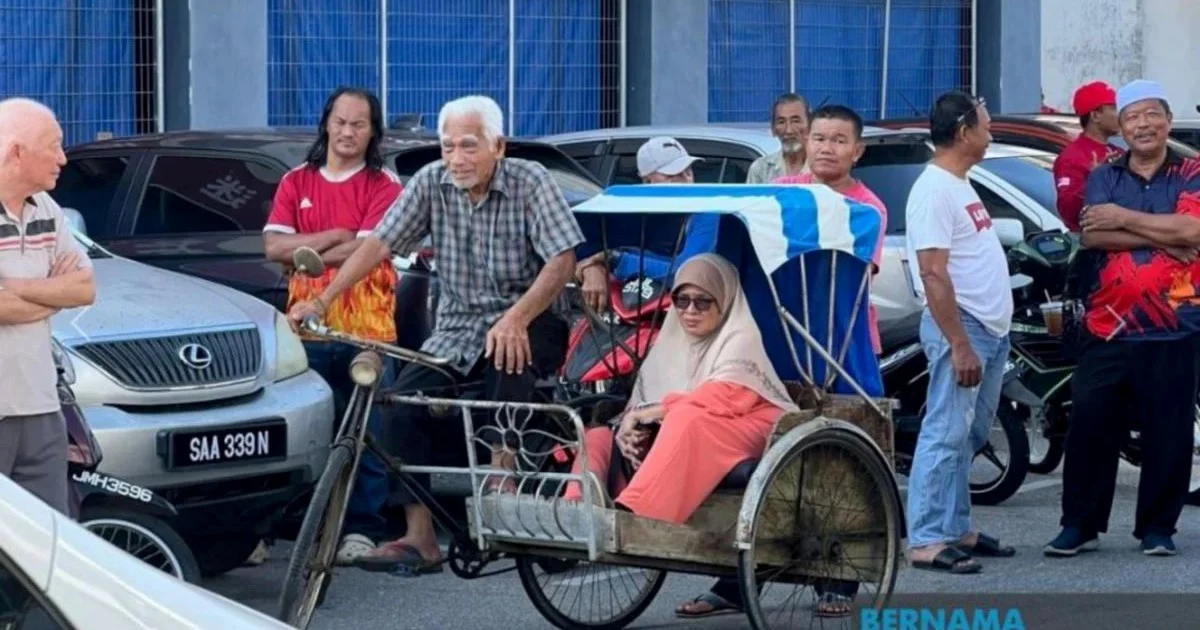
Prime Minister Datuk Seri Anwar Ibrahim has publicly expressed his appreciation for an 86-year-old trishaw operator who made the remarkable effort to pedal nearly a kilometre on his vehicle to meet him, driven by his wife's heartfelt wish to see the nation's leader in person. The gesture underscores the enduring appeal of personal connection in Malaysian public life and the willingness of ordinary citizens to go to extraordinary lengths for meaningful encounters.
The incident reflects a broader pattern in Malaysia where leaders and constituents maintain relatively direct lines of engagement. Unlike some democracies where political figures operate behind layers of security and intermediaries, Malaysian politics has traditionally allowed space for these spontaneous, unfiltered interactions. The trishaw rider's determination to bridge that gap speaks to a cultural expectation that public figures should remain accessible to the populace, regardless of age or circumstance.
Trishaw operators represent a distinctive segment of Malaysia's informal economy and urban heritage. These pedal-powered vehicles, once the primary mode of public transportation in Malaysian cities, have largely given way to motorcycles, taxis, and ride-sharing services. Yet they persist in certain neighbourhoods and tourist areas, operated primarily by elderly men who have spent decades in the trade. The fact that this 86-year-old was still actively pedalling his trishaw demonstrates the economic necessity that keeps many senior citizens working well into their later years, often without adequate pension coverage or social safety nets.
The PM's acknowledgment of this individual effort carries multiple implications for Malaysian society. It validates the experiences and dignity of working-class seniors, particularly those in the informal sector who frequently remain invisible in policy discussions. By publicly thanking the trishaw rider, Anwar essentially elevates his story from an anecdotal curiosity to a matter of national recognition, implicitly endorsing the values of perseverance and dedication that the man embodied.
The wife's wish to see the Prime Minister in person adds another dimension to this narrative. It suggests that despite the prevalence of media coverage, social media updates, and televised appearances, many Malaysians still place significant value on direct, unmediated encounters with their leaders. This preference for face-to-face interaction persists across generations and demonstrates that digital communication, however prevalent, has not entirely replaced the human desire for physical presence and authentic connection.
For elderly Malaysians particularly, such moments may carry special significance. Having lived through multiple administrations and witnessed the nation's transformation from British colony to independent state, senior citizens often possess a distinctive perspective on leadership. Their desire to see contemporary leaders reflects both continuity with their own era of politics and a curiosity about who steers the nation forward. The trishaw rider's wife's request encapsulates this intergenerational interest in the country's governance.
The incident also touches on questions of urban accessibility and inclusion. That an elderly man felt compelled to manually pedal a trishaw for nearly a kilometre raises implicit questions about whether Malaysia's public spaces and infrastructure adequately accommodate senior citizens. The ease with which he was able to reach the Prime Minister despite his age stands in contrast to the daily struggles many seniors face navigating urban environments designed with younger, more mobile populations in mind.
Trishaw riding itself, particularly for an octogenarian, requires considerable physical stamina and skill. The fact that the 86-year-old maintained sufficient health and strength to undertake this journey suggests either exceptional vitality for his age or genuine desperation to fulfil his wife's wish. Either interpretation speaks to the resilience of Malaysia's working elderly and their commitment to their families' happiness.
The PM's public gratitude also serves a diplomatic function within Malaysian society. By acknowledging ordinary citizens' efforts and aspirations, political leaders reinforce their claim to represent all segments of the population, not merely the wealthy or educated elite. In an era of widening income inequality and growing urban-rural disparities, such gestures hold symbolic weight beyond their immediate context.
Moreover, this encounter illustrates how Malaysian politics operates through networks of personal relationships and informal channels. Unlike more rigid bureaucratic systems, the accessibility that allowed the trishaw rider to reach Anwar reflects the comparative openness of Malaysia's political culture, though this accessibility varies significantly depending on one's social standing, race, religion, and connection to political networks.
The gratitude Anwar expressed will likely resonate across multiple audiences. For senior citizens, particularly those in precarious economic situations, it represents validation of their existence and worth in a society that often marginalizes the elderly. For workers in the informal economy, it acknowledges their contribution to Malaysia's social fabric. For the general public, it portrays their Prime Minister as someone accessible to ordinary people, not sequestered in ivory towers.
This simple act of a trishaw rider fulfilling his wife's wish, coupled with the PM's reciprocal expression of thanks, encapsulates elements that define Malaysian society: the persistence of traditional modes of living alongside modernity, the continued importance of personal connections in political life, the resilience of working-class elderly, and the enduring belief that barriers between leaders and citizens remain permeable. It is a reminder that even in an increasingly complex, digitized world, direct human contact and mutual acknowledgment retain profound significance in shaping national identity and civic culture.

