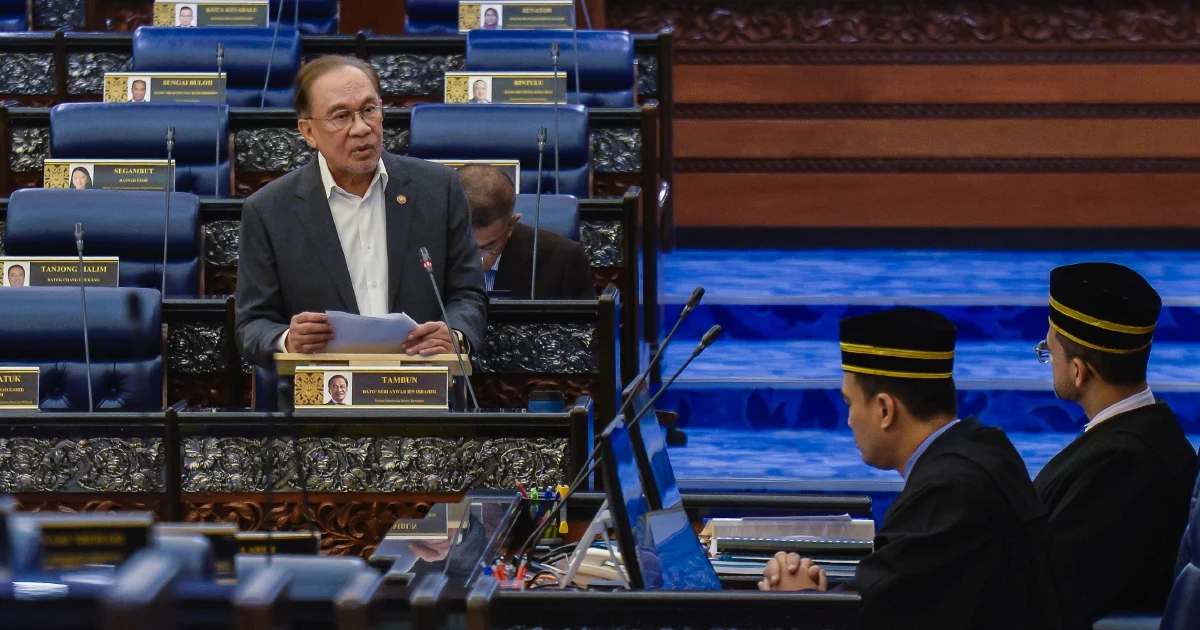
Prime Minister Datuk Seri Anwar Ibrahim moved to extinguish mounting speculation over a disputed Johor Felda Settlers' Day event, appearing before Parliament to categorically deny that he had issued any instruction to cancel the gathering in Kluang. The clarification represents his second public statement on the matter, underscoring the political sensitivity surrounding the episode and the need for the government to manage perceptions during an election campaign cycle.
In his parliamentary remarks, Anwar framed the constraints affecting the celebration within the ordinary regulatory framework applied across all government activities during election periods. He stressed that the only operative guideline was a blanket prohibition preventing public agencies and state machinery from being mobilized for campaigning purposes—a standard safeguard designed to maintain electoral neutrality and prevent the ruling apparatus from gaining unfair advantage over opposition parties.
The controversy surrounding the Felda Settlers' Day event had generated considerable public discussion, with various parties speculating about whether senior government figures had moved to suppress the occasion for political reasons. The disputed event held particular resonance in Johor, a state where the Federal Land Development Authority (Felda) maintains deep institutional roots and where the settler community represents a politically significant constituency. Felda settlers have historically formed a crucial voting bloc in Malaysian elections, making their concerns and grievances matters of considerable electoral weight.
Anwar's repeated denials suggest that the government recognized the potential for the incident to damage its standing among rural communities and agricultural constituencies. Any perception that the administration was arbitrarily preventing settlers from commemorating their heritage could have wider ramifications beyond Johor, rippling through other Felda-dominated regions across Peninsular Malaysia. The government's apparent vigilance in clarifying its position reflects awareness that such communities possess long institutional memories and strong networks through which information—and misinformation—circulates rapidly.
The Felda organization itself has undergone considerable scrutiny and restructuring in recent years, with recurring debates about its financial sustainability, governance arrangements, and the socioeconomic conditions of settlers themselves. These underlying tensions mean that any administrative action affecting Felda-related activities tends to attract heightened attention and interpretation. Settlers and their representatives remain acutely sensitive to what they perceive as neglect or unfair treatment by successive administrations.
The distinction Anwar drew between a specific cancellation directive and broader election-period protocols carries legal and administrative significance. Government agencies are indeed bound by established procedures during election periods that restrict their capacity to engage in activities that could be construed as supporting particular political actors or parties. However, such restrictions typically apply to the use of government resources, facilities, and personnel for overtly partisan purposes rather than to cultural or commemorative events that lack explicit campaign dimensions.
The ambiguity surrounding what constitutes impermissible campaigning versus legitimate cultural celebration has proven fertile ground for dispute in Malaysian electoral politics. Different stakeholders—government officials, opposition figures, civil society monitors—often reach divergent conclusions about whether specific activities cross the line from acceptable to prohibited conduct. The Johor incident reflects this persistent interpretive challenge that election management authorities and political leaders face throughout campaign seasons.
For Malaysian voters and observers, the episode illustrates the sometimes fractious relationship between campaign regulations and everyday government operations. Elections in Malaysia create a regulatory environment where normal administrative and ceremonial functions become subject to heightened scrutiny and potential reinterpretation. Organisations and communities planning events during election periods must navigate complex guidelines that can appear unclear or subject to inconsistent application, generating confusion and occasionally resentment.
The Prime Minister's intervention to address the matter directly in Parliament served multiple communicative purposes. It allowed him to enter an official record of his position, providing documentary evidence that would be circulated through parliamentary records and media reporting. It also signaled to settlement communities and Felda-linked constituencies that the government took their concerns seriously enough to warrant the Prime Minister's personal attention, potentially mitigating any sense of dismissal or indifference.
As Malaysia advances through its electoral cycle, the government faces ongoing challenges in balancing legitimate election regulations with the legitimate expectations of communities and constituencies seeking to maintain their cultural and institutional observances. The Felda Settlers' Day controversy underscores how elections inevitably create friction between administrative necessity and cultural continuity, between preventing partisan abuse of state resources and allowing communities their ordinary commemorative practices.
Looking forward, the incident may prompt useful refinements to how election guidelines are communicated and applied to ensure greater clarity for organizations and communities. Clear protocols distinguishing genuinely campaigning activities from culturally significant celebrations could reduce similar disputes. The government's repeated clarification attempt reflects an implicit acknowledgment that perception and credibility matter significantly in electoral politics, particularly when constituencies feel their interests or heritage are at stake.

