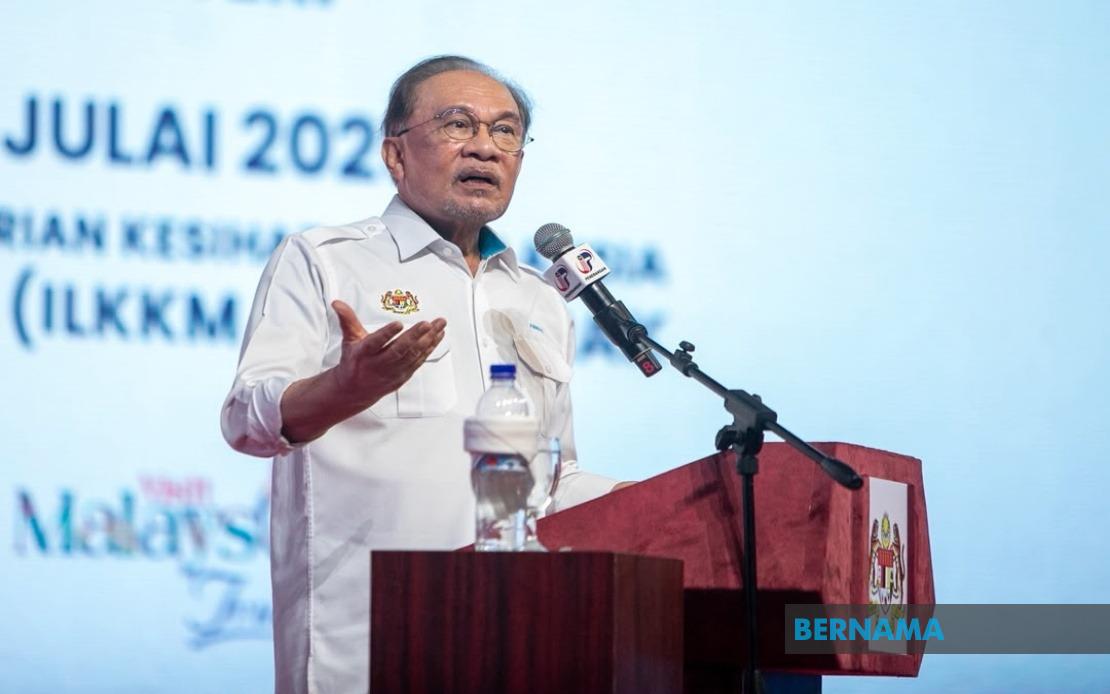
Prime Minister Datuk Seri Anwar Ibrahim has made a direct appeal to Malaysia's younger generation to recognise and honour the nation's independence struggle, framing historical awareness as central to national identity. Speaking at the launch of the 2026 National Month and Fly the Jalur Gemilang Campaign in Ipoh on July 19, Anwar stressed that contemporary Malaysians must understand the profound costs of the freedoms they now take for granted, costs measured in the dedication and sacrifice of independence-era leaders and activists.
The Prime Minister's message reflected broader concerns within Malaysia's political establishment about generational disconnection from national history. By launching a campaign specifically aimed at 2026—a milestone year without particular historical significance—the government signals an ongoing commitment to keep independence narratives alive and relevant. Anwar framed the effort not merely as ceremonial flag-waving but as a deliberate exercise in historical consciousness, suggesting that national pride divorced from historical understanding risks becoming hollow.
Anwar articulated a three-stage approach to national appreciation: revisiting historical narratives, symbolically expressing unity through the national flag, and collectively advancing toward shared prosperity. This framework positions history not as abstract academic exercise but as foundation for contemporary nation-building. The articulation matters because it positions younger voters and citizens as inheritors of a specific covenant—one requiring them to honour past sacrifices through present conduct and future vision.
The struggles of Malaysia's independence fighters—encompassing political negotiation, civil resistance, and personal sacrifice—form the historical bedrock that Anwar invoked. These efforts, spanning from pre-independence organising through the constitutional negotiations that culminated in August 1957, represented decades of sustained effort across multiple communities and ideological factions. By emphasising the human cost through the phrase "blood, sweat and tears," Anwar attempted to make abstract history visceral and immediate for contemporary listeners.
The campaign launch in Ipoh carried particular symbolic weight, as Perak has historical significance in Malaysia's nationalist movements. The presence of Perak Menteri Besar Datuk Seri Saarani Mohamad alongside federal leadership underscored the all-levels commitment to the initiative. National Unity Minister Datuk Aaron Ago Dagang's participation further signalled that the government frames historical consciousness as integral to contemporary unity efforts, particularly important in a nation navigating diverse communal identities and competing narratives.
For Malaysian readers, Anwar's emphasis on generational responsibility carries immediate relevance. The youth cohort he addressed—those born after independence, including digital natives who access information through non-traditional channels—may lack organic connection to independence narratives. Schools teach history, but lived experience differs fundamentally from classroom instruction. By positioning national month campaigns as tools for making history meaningful rather than mandatory, the government acknowledges this gap.
The Prime Minister's framing also subtly addresses political concerns about national cohesion. In plural Malaysia, shared historical narrative has occasionally fractured along communal lines, with different communities emphasising different aspects of independence struggle. By calling for unified appreciation of "the struggle," Anwar implicitly advocates for inclusive historiography—one recognising contributions across ethnic and religious lines without requiring communities to suppress specific narratives. This represents a delicate balance in Malaysian political discourse.
Regionally, Malaysia's approach to independence commemoration reflects broader Southeast Asian patterns. Across the region, nations grapple with how to maintain historical consciousness among populations increasingly focused on contemporary concerns. Vietnam, Thailand, Indonesia, and the Philippines all employ national campaigns and education initiatives to keep independence histories central to national identity. Malaysia's 2026 campaign thus situates the country within regional peer practices.
The communications ministry's involvement, through Minister Datuk Seri Fahmi Fadzil's presence, indicates the government's view of this campaign as requiring sustained media engagement and narrative management. Effective historical communication demands not merely patriotic rhetoric but sustained storytelling across platforms, particularly those accessed by younger audiences. Digital strategies, educational partnerships, and cultural programming all become relevant to reaching disengaged demographics.
Anwar's specific warning against forgetfulness—"children, do not forget this"—suggests anxiety about generational transmission of values. In societies experiencing rapid modernisation, urbanisation, and digital disruption, maintaining continuity with historical consciousness requires deliberate intervention. The Prime Minister's direct address carries emotional appeal precisely because it acknowledges stakes: forgetting costs something real, namely collective memory and national resilience.
The 2026 campaign timing allows nearly two years for programme development and implementation. This extended runway suggests the government views historical consciousness-building as requiring sustained effort rather than annual ceremony. Effective engagement will likely demand partnerships with educational institutions, cultural organisations, and youth groups—constituencies that can embed independence narratives within regular programming rather than confining them to designated months.
For Malaysia's political future, maintaining generational engagement with independence values carries stakes beyond ceremonial pride. National cohesion, constitutional legitimacy, and collective problem-solving capacity all draw strength from shared historical consciousness. When citizens understand independence not as distant achievement but as foundation for ongoing national project, they engage more meaningfully in contemporary governance challenges.

