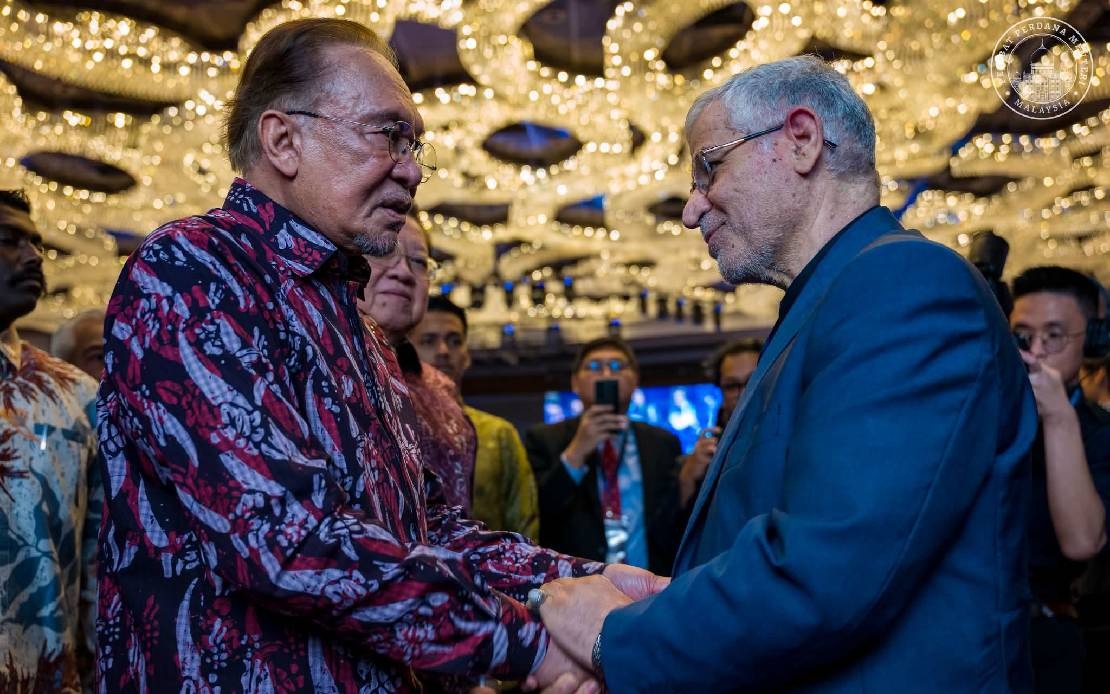
Prime Minister Datuk Seri Anwar Ibrahim has formally expressed regret to the Iranian Government for his absence at the state funeral and farewell ceremonies honouring the late Supreme Leader Ayatollah Ali Khamenei, conveying his apologies through a direct meeting with Iran's Ambassador to Malaysia, Valiollah Mohammadi, during the 39th Asia-Pacific Roundtable conference in Kuala Lumpur on Tuesday. The Prime Minister, unable to depart Malaysia due to pressing official engagements already scheduled, nonetheless took the opportunity to personally extend condolences to both the Iranian authorities and its people during this period of national mourning.
Through a social media statement, Anwar acknowledged that prior commitments made his international travel impossible at the time when Tehran was preparing to bid farewell to its supreme leader, who passed away on February 28 following a combined military operation attributed to the United States and Israel. The diplomatic gesture, made face-to-face with Ambassador Mohammadi, underscores Malaysia's commitment to maintaining cordial relations with the Islamic Republic despite logistical constraints preventing the Prime Minister's personal attendance at such a significant state occasion.
Instead of leading the Malaysian delegation, Anwar tasked Agriculture and Food Security Minister Mohamad Sabu with the responsibility of representing the nation at the funeral proceedings and related ceremonies. This decision ensured that Malaysia maintained a visible presence at the event while allowing the Prime Minister to attend to urgent domestic matters requiring his presence. Sabu's attendance as a senior government representative conveyed Malaysia's respect for Iran and solidarity with the country during this critical moment of transition in its political leadership.
The funeral arrangements, scheduled to unfold over six consecutive days commencing July 4, comprise an elaborate series of state ceremonies befitting the status of Iran's highest religious and political authority. Initial proceedings would see funeral processions traverse through Tehran and Qom, two of Iran's most significant religious centres, drawing mourners and dignitaries to pay their final respects. The ceremonial calendar culminates in Khamenei's burial at the Imam Reza Shrine located in Mashhad on July 9, one of Shia Islam's holiest sanctuaries.
Khamenei's death at age 86 at his Tehran residence marked a pivotal moment not only for Iran but for regional geopolitics across the Middle East and beyond. His passing followed a significant military escalation in the region, with the joint operation attributed to Western and Israeli forces signalling heightened tensions in an already volatile area. The succession and transition period emerging from his death carry implications for Iran's domestic stability and its foreign policy orientation across multiple international relationships.
Malaysia's diplomatic response, while constrained by the Prime Minister's inability to attend in person, reflects the nation's nuanced position within international affairs. As a Muslim-majority country with historical ties to Iran and simultaneous engagement with Western powers, Malaysia navigates complex geopolitical currents. The dispatch of a cabinet minister demonstrates appropriate respect while pragmatically acknowledging competing demands on the Prime Minister's time and attention.
The timing of the Asia-Pacific Roundtable conference, which coincided with the preparation for Khamenei's funeral proceedings, presented the ideal venue for Anwar to communicate Malaysia's position directly to Iranian representation. This setting allowed for a formal yet relatively intimate diplomatic exchange outside the ceremonial context of a full state funeral, enabling substantive communication about Malaysia's commitment to the bilateral relationship.
Iran's Supreme Leader holds unparalleled authority within the Islamic Republic's political system, making his death and the succession process matters of profound constitutional and strategic significance. Khamenei's tenure spanned multiple decades of Iranian history, including periods of intense international isolation, nuclear diplomacy, and regional conflicts. The transition to new leadership carries implications for how Iran will approach international negotiations, particularly concerning nuclear programmes and relationships with various global powers.
For Southeast Asian nations like Malaysia, developments within Iran's political sphere hold relevance to regional trade patterns, energy security considerations, and the broader balance of power in global affairs. Iran's approach to international engagement under new leadership could influence economic partnerships, diplomatic priorities, and the region's strategic environment. Malaysia's careful maintenance of relations with Iran through appropriate representation at state ceremonies contributes to a broader diplomatic portfolio designed to preserve influence and access regardless of which particular leadership configuration emerges in Tehran.
The incident also highlights the delicate balance that middle-power nations must maintain when navigating between competing international relationships and domestic imperatives. Anwar's personal apology, communicated through formal diplomatic channels and publicly acknowledged via social media, represents a sophisticated approach to managing expectations while being transparent about constraints. This combination of expressed regret, personal engagement with diplomatic representatives, and deployment of high-ranking alternative delegates demonstrates how Malaysia attempts to uphold international courtesies whilst managing the practical realities of governance.
Looking forward, the leadership transition in Iran will likely reshape diplomatic dynamics across the Middle East and influence how regional powers including Malaysia calibrate their foreign policy strategies. The respectful manner in which Malaysia has handled its absence from the funeral ceremonies positions the nation favourably for continued constructive engagement with whatever leadership configuration emerges in Tehran, while the Prime Minister's public acknowledgement of the significance of the moment affirms Malaysia's recognition of Iran's importance within international affairs.

