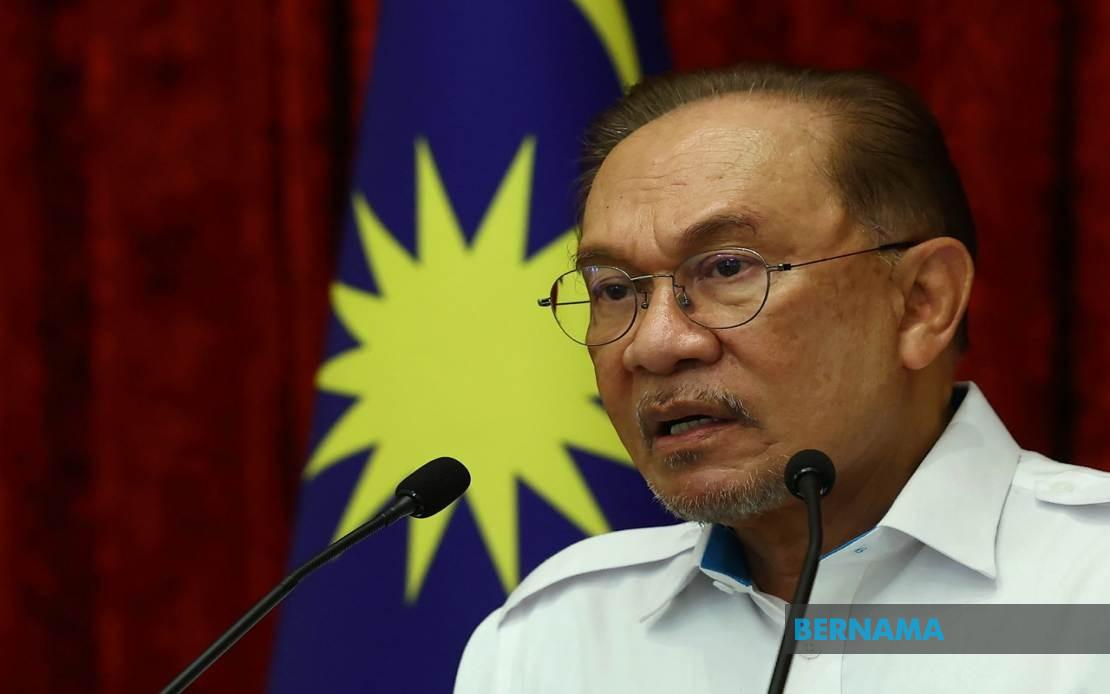
Prime Minister Datuk Seri Anwar Ibrahim has expressed regret at being unable to participate in today's special sitting of the Dewan Rakyat, which was convened to examine findings from the Royal Commission of Inquiry into Tabung Haji. In a statement released through his senior press secretary Tunku Nashrul Abaidah, the Prime Minister indicated that he remains committed to the integrity of Malaysia's premier pilgrimage fund management institution despite his physical absence from the chamber.
The absence underscores ongoing health challenges facing the nation's chief executive. According to Anwar's medical team, he recently underwent an elective laparoscopic surgical procedure to address a para-umbilical hernia, a condition requiring the kind of minimally invasive intervention that typically demands recovery time. The timing of this intervention coincided with heightened public scrutiny of Tabung Haji's operations, an issue that carries significant weight given the fund's custodianship of monies belonging to millions of Malaysian Muslims intending to perform the Hajj pilgrimage.
Though physically unable to attend, the Prime Minister's office emphasised his intention to remain engaged with the parliamentary debate through remote monitoring. This arrangement reflects contemporary parliamentary practices where senior officials can observe proceedings from alternative locations, ensuring they remain informed of critical national discussions even during periods of medical recovery. The statement specifically noted that Anwar would exercise close attention to the proceedings, signalling his resolve to protect public confidence in one of Malaysia's most significant religious and financial institutions.
Anwar's health trajectory appears to be progressing positively, according to official medical updates. His press secretary indicated that recovery is advancing satisfactorily and that the Prime Minister continues physiotherapy sessions administered by his medical specialist team. Such therapeutic regimens typically span several weeks following surgical intervention, suggesting the Prime Minister's gradual return to full parliamentary duties remains contingent on medical clearance from his medical practitioners.
The RCI report on Tabung Haji has generated considerable political and public interest, as the commission was tasked with investigating governance and operational matters affecting the institution. Parliamentary debate over such a report carries implications extending beyond the immediate institutional context, potentially influencing broader public confidence in how government-linked entities manage citizen assets. The fact that the Prime Minister prioritised advance notification of his non-attendance demonstrates awareness of the occasion's significance and an attempt to prevent speculation about his commitment to parliamentary accountability.
Anwar's 79th birthday, which fell on August 10, provided an occasion for public expressions of support and well-wishes. His office took the opportunity to publicly acknowledge those who had offered prayers and greetings, a gesture reflecting the cultural and religious dimensions of leadership in Malaysia's Islamic context. These expressions of solidarity typically strengthen a leader's political position during periods of temporary incapacity, as they reinforce the personal bonds connecting political leadership to constituents and government functionaries.
The coordination between Anwar's office and Parliament to manage today's special sitting demonstrates institutional mechanisms for accommodating leadership absences without disrupting governmental processes. While the Prime Minister's presence carries symbolic weight during important parliamentary debates, the existence of established protocols for managing such situations provides continuity and ensures that critical national matters proceed without significant impediment. This reflects the distinction between ceremonial importance and substantive governance capacity.
From a Southeast Asian perspective, the situation illustrates how major economies manage leadership transitions or temporary incapacities at the highest levels. Malaysia's handling of the PM's medical circumstances has remained transparent and orderly, contrasting sharply with opacity in some regional neighbours. This transparency extends to the public disclosure of medical procedures and recovery timelines, establishing clear expectations about leadership availability and decision-making capacity.
Tabung Haji's institutional credibility depends significantly on demonstrated political commitment to addressing any governance concerns identified by the RCI. The Prime Minister's insistence on closely following proceedings reflects understanding that investor confidence—in this case, among millions of Malaysian Muslims with savings in the fund—depends on visible leadership engagement with accountability mechanisms. The RCI process itself represents an institutional response to concerns about fund management, and parliamentary scrutiny provides the final layer of accountability before public confidence is either restored or further eroded.
Anwar's recovery timeline will likely shape his engagement with other pressing national issues requiring prime ministerial attention. Malaysia faces multiple governance challenges, from economic management to regional diplomatic positioning, each demanding executive focus. The phased return to full duties, medically supervised and publicly transparent, suggests a careful balancing of health imperatives against the demands of high office.
As proceedings in the Dewan Rakyat proceed without the Prime Minister's physical presence, the institution of parliamentary democracy continues to function according to established conventions. Yet Anwar's remote engagement signals that leadership accountability transcends physical presence, extending into the digital and communicative sphere where modern leaders increasingly operate. This incident may well establish precedent for how senior officials balance medical necessity against political responsibility in Malaysia's evolving democratic practice.

