Two hundred alumni from the National Service Training Programme (PLKN) 3.0 will make history by marching in the National Day parade in Putrajaya on August 31, marking the first occasion that trainees from the rejuvenated scheme will perform before the King, Prime Minister, and Cabinet members in a major state ceremony. The participation represents a significant symbolic moment for the three-year-old national service initiative, which has undergone substantial restructuring since its relaunch. The selected contingent will commence formal parade practice in Putrajaya on August 25, ensuring they are fully prepared for the high-profile appearance at the nation's most important annual gathering.
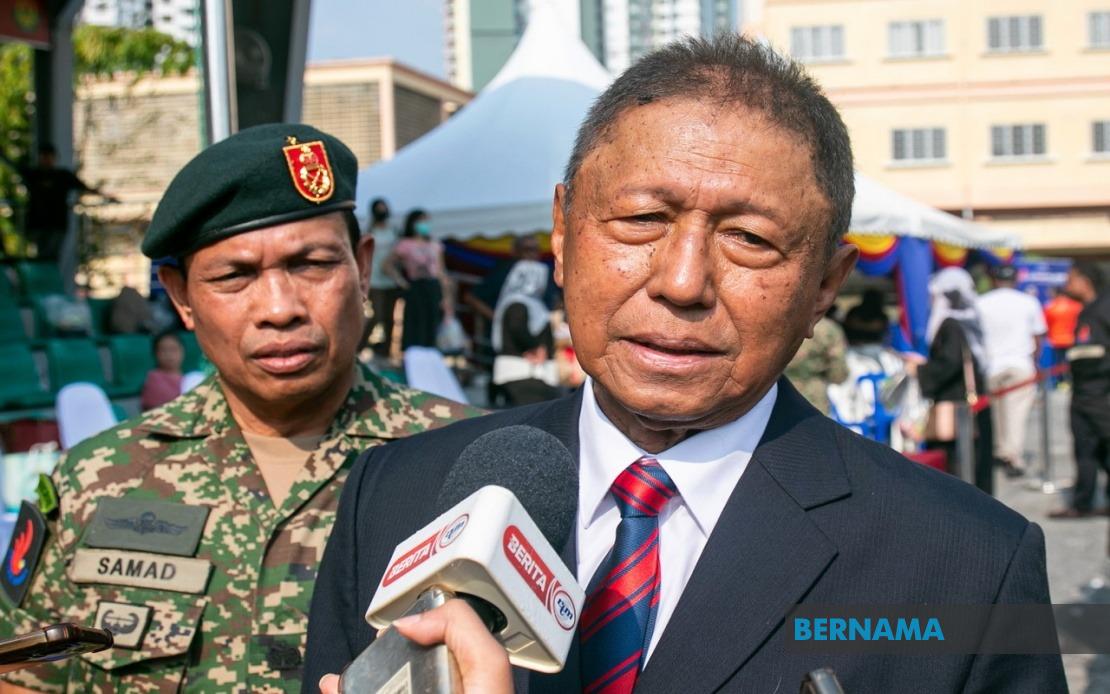
General (Rtd) Tan Sri Dr Abdul Aziz Zainal, chairman of the National Service Training Council (MLKN), emphasised that this debut marks a turning point in how Malaysia presents its youth mobilisation efforts to the broader public. He underlined that the parade appearance serves multiple objectives beyond ceremonial value, functioning as a platform to demonstrate the tangible outcomes of the intensive 45-day training regimen that participants undergo at designated national camps. The visibility afforded by the National Day platform aligns with broader government efforts to rebuild public confidence in the PLKN 3.0 framework following earlier iterations of the scheme that faced criticism over effectiveness and operational concerns.
The most recent cohort of 795 trainees successfully graduated from the PLKN 3.0 Series 3/2026 programme, which commenced on July 11 and operated across three separate training facilities. These comprised 106 female participants from Camp 504 AW in Bukit Keteri, Perlis; 442 male trainees from Camp 505 AW in Pekan, Pahang; and 247 female participants from Camp 515 AW in Kuala Lumpur. The distribution across geographically dispersed locations reflects the programme's strategy to manage training capacity while maintaining regional accessibility for participants across the peninsula. The completion of this series without reported major incidents suggests that operational protocols have stabilised following earlier institutional challenges.
Three trainees were recognised as exemplary performers within their respective cohorts. An'nur Najiha Muhammad, aged 18 from Ipoh, Perak, topped the rankings at Camp 504 AW, while Muhammad Firdaus Muhammad Said, 18, from Kuantan, Pahang, received top honours at Camp 505 AW. Cheyenne Alessandra Michael, also 18 and based in Kuala Lumpur, emerged as the standout performer at Camp 515 AW. These selections highlight the programme's emphasis on individual achievement and leadership development within the structured military training environment, providing role models for future cohorts.
Expanding capacity represents a critical priority for programme administrators moving forward. Abdul Aziz revealed that the forthcoming PLKN 3.0 Series 4/2026 will significantly scale up participant numbers through the establishment of additional training facilities and partnership arrangements with existing institutions. The plan envisions the activation of five new camps, including Camp 503 in Hutan Melintang, Perak; Camp 506 in Sungai Durian, Kelantan; and Camp 513 in Bukit Pinang, Kedah. Additionally, two centres operated by the Public Training Institute (ILA) in Sungai Petani, Kedah and Tuaran, Sabah will serve as supplementary facilities, working alongside the three established operational camps.
The expansion strategy incorporates an innovative dimension through partnership with the Malaysian Volunteer Corps Department (RELA), whose existing training infrastructure will be leveraged to accommodate additional recruits. This collaborative approach enables the programme to substantially exceed previous capacity constraints without requiring entirely new facility construction. Officials project that the combined deployment of traditional PLKN camps alongside RELA training centres, augmented by enhanced instructor recruitment, will permit the accommodation of more than 1,000 trainees within a single series—a meaningful increase over the approximately 800-participant throughput achieved in recent iterations. This scalability becomes particularly significant given Malaysia's demographic profile and the government's stated commitment to universal national service participation.
For Malaysia's wider region, the expansion of the PLKN 3.0 programme carries implications as other Southeast Asian nations grapple with questions about effective youth mobilisation and civic engagement strategies. The Indonesian military's ongoing conscription debates, Thailand's irregular conscription implementation, and Vietnam's universal military service all remain subjects of considerable public controversy. Malaysia's approach of voluntary participation combined with structured incentives and emphasis on patriotic education represents a distinctive model within the regional context, though questions persist regarding its ultimate efficacy and social penetration.
Cheyenne Alessandra Michael's reflections on her training experience illuminate the psychological objectives embedded within the programme's curriculum architecture. She attributed her increased patriotic consciousness to daily exposure to Wataniah (Territorial Army) personnel operating within the same camp environment, illustrating how proximity to professional military culture shapes participants' self-perception and national identity formation. Her commentary suggests that the programme succeeds in generating genuine attitudinal shifts regarding national pride and appreciation for Malaysia's armed forces, outcomes that extend beyond mere physical conditioning or technical military instruction. This psychological dimension may prove decisive in determining whether the PLKN 3.0 ultimately achieves its intended role as a transformative civic experience for young Malaysians.
Michael further articulated how the intensive 45-day immersion cultivated deeper comprehension of the sacrifices undertaken by Malaysia's independence generation, translating historical knowledge into visceral appreciation. She connected her training experience to heightened recognition of her generation's responsibilities in preserving national stability and security—a narrative alignment that administrators actively foster through curriculum content emphasising national history and institutional symbolism. This intergenerational bridging function constitutes an underappreciated dimension of national service programmes, potentially influencing long-term civic participation patterns and institutional legitimacy among young adults who complete the training.
The decision to feature PLKN 3.0 alumni prominently in the National Day parade represents a calculated strategic choice by programme leadership to capitalise on the ceremonial platform's symbolic power and media coverage intensity. By positioning trainees alongside the King, Prime Minister, and senior government figures, authorities visually affirm the programme's integration into Malaysia's national institutional framework and emphasise its alignment with core state objectives. The parade appearance should generate substantial domestic media attention and social media circulation, potentially enhancing public awareness of the programme among target demographic cohorts and addressing longstanding perceptions of institutional credibility. Whether this symbolic investment translates into sustained public support and increased voluntary participation rates will become apparent through registration patterns in subsequent programme series.

