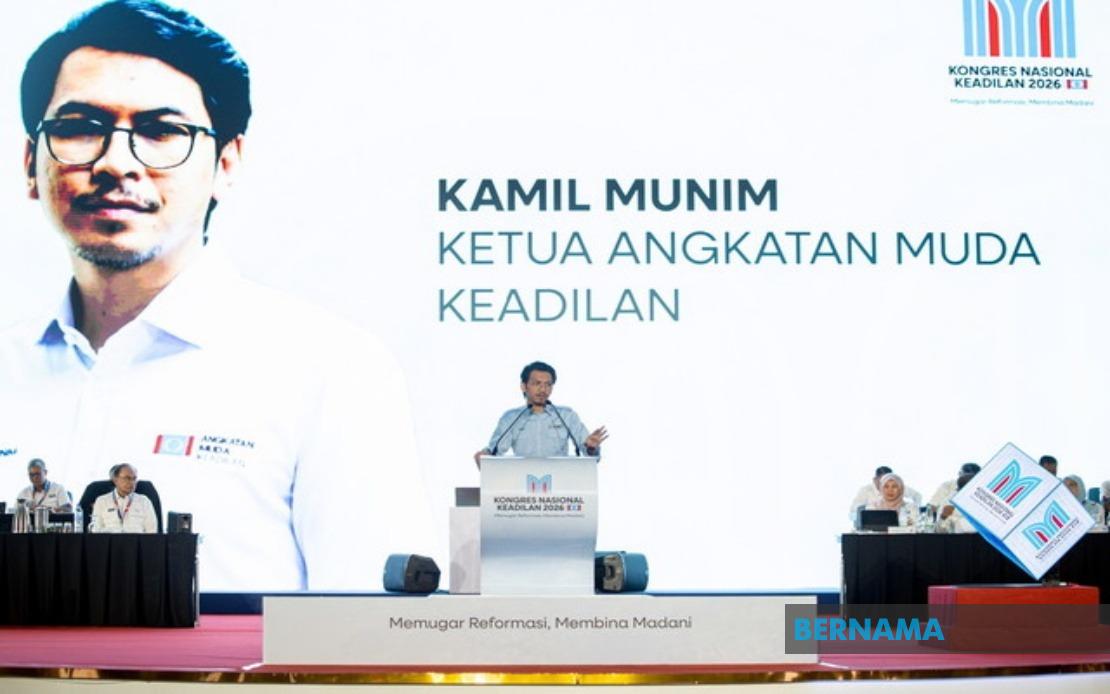
PKR Youth (AMK) must fundamentally rethink its political strategies and messaging to better connect with voters aged 45 and below, a demographic that represents the largest bloc on Malaysia's electoral roll. This call for strategic realignment came from AMK chief Muhammad Kamil Abdul Munim during the second day of the PKR National Congress at the Melaka International Trade Centre, where he delivered his winding-up remarks to party delegates.
The push for reform reflects serious concerns within PKR's leadership about the party's recent electoral performance in two state-level contests. Results from the Johor and Negeri Sembilan state elections have prompted the party machinery to conduct a thorough examination of its current approach and effectiveness in mobilising voter support. Muhammad Kamil framed this reassessment as essential, noting that the elections have created an opportunity for the party to evaluate which tactics are working and which require substantial modification.
Demographic realities underpin this strategic imperative. According to electoral data cited by Muhammad Kamil, voters under 45 years old now form the single largest cohort within Malaysia's registered voter base. This demographic shift has profound implications for any political party seeking to build winning coalitions. Young voters bring distinct priorities, communication preferences, and expectations of political parties compared to older generations. Understanding and addressing these differences has become non-negotiable for parties aiming to remain competitive.
The party's grassroots leadership has also come under scrutiny. Muhammad Kamil urged local and divisional leaders to move beyond purely administrative functions and deepen their engagement with community concerns. Rather than remaining confined to organisational tasks, party activists must develop stronger leadership capabilities and forge genuine connections with constituents. This represents a shift from transactional politics toward relationship-building at the community level, particularly in rural areas where voter sentiment has grown increasingly volatile.
Although the MADANI Government has received generally favourable public assessments during its tenure, electoral results suggest significant disconnects remain between government performance and voter perception. The gaps revealed by recent state elections indicate that positive national-level achievements may not automatically translate into voter support if local grievances remain unaddressed. Muhammad Kamil emphasised that identifying and remedying these disconnects should become the party's immediate priority.
Engagement with rural communities emerged as a specific strategic focus. Muhammad Kamil stressed the importance of direct dialogue with small grassroots groups in less urbanised areas, where political movements are increasingly volatile. These communities often have distinct concerns—ranging from economic opportunity to infrastructure development to cultural preservation—that may differ substantially from concerns in urban centres. By listening carefully to these concerns and proposing concrete solutions, PKR can rebuild trust among voters who have grown sceptical of traditional political promises.
The party's historical narrative of periodic electoral breakthroughs offers both inspiration and caution. Muhammad Kamil referenced PKR's capacity to generate political surprises roughly every decade: the 2008 general election, when the party helped deny Barisan Nasional its customary two-thirds parliamentary supermajority, and the 2018 general election, which brought Pakatan Harapan to federal power. These victories demonstrate PKR's organisational capacity and popular resonance when conditions align, yet they also highlight the risk of complacency between electoral cycles.
The imperative for change extends beyond AMK leadership to the entire party apparatus. Muhammad Kamil called upon all party leaders and grassroots organisers present at the congress to prepare comprehensively for the approaching general election. This preparation must integrate lessons from previous setbacks while building renewed momentum around the party's reform and change agenda. The message was clear: internal restructuring must accelerate now rather than waiting until the final pre-election months.
For Malaysian voters and political observers, these statements signal that PKR recognises fundamental shifts in the country's electoral landscape. Younger voters increasingly prioritise performance, responsiveness, and alignment with their generation's values over party loyalty or historical credentials. Parties that fail to adapt their messaging, candidate selection, and policy priorities to reflect these generational differences face marginalisation even in contexts where they once enjoyed structural advantages.
The broader implications for Malaysian politics suggest intensifying competition for the youth vote across all major coalitions. As PKR recalibrates its approach, Barisan Nasional and other opposition blocs are similarly attempting to strengthen their appeal to younger demographics. This competition may ultimately benefit Malaysian democracy by forcing parties to engage more substantively with younger voters' genuine concerns rather than relying on established patronage networks or inherited voting patterns.
The timing of this strategic reset also matters significantly. With general elections potentially approaching within the next 18 months, the window for implementing new strategies and assessing their effectiveness remains constrained. PKR must move rapidly from diagnosis to implementation while maintaining internal cohesion—a challenging balance that will test both leadership capacity and grassroots discipline. The party's ability to translate Muhammad Kamil's exhortations into concrete changes will substantially influence its competitive position when Malaysian voters next head to the polls.

