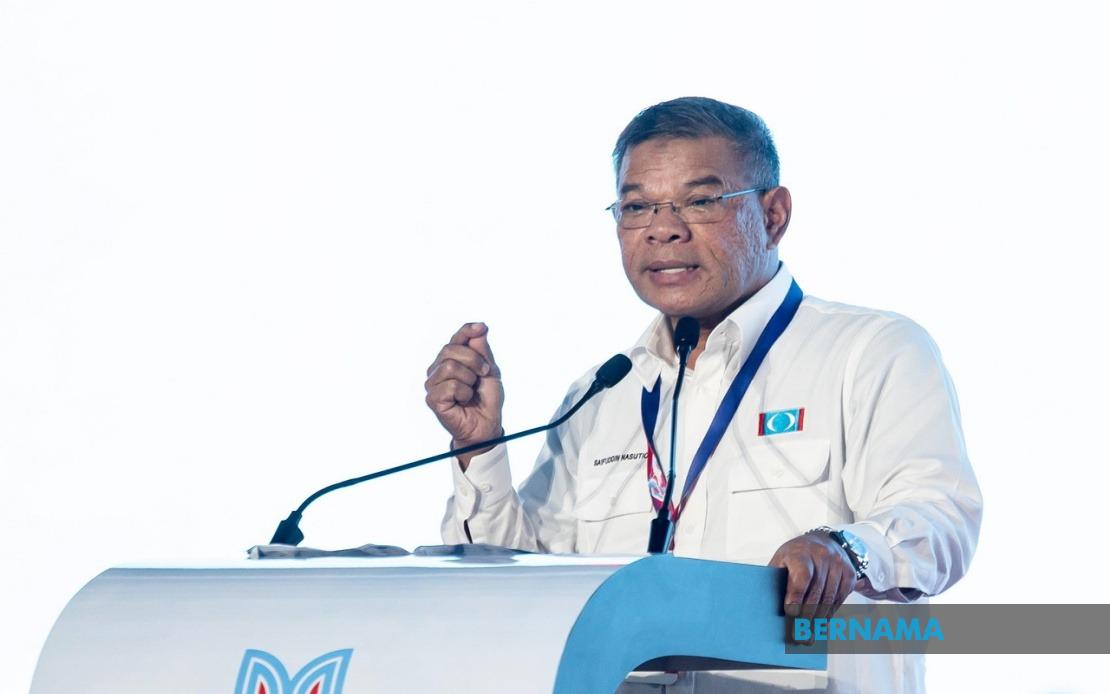
The People's Justice Party (PKR) has signalled a strategic pivot away from identity-based politics towards a performance-centred governance model, with party leadership arguing that focusing on race and religious identity delivers no tangible benefits to the nation. Speaking at the 2026 PKR National Congress in Melaka on August 16, Datuk Seri Saifuddin Nasution Ismail, who is discharging the duties of deputy president alongside his role as Home Minister, characterised identity politics as a fundamentally unproductive "zero-sum game" that ultimately undermines national progress and cohesion.
Saifuddin Nasution's intervention at the party's congress reflects growing concern within PKR about the electoral and social costs of identity-driven political messaging. The deputy president contended that competing on grounds of communal identity produces only winners and losers, with neither camp achieving lasting gains for their constituencies. Instead, he advocated a wholesale reorientation of political discourse towards measurable outcomes in economic performance, employment generation, and improvements in living standards across all demographic groups. This repositioning signals PKR's intention to contest future elections on the basis of governance competence rather than identity mobilisation—a strategy that may offer the coalition a competitive advantage if voters increasingly prioritise economic concerns over symbolic political contestation.
Central to PKR's emerging framework is the concept of "growing the pie of prosperity," a metaphor that deliberately rejects zero-sum competition and frames economic expansion as mutually beneficial rather than zero-sum distribution. Under this logic, rising national prosperity allows all communities and income groups to improve their circumstances simultaneously, eliminating the perceived necessity for one group to forfeit rights or resources for another to gain. Saifuddin Nasution articulated this philosophy as a counterpoint to identity politics that often emphasises protection of communal interests against perceived threats from rival groups. The approach reflects a pragmatic calculation that in an era of economic stagnation and cost-of-living pressures, Malaysian voters—particularly younger and urban constituencies—may respond more favourably to government promises of job creation and wage growth than to communal grievance narratives.
Acknowledging Malaysia's intrinsic plurality, Saifuddin Nasution conceded that Malay, Islamic, Chinese, Indian, Sabah, and Sarawak identities are legitimate dimensions of Malaysian reality and should not be delegitimised or suppressed. However, he drew a sharp distinction between acknowledging communal identities and weaponising them for political purposes. The critical problem, in his formulation, emerges when identity becomes an instrument to generate fear and suspicion among communities, transforming what ought to be neutral demographic facts into sources of intergroup anxiety and political mobilisation. This framing attempts to occupy middle ground: neither denying the salience of identity to Malaysians' self-perception nor permitting it to dominate political discourse in ways that privilege symbolic competition over substantive policymaking.
PKR's leadership outlined three concrete operational priorities that should guide both the party and the MADANI Government's governance approach. First, aggressive pursuit of economic expansion through policies and investments that increase aggregate prosperity, making the benefits of growth accessible across income strata and ethnic communities. Second, recalibration of government assistance programmes towards need-based rather than identity-based criteria, ensuring that social support reaches citizens based on demonstrable economic hardship rather than communal affiliation. Third, sustained commitment to institutional integrity through anti-corruption enforcement and transparency measures that restore public confidence in governance institutions and protect fiscal resources for productive investment. Together, these priorities constitute a governing philosophy explicitly premised on the notion that shared prosperity and institutional quality constitute superior alternatives to identity-based political competition.
Saifuddin Nasution further reframed the genuine security threats facing Malaysian communities by arguing that poverty and social pathology—particularly drug addiction among young people—pose substantially greater dangers to community wellbeing than do the presence or political mobilisation of other ethnic or religious groups. This rhetorical move serves multiple purposes: it deflects from identity-based anxieties by redirecting attention towards tangible social problems affecting all communities, it positions the government as focused on concrete welfare improvements rather than abstract communal defence, and it implies that identity-focused political messaging distracts from addressing shared vulnerabilities. By emphasising drug abuse and economic desperation as primary threats, PKR seeks to establish common cause among diverse voter constituencies around a non-communal agenda.
The timing of these pronouncements at a formal party congress carries particular significance as Malaysia approaches electoral cycles that will test whether voters embrace the performance-based politics PKR advocates. By enshrining this strategic orientation in party congress speeches and presumably in campaign messaging, PKR is signalling commitment to a distinct political brand differentiated from competitors who may continue mining identity politics. This positioning also carries implications for coalition dynamics within the MADANI Government, potentially creating pressure on coalition partners to moderate identity-focused messaging and align with performance-based governance frameworks. However, the extent to which PKR's advocacy can reshape broader political discourse depends substantially on whether economic conditions improve sufficiently to make performance metrics genuinely favourable.
For Malaysian voters and observers of Southeast Asian politics more broadly, PKR's emphasis offers a reminder that identity need not permanently dominate electoral competition. The party's argument that nations can redirect political contestation towards governance outcomes and economic performance reflects broader debates within the region about whether development-focused pragmatism can supersede identity-based political mobilisation. Whether PKR's framework resonates with electorate depends partly on the credibility of the MADANI Government's economic record and partly on whether rival political forces continue deploying identity narratives that shape voter preferences. If economic conditions deteriorate or security concerns intensify, even parties committed to performance-based politics may find identity grievances re-emerging as electoral drivers.
Saifuddin Nasution's directive that party members intensify efforts promoting the MADANI Government's achievements among young voters signals recognition that demographic change creates opportunities for reorienting political discourse. Younger Malaysians, particularly those prioritising economic opportunity and cost-of-living relief over communal symbolic contests, may prove more responsive to performance-based messaging than older cohorts socialised within identity-dominant political environments. PKR's explicit focus on youth engagement suggests the party views the coming electoral cycle as a pivotal opportunity to shift voter preferences towards substantive governance metrics, potentially establishing new political norms that persist across subsequent electoral cycles. This generational strategy could prove decisive if successfully mobilised across both urban and emerging younger voter populations in secondary towns.

