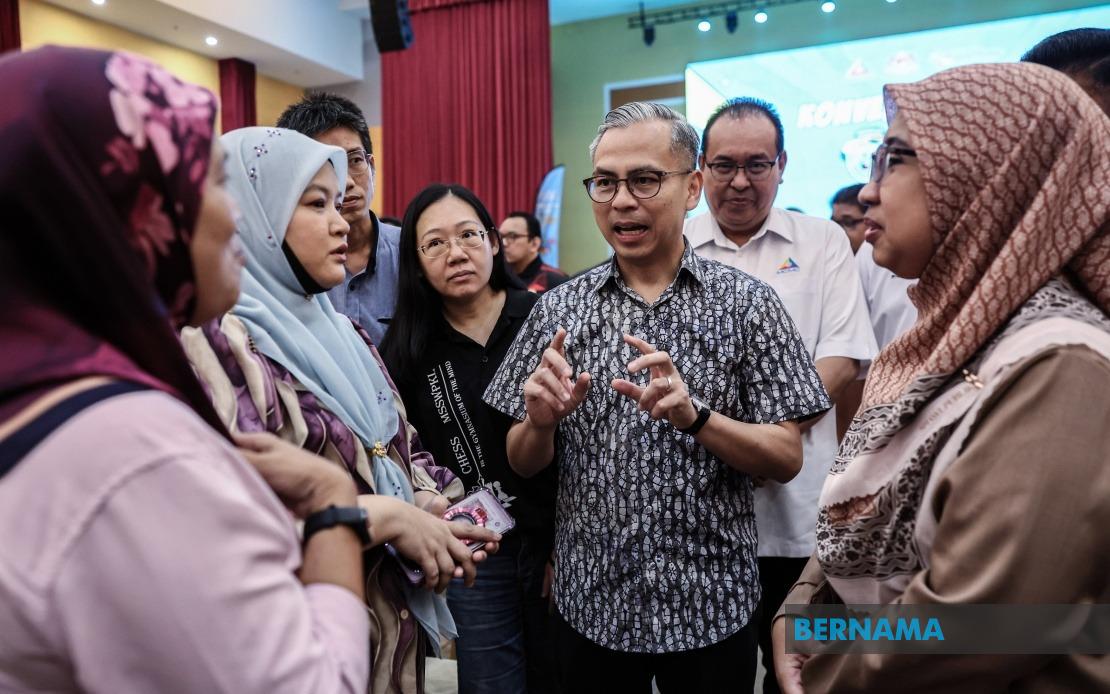
The People's Justice Party (PKR) moved to quell concerns about leadership continuity on Thursday, announcing that deputy president Nurul Izzah Anwar's decision to take temporary leave from her position will not interrupt the party's day-to-day operations or strategic direction. PKR Information chief Datuk Seri Fahmi Fadzil emphasised during a press conference that the party machine would continue functioning smoothly, with all essential work proceeding as scheduled despite the leadership adjustment at the deputy level.
Nurul Izzah, whose name carries significant weight within PKR and beyond as the daughter of Prime Minister Datuk Seri Anwar Ibrahim, had sought to resign from her post. However, the PKR Central Leadership Council declined to accept her resignation, instead approving her request for a formal leave of absence. The decision allows her to concentrate on personal matters whilst pursuing postgraduate studies towards her PhD, a move that signals the party's flexibility in accommodating members' educational and personal aspirations without creating organisational vacancies that could invite fresh power struggles.
The responsibility for managing the deputy president's portfolio during Nurul Izzah's absence has been transferred to vice-president Datuk Seri Saifuddin Nasution Ismail, a seasoned political operator with extensive experience in managing party machinery. Fahmi's emphasis on Saifuddin's capability to shoulder these duties reflects confidence within PKR's top leadership that the transition will be seamless. Saifuddin's track record suggests he is well-positioned to maintain the balance that Nurul Izzah maintained at the deputy level, particularly given his prior roles in party administration and government service.
Fahmi took care to underline that Nurul Izzah remains a full party member despite stepping back from her formal leadership position. This distinction is important for PKR's narrative, ensuring that members understand her departure from the deputy president role as temporary and strategic rather than a sign of internal conflict or loss of faith in party direction. By framing her continued membership as active, PKR attempts to preserve her profile within the party structure for future contributions once her studies are completed.
The timing of Nurul Izzah's move comes amid broader discussion about parliamentary representation and potential shifts in the political landscape. When asked about speculation that Subang MP Wong Chen might vacate his parliamentary seat, Fahmi declined to confirm any such developments, stating that he had received no official notification and that any announcements regarding parliamentary vacancies would come through Dewan Rakyat Speaker Tan Sri Johari Abdul. This cautious response suggests PKR is managing multiple moving pieces in its organisational structure.
Rumours have circulated within political circles about the possibility of an early general election, which would have significant implications for PKR's positioning within both Pakatan Harapan and the broader Unity Government coalition. Fahmi addressed these directly, stating unequivocally that no plans exist for an election ahead of schedule. He indicated that the current government timeline envisages the next general election occurring no later than the end of next year, a conventional schedule that provides the administration with the full duration of its term to consolidate achievements and push through remaining policy priorities.
The government's current strategic focus, according to Fahmi, remains firmly centred on ensuring stable administration and pursuing the comprehensive reform agenda that underpins Prime Minister Anwar Ibrahim's leadership. This emphasis reflects an understanding that Malaysia's political and economic challenges require sustained institutional attention rather than the disruptions that early elections would inevitably cause. By insisting on continuity, Fahmi signals that PKR and its coalition partners remain committed to longer-term governance rather than short-term political positioning.
Fahmi highlighted the collective commitment within Pakatan Harapan and the Unity Government to maintain momentum on economic improvement and structural reform initiatives. This broad framing suggests that individual leadership adjustments, such as Nurul Izzah's temporary departure, are viewed as minor operational matters within the context of larger strategic objectives. The emphasis on coalition unity is particularly significant given that Malaysia's government depends on maintaining a complex balance among diverse component parties with differing interests and constituencies.
Among specific outstanding matters requiring government attention, Fahmi pointed to the implementation of recommendations from the Royal Commission of Inquiry into Lembaga Tabung Haji covering the 2014 to 2020 period. This reference underscores the government's ongoing effort to address legacy issues inherited from previous administrations, a theme that resonates with reform-minded voters who elected the current coalition partly on promises of accountability and institutional strengthening. Progress on RCI recommendations has become a barometer of the government's commitment to its stated reform agenda.
Looking ahead, Fahmi hinted that Prime Minister Anwar Ibrahim would soon announce several significant initiatives that he characterised as beneficial for both the Malaysian people and the nation's broader interests. These forthcoming announcements remain unspecified, but such signals typically precede major policy rollouts, cabinet adjustments, or strategic pivots in government direction. The timing, coming shortly after Nurul Izzah's leave arrangement, suggests the government may be orchestrating a broader set of moves to demonstrate momentum and renewal within the administration.
For Malaysian observers, Nurul Izzah's temporary leave represents a moment of institutional continuity rather than disruption. Her decision to pursue doctoral studies reflects a longer-term perspective on her political career, one that values intellectual development and personal growth alongside party service. The PKR leadership's handling of her request demonstrates a degree of maturity in party management, accepting that leaders need periodic breaks from frontline roles without interpreting such breaks as abandonment of political commitment.

