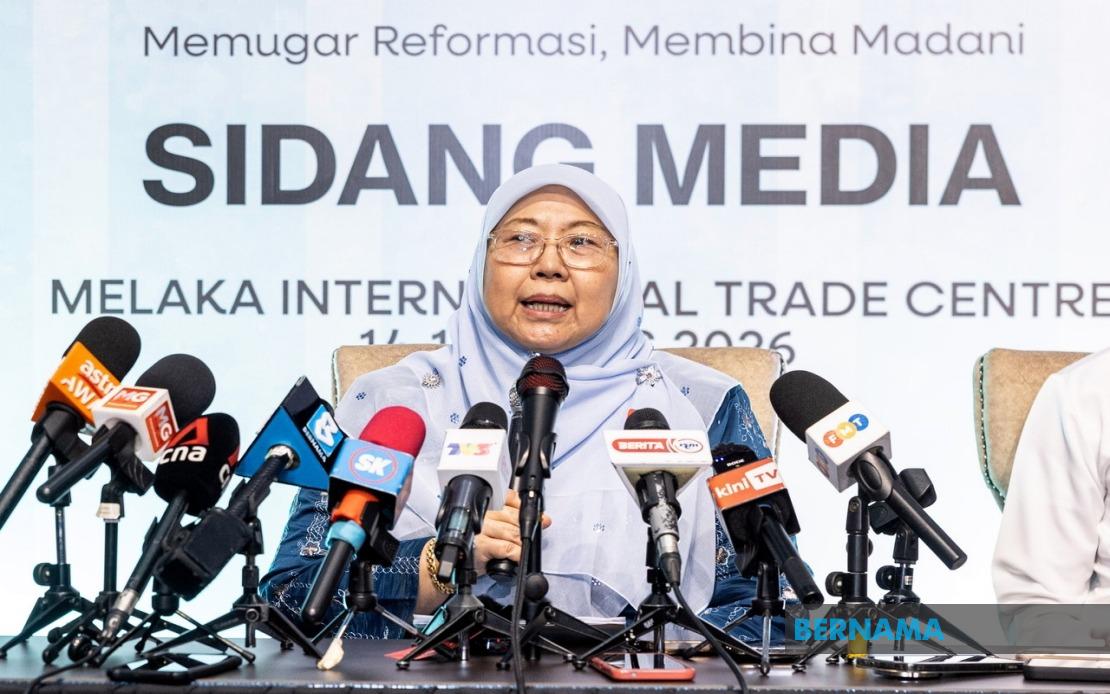
Parti Keadilan Rakyat (PKR) has adopted a flexible approach regarding deputy president Nurul Izzah Anwar's absence for postgraduate studies, establishing no specific duration for her leave and signalling the party's readiness to accommodate her educational aspirations. PKR secretary-general Senator Datuk Dr Fuziah Salleh made the announcement in Melaka on August 14 during the opening ceremony of the party's 2026 National Congress, underscoring the leadership's pragmatic stance toward balancing party operations with the professional development of senior figures.
The decision to grant Nurul Izzah an open-ended leave represents a notable shift in how Malaysian political parties manage high-profile departures, particularly at the deputy presidential level. Rather than imposing conditions or deadlines that might strain party cohesion, PKR has framed the arrangement as a mutual understanding whereby Nurul Izzah can return to her responsibilities whenever she determines her studies are complete. This approach reflects broader changes in how modern political organisations view member development and retention, especially as younger generation leaders seek to enhance their qualifications and international standing.
Fuziah clarified that Nurul Izzah would remain actively engaged with party functions through the duration of the three-day National Congress, including the Angkatan Muda Keadilan (AMK) congress, Wanita PKR congress, and key debate sessions. Her participation in the closing remarks and ceremonial responsibilities demonstrates that her leave would commence only after these significant party gatherings conclude, ensuring continuity during an important political gathering that sets the direction for the coming years.
The timing of Nurul Izzah's decision to pursue further education carries symbolic weight within PKR's broader narrative of institutional development. As the daughter of party president Anwar Ibrahim, her choice to step back temporarily for academic advancement sends a signal to party members and the broader political establishment that PKR values intellectual rigour and continuous learning among its leadership cadre. This positioning helps counter perceptions that Malaysian political dynasties prioritise position over substance, a concern that has periodically surfaced in PKR's internal discourse.
PKR's willingness to operate without a deputy president for an indeterminate period raises practical questions about succession planning and leadership depth within the party. The absence of an explicit timeline suggests either confidence in the party's institutional resilience or a deliberate strategy to avoid creating vacancy speculation that might trigger internal power struggles. For a party that has experienced multiple leadership transitions and internal tensions, maintaining stability during senior-level absences requires careful management and clear communication to the party base.
The National Congress itself, hosting concurrent gatherings of AMK and Wanita PKR, provides an opportunity for the party to reinforce its commitment to generational renewal and women's representation in leadership structures. Fuziah indicated that delegates would have substantial latitude in determining which motions to bring forward for debate, suggesting an emphasis on grassroots input rather than top-down direction. This democratic approach aligns with PKR's self-positioning as a reformist party committed to internal democratisation, though implementation often reveals gaps between stated principles and actual practice.
PKR president Anwar Ibrahim's policy speech, expected to address party strategy, institutional reform, and long-term direction, will establish the broader context within which Nurul Izzah's leave occurs. The president's remarks typically set the tone for party activity and provide guidance to delegates navigating sensitive internal questions. In this instance, the speech may offer reassurance regarding the party's stability and vision during a period when a key deputy is on academic sabbatical, potentially addressing concerns about perceived power vacuums or succession questions.
The flexibility PKR has demonstrated regarding Nurul Izzah's leave reflects evolving attitudes toward work-life balance and professional development within Southeast Asian political organisations. As global standards increasingly emphasise continuous learning and credential enhancement, Malaysian parties face pressure to accommodate senior members' aspirations without appearing to compromise governance capacity. This accommodation also positions PKR as forward-thinking compared to competitors that might view such absences as political vulnerability.
Fuziah's statement that the party remains prepared to welcome Nurul Izzah back whenever she completes her studies effectively removes artificial pressure while maintaining her connection to PKR. This approach differs substantially from arrangements where leave is tightly circumscribed, potentially complicating her eventual re-entry or creating perceptions of diminished commitment. By framing her return as entirely her decision, PKR avoids scenarios where the party appears to have sidelined a senior leader or where personal timelines clash with institutional expectations.
The broader implications for Malaysian politics extend beyond PKR's internal management. As political parties increasingly compete for educated, internationally-oriented talent, demonstrating adaptability toward professional development becomes a recruitment and retention advantage. Young professionals considering political careers may view PKR's approach more favourably than competitors, particularly if they value the option to pursue advanced degrees or international experience without sacrificing party positions permanently.
Nurul Izzah's planned educational pursuit also reflects the general trajectory of Malaysian political leadership, where international qualifications and diverse professional experiences increasingly characterise senior positions. Her temporary absence for study aligns with patterns observed among prominent Southeast Asian political figures who routinely engage in external professional activities alongside official duties, viewing such engagement as enhancing rather than diminishing their political contributions.
The open-ended nature of her leave, while presenting administrative challenges, ultimately demonstrates confidence in both PKR's institutional depth and Nurul Izzah's commitment to the party. By avoiding artificial deadlines or return conditions, PKR signals that it views her development as an asset to be supported rather than a liability to be minimised. This perspective, if consistently applied across the party's leadership structure, could differentiate PKR in a political landscape where institutional flexibility remains relatively uncommon.

