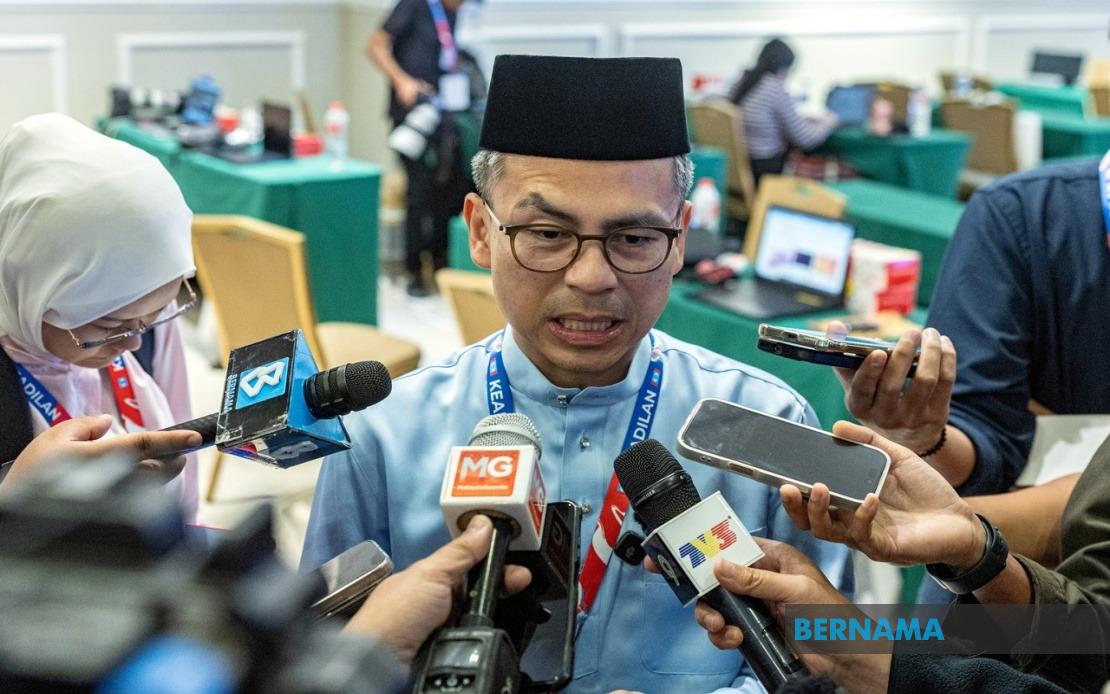
Malaysia's Parti Keadilan Rakyat (PKR) is embarking on a significant restructuring of how it communicates government policies and achievements to the public, recognising a persistent credibility gap that threatens to undermine its political messaging. The initiative emerged from delegates' proposals at the PKR National Congress 2026, held at the Melaka International Trade and Exhibition Centre (MITC) in Ayer Keroh on August 15, with Communications Minister Datuk Seri Fahmi Fadzil signalling that the party's leadership is taking the feedback seriously as it prepares for its next phase in government.
The core challenge identified by PKR delegates reflects a broader frustration across Malaysia's ruling coalition: despite tangible economic improvements and government-implemented policies, ordinary Malaysians are not experiencing corresponding benefits in their daily lives. This perception problem has become increasingly acute as the government touts macroeconomic indicators and fiscal discipline, yet households continue to grapple with cost-of-living pressures, rising rents, and stagnant wages. Fahmi acknowledged this disconnect explicitly, noting that government efforts remain poorly translated into messaging that resonates with ordinary citizens, suggesting that the problem is not necessarily policy failure but rather a failure to articulate and defend achievements in terms that matter to voters.
Fahmi's dual role as Information Chief and Communications Minister positions him at the centre of this communications overhaul, and his comments indicate that PKR recognises the urgency of the situation. The party's leadership has committed to presenting detailed proposals during the Congress's winding-up session, drawn from suggestions raised throughout the week. Rather than dismissing these concerns as merely perception management, Fahmi's remarks suggest that PKR is prepared to implement structural changes within its own party machinery to improve how information flows from government to constituencies, and crucially, how local concerns flow back to Putrajaya for policy response.
One significant element of the proposed restructuring involves formalising communication channels between parliamentary representatives and party headquarters. Fahmi indicated that while informal channels have existed, a more robust institutional framework is needed to ensure that grassroots issues reach decision-makers quickly and that solutions can be developed and communicated back to communities. This suggests PKR recognises that its branch leaders and grassroots activists possess valuable intelligence about public sentiment and local concerns that are not adequately feeding into central messaging strategy or policy formulation.
The acknowledgement that branch leaders have expressed commitment to playing a greater role in information dissemination is particularly significant for understanding where PKR believes the communications breakdown occurs. Rather than viewing the party's communication infrastructure as working smoothly with citizens simply failing to listen, PKR appears to accept that local party structures have been underutilised as conduits for explaining government policy. This represents a shift towards treating branch-level activists as strategic communicators rather than mere campaign foot soldiers, potentially upgrading their training and resources for message amplification.
For Malaysian observers, this strategic pivot carries implications beyond PKR's internal management. The ruling Pakatan Harapan coalition has struggled since taking power to build a compelling narrative around its economic stewardship and reforms. Opposition parties have been particularly effective in weaponising public frustration over costs and living standards, regardless of whether macroeconomic fundamentals have improved. PKR's decision to confront this messaging gap head-on suggests that coalition leaders have recognised that election outcomes in Malaysia are determined less by objective economic data and more by subjective experiences and perceptions cultivated through effective political communication.
The fact that this discussion occurred at a party congress rather than behind closed doors also signals that PKR is treating communications strategy as a matter of party legitimacy and internal accountability. Delegates felt empowered to raise these concerns, and leadership responded not with defensiveness but with receptiveness. This internal democratic engagement could strengthen party cohesion and ensure that when new communication approaches are rolled out, they carry the buy-in of activist bases rather than appearing as top-down directives from the party hierarchy.
Fahmi's reference to the party's Central Leadership Council (MPP) being receptive and committed to leading transformation through internal changes first suggests that PKR understands that communications effectiveness flows from institutional coherence. If the party's own internal leadership structures are not aligned in messaging, grassroots communicators will lack clear direction. This implies that structural reforms may extend to how the party's senior decision-making body itself communicates, setting an example for how information should flow throughout the organisation.
For Southeast Asian politics more broadly, PKR's communications challenge reflects a common difficulty facing centre-left and progressive coalitions across the region. These parties often implement economically rational policies that protect long-term stability but fail to generate immediate household-level improvements that citizens can perceive and celebrate. Meanwhile, populist opponents can more readily promise immediate relief or blame external scapegoats. PKR's attempt to solve this through better strategic communication demonstrates both the sophistication of its approach and the limits of messaging in overcoming structural economic challenges that require time and sustained effort to resolve.
The timing of this strategic review, occurring more than a year before Malaysia's next general election, suggests that PKR is preparing the political terrain for renewed competition. By acknowledging current communication shortcomings and committing to systematic improvements, the party is positioning itself to manage public expectations and potentially reshape how Malaysians perceive government performance. Whether these changes will prove sufficient to reverse public perception gaps depends not only on communication effectiveness but also on whether policies can be adjusted to deliver more visible household-level improvements, which remains the ultimate test of any messaging strategy.

