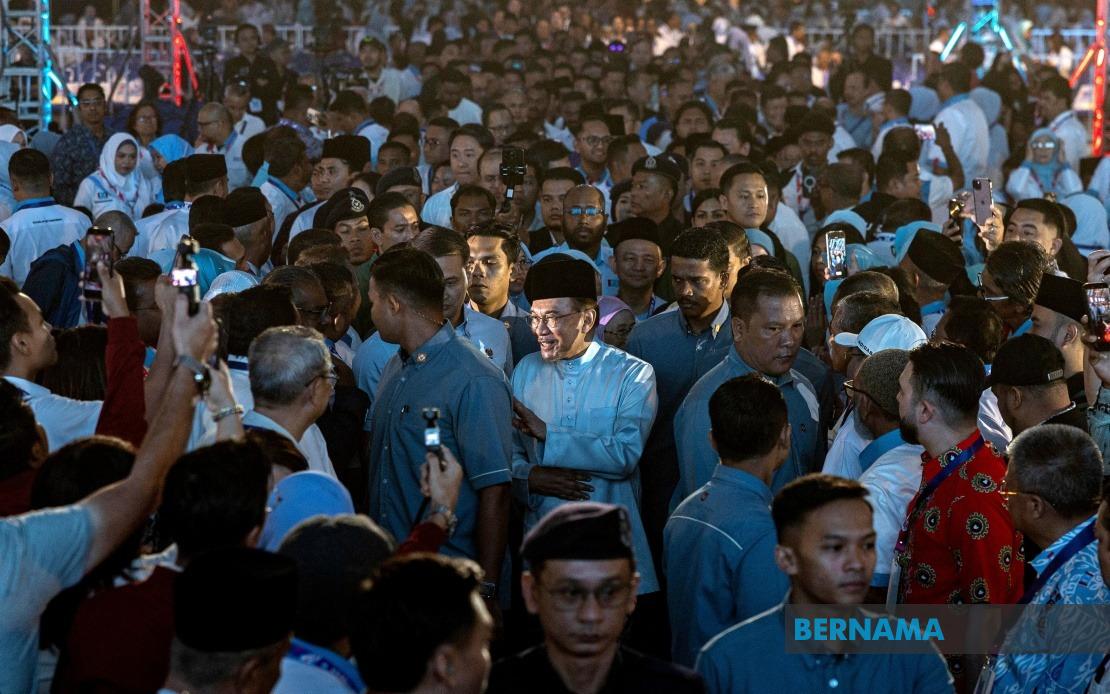
Tengku Datuk Seri Zafrul Tengku Abdul Aziz has set the tone for PKR's forthcoming 2026 National Congress by emphasising the need for party unity and renewed efforts to earn back the electorate's confidence. The Prime Minister's senior political adviser, who serves as an ex-officio member of the PKR Political Bureau, delivered his message via social media from Melaka, underlining that the gathering must function as a crucial juncture for the party to consolidate its forces and chart a clearer path forward.
The timing of Tengku Zafrul's intervention carries particular weight given recent disappointments in state elections. Rather than deflecting blame onto coalition partners within the Unity Government, he has pivoted the conversation inward, suggesting that PKR's leadership recognises the need to examine its own performance before looking elsewhere for explanations. This pragmatic assessment reflects an understanding that external factors, while significant, cannot substitute for robust internal party management and effective grassroots mobilisation.
Tengku Zafrul's call for comprehensive self-reflection addresses what appears to be a fundamental challenge facing PKR in the contemporary political landscape. He has explicitly urged all members to undertake an honest examination of the party's structural weaknesses, organisational efficiency and mechanisms of internal communication. This diagnostic approach suggests recognition that the party machine, from its grassroots networks to its central command structures, requires systematic strengthening to function at optimal effectiveness.
The adviser's emphasis on listening to people's concerns represents a strategic repositioning in how PKR engages with ordinary citizens. Rather than becoming consumed by the urge to respond immediately to criticism or defend recent policy decisions, he advocates for a more patient, empathetic approach where party representatives first seek to comprehend what voters are genuinely experiencing. This shift in methodology acknowledges that residents' grievances often go unheard because political actors rush to justify rather than understand.
Communication failures emerge as a central theme in Tengku Zafrul's assessment of where PKR has fallen short. He recognises that even when the government and party deliver tangible results and improvements, these achievements may fail to register with the public if the narrative and evidence are not presented clearly and persuasively. This gap between performance and perception represents a critical vulnerability that extends beyond PKR to broader challenges facing the Unity Government coalition.
The framework Tengku Zafrul proposes—listen, acknowledge, deliver—operates on a logic of sequential engagement rather than simultaneous response. By separating these three components, he implicitly critiques a tendency within political organisations to collapse these stages, answering before hearing and defending before acknowledging. This methodical approach demands patience and humility from party activists, qualities that can be difficult to instill in competitive political environments.
Regional implications ripple through Tengku Zafrul's intervention, particularly for Malaysia's broader democratic functioning. PKR's capacity to revitalise itself directly affects the stability and credibility of the Unity Government arrangement, which has become the dominant coalition structure since 2022. Should PKR successfully implement internal reforms and reconnect with voters, the coalition gains additional resilience. Conversely, continued erosion of PKR's electoral support could destabilise the government and reshape Malaysia's political dynamics.
The statement also reflects broader challenges facing centrist and reformist movements across Southeast Asia. Parties positioning themselves as progressive forces often struggle with the tension between policy delivery and effective political communication, between governance achievements and grassroots enthusiasm. PKR's experience resonates with similar parties across the region that have discovered that good intentions and policy success alone cannot sustain electoral momentum without sustained organisational engagement and transparent communication with constituents.
Tengku Zafrul's role as senior political adviser gives his words particular resonance within party circles, signalling top-level commitment to renewal. This positioning suggests that party leadership recognises the gravity of recent electoral setbacks and is prepared to drive comprehensive internal reforms. The emphasis on assessing weaknesses rather than celebrating past achievements indicates a realistic appraisal of PKR's current standing and trajectory.
The forthcoming 2026 congress will serve as a critical test of whether PKR can translate these high-level exhortations into practical reforms. The party will need to move beyond rhetorical commitment to unity and begin implementing structural changes that address identified weaknesses in party machinery, communication strategies and grassroots engagement. The success of these efforts will substantially influence not only PKR's electoral prospects but also the broader stability of Malaysia's political system heading into the next general election cycle.

