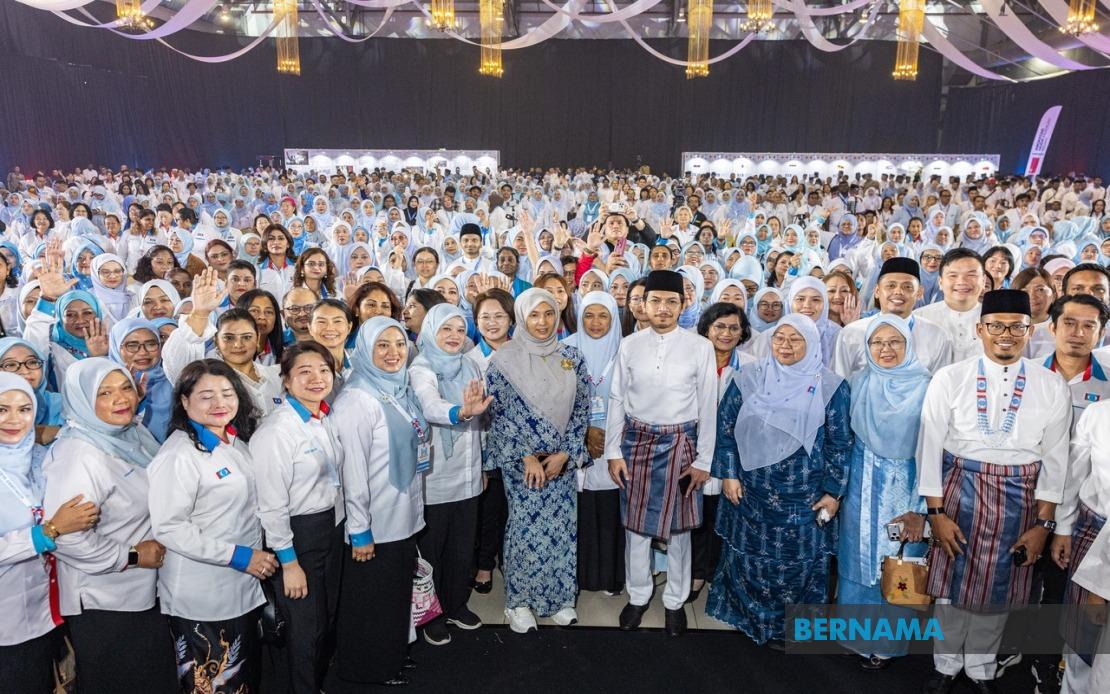
The People's Justice Party (PKR) faces a critical challenge in converting public support into concrete electoral gains, according to the chief of its youth wing Angkatan Muda Keadilan (AMK), Muhammad Kamil Abdul Munim. Speaking at the 2026 AMK National Congress held in Melaka this week, he emphasised that the party's current standing requires a comprehensive overhaul of its political messaging and organisational approach if it hopes to maintain its relevance and secure victories in upcoming elections.
Muhammad Kamil's assessment points to a growing recognition within PKR's hierarchy that the party faces a structural problem distinct from matters of popularity or public affection. While PKR continues to command significant support among certain voter demographics and retains government representation, recent electoral performances in Sabah, Johor and Negeri Sembilan have exposed vulnerabilities in translating that support into tangible election outcomes. The youth wing chief argued that these experiences revealed a fundamental weakness: the party's grassroots infrastructure remains insufficiently robust to convert enthusiasm into systematic electoral machinery capable of winning seats at scale.
The timing of this critique is significant for Malaysian politics. Since PKR's formation in 1998, the party has historically benefited from waves of popular sentiment, with ordinary citizens volunteering their labour and networks to support electoral campaigns. During both opposition phases and government participation, this volunteer base provided the party with operational advantages that transcended its formal organisational structure. However, Muhammad Kamil's comments suggest this organic mobilisation model no longer delivers reliable returns, particularly as Malaysia's electoral landscape has become more fragmented and competitive.
The implications for PKR extend beyond mere internal party management. As a key component of the Pakatan Harapan coalition and a significant presence in the current federal government, PKR's capacity to perform well in state and general elections directly affects the stability and trajectory of Malaysia's political coalitions. Weakness in PKR's ground presence could translate into seats lost not merely to opposition parties but to coalition partners such as DAP or Amanah, potentially shifting internal power dynamics within Putrajaya.
Muhammad Kamil advocated for PKR to fundamentally reconsider its operational methodology, calling for approaches that are more deliberate, strategically coordinated and outcome-focused. His emphasis on adopting new tactics and refining political activities reflects an acknowledgment that the era of relying predominantly on spontaneous popular movements has ended. The party must evolve from a protest vehicle into a disciplined electoral organisation capable of sustained performance across diverse constituencies and demographic groups.
The congress itself provided a platform for broader reflection within PKR's youth wing about the party's direction. Attended by senior figures including deputy president Nurul Izzah Anwar, vice-president Dr Zaliha Mustafa and Wanita PKR chief Fadhlina Sidek, the gathering signalled that concerns about organisational capacity extend across the party's leadership echelons. Rather than dismissing recent setbacks, these leaders appeared to accept that difficult truths about PKR's limitations required frank acknowledgment and concrete remediation.
Fadhlina Sidek particularly emphasised the necessity of using the congress as a moment for institutional introspection and humility. She argued that leaders' rhetoric must be converted into actionable strategic initiatives, with grassroots feedback incorporated systematically into party planning. This framing suggests that PKR's leadership recognises that exhortatory speeches alone cannot address underlying organisational deficiencies. Instead, the party requires detailed operational reforms that empower local structures and ensure coherent implementation of electoral strategies across different states and regions.
The distinction Muhammad Kamil drew between opposition and government phases of political activism also merits attention. He observed that pursuing reform objectives operates differently depending on whether a party occupies government or operates from outside power structures. This observation reflects a mature understanding that PKR's recent experience as part of the ruling coalition has complicated its organisational dynamics. Members accustomed to opposition activism must adapt to government responsibilities, fundraising patterns shift, and volunteer motivations become more diverse and sometimes contradictory.
For Malaysian observers and political analysts, PKR's current trajectory represents a broader challenge facing parties that have transitioned from protest movements to mainstream political entities. The party must develop institutional depth and organisational discipline without losing the dynamism and ideological clarity that initially attracted supporters. This balancing act has proven difficult for comparable parties internationally and regionally, suggesting PKR faces years of adjustment as it consolidates its position within Malaysia's political establishment.
The youth wing's congress also underscores generational questions within PKR's future. As founding narratives about the party's origins in 1998 reform agitation become increasingly distant history, younger members recruited through government positions or conventional party structures may lack the activist instincts and personal networks that characterised earlier cohorts. Muhammad Kamil's call for renewed commitment and determination thus carries an implicit message: PKR must simultaneously preserve institutional memory of its reform mission while building new organisational capabilities suited to contemporary electoral competition.
Moving forward, PKR's response to these critiques will determine its political trajectory through the remainder of this government's term and into the 2026 general election cycle. Whether the party can successfully execute the strategic and organisational reinvention its youth wing advocates remains an open question, but the frank acknowledgment of current weaknesses suggests at least some institutional willingness to confront difficult realities.

