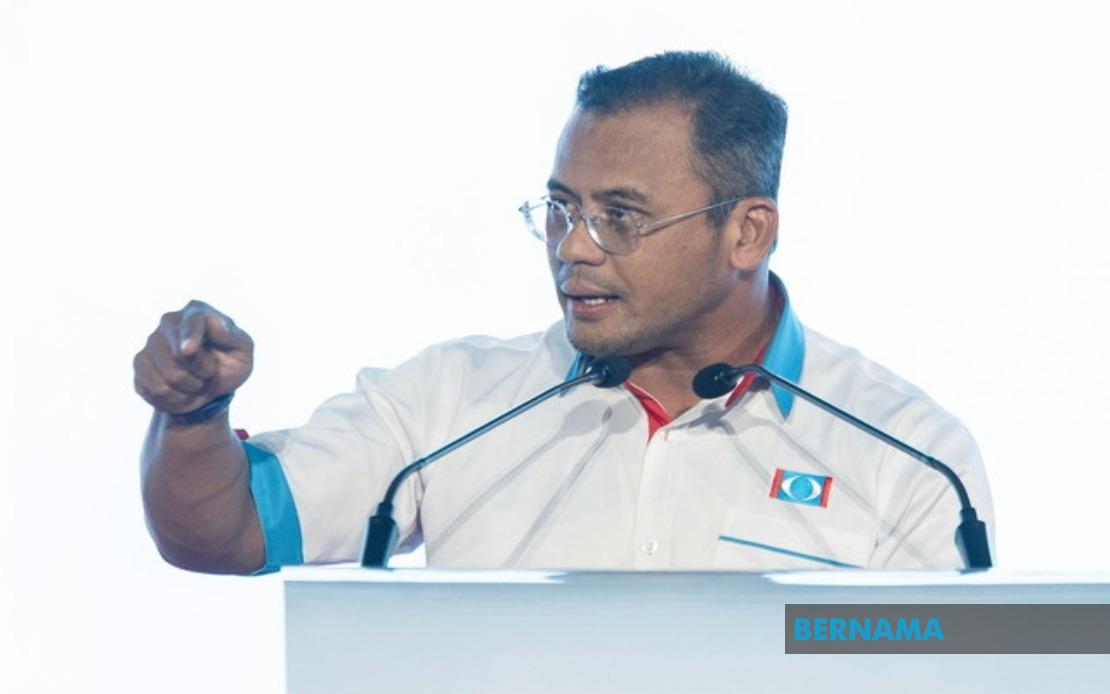
The leadership of Parti Keadilan Rakyat has made a pointed call for the party to continue championing equitable governance and steer clear of exploiting racial divisions as a political strategy. Speaking at the PKR National Congress in Melaka, senior party figures underlined their commitment to safeguarding democratic principles and social cohesion while respecting the constitutional protections afforded to Islam and the Malay community—a delicate balance that has become increasingly important in Malaysia's fractious political landscape.
Datuk Seri Amirudin Shari, the party's vice president and Selangor Menteri Besar, articulated this position during the congress closing remarks, framing PKR's approach as one that simultaneously honours constitutional fundamentals and extends fair treatment across all communities. His framing is significant: rather than presenting these principles as contradictory, he positioned them as complementary elements of a coherent political philosophy. This nuance addresses a persistent criticism that multiethnic coalitions in Malaysia struggle to reconcile the constitutional acknowledgement of special rights for Malays and Islam with broader commitments to non-discrimination.
Amirudin traced this balancing act to the reform movement initiated by party president Datuk Seri Anwar Ibrahim in 1998, which he credited with advancing multiple democratic priorities. According to the vice president, PKR's historical contribution encompasses not merely electoral success but substantive shifts in public discourse around democratic deepening, protection of fundamental rights, equitable economic opportunity, and institutional integrity. This historical perspective suggests that the party views its current positioning as an extension of two decades of ideological development rather than a sudden pivot.
A second vice president, Datuk Seri R. Ramanan, who holds the Human Resources portfolio, went further in his condemnation of identity-based politics. He directly identified what he characterised as deliberate efforts by certain political actors to weaponise racial anxieties for electoral gain, portraying such tactics as fundamentally corrosive to national unity. Ramanan's statement carries particular weight given his ministerial position and his role representing the multiethnic constituency that such divisive messaging typically targets. His call for PKR to remain steadfastly opposed to racial polarisation echoes growing concern among moderate political voices that Malaysia's social fabric faces genuine strain from escalating identity-focused campaigning.
Ramanan also pivoted toward internal party discipline, urging the leadership hierarchy to project unity and suppress personal rivalries that might otherwise cascade down through the party structure. His warning—that factional disputes at the top level ultimately weaken grassroots machinery and confuse ordinary members—reflects a pragmatic assessment of organisational dynamics. When senior figures engage in public disagreement, he suggested, the party's opponents benefit from the resulting confusion and reduced coherence. This emphasis on party discipline speaks to concerns that PKR, like other Malaysian political organisations, faces recurring centrifugal pressures that threaten organisational cohesion.
The human resources minister explicitly framed party unity as a prerequisite for electoral effectiveness, arguing that a house divided against itself inevitably loses its capacity to present a compelling alternative to voters. His appeal to members to subordinate ego to collective purpose reflects a recognisable anxiety within multiethnic parties that personal ambitions and factional loyalties can undermine the broader mission. For PKR specifically, which has struggled at various points with high-profile defections and internal disputes, this reminder of institutional priorities carries evident urgency.
A third voice in this leadership chorus came from vice president Datuk Chang Lih Kang, who offered empirical evidence to counter the claim that racial or identity-based appeals represent the most effective political strategy. Chang pointed to the Chennah state election result in Negeri Sembilan, where DAP secretary-general Anthony Loke achieved notably increased support from Malay voters despite opposition campaigns predicated on identity politics. This specific example serves a dual rhetorical purpose: it demonstrates that non-Malay political leaders can successfully appeal across ethnic lines, and it suggests that identity-focused messaging, regardless of its volume or intensity, does not necessarily determine electoral outcomes.
Chang's argument implies a broader claim about the political marketplace in Malaysia—namely, that voters increasingly evaluate candidates on competence and service delivery rather than exclusively or even primarily through an ethnic or religious lens. If this assessment holds, it could suggest a gradual shift in electoral behaviour that might ultimately reduce the incentive for politicians to deploy divisive messaging. However, the need for Chang and other PKR leaders to repeatedly emphasise this point also suggests considerable scepticism remains about such a shift, both within PKR's own ranks and among rival political movements.
The timing of these statements at PKR's national congress carries significance beyond their immediate rhetorical content. National congresses represent formal occasions where party direction gets articulated, member commitment gets renewed, and messaging for the broader public gets established. By making anti-identity-politics positioning a central theme of the congress, PKR's leadership has signalled that differentiation from opponents on this dimension constitutes part of the party's core brand proposition. This positioning distinguishes PKR from parties that have more openly embraced communal or religious mobilisation strategies.
For Malaysian political observers, these statements reflect broader tensions in the country's democratic development. As electoral competition intensifies and parties search for voter mobilisation strategies, the temptation to activate identity-based grievances remains strong. Simultaneously, growing recognition of the risks such strategies pose to social stability has prompted moderate voices across the political spectrum to warn against escalation. PKR's explicit repositioning against identity politics places it within this moderate camp, though critics would argue that rhetoric and practice do not always align consistently within any Malaysian political party.
The implications for regional politics warrant consideration as well. Malaysia's experience with multiethnic governance and the periodic tensions around constitutional accommodation of group identities offers lessons relevant to other Southeast Asian democracies navigating similar challenges. PKR's attempt to articulate a framework respecting constitutional protections while rejecting divisive exploitation of identity represents one particular approach to this persistent problem. Whether the party can sustain this positioning amid electoral pressures and internal dynamics remains an open question, but the reiteration by multiple senior figures suggests leadership commitment to the principle, at minimum.
Moving forward, the test of these commitments will emerge in PKR's actual campaign strategies, candidate selection decisions, and responses to provocative statements from rival parties. The statements at the national congress establish clear markers against which the party's subsequent conduct can be evaluated. For Malaysian voters and observers of democratic development in the region, monitoring the alignment between these declared principles and actual practice will provide valuable insight into whether Malaysian politics can gradually shift toward more inclusive, issues-focused competition or whether identity-based mobilisation will continue to dominate the electoral landscape.

