Prime Minister Datuk Seri Anwar Ibrahim has emphasised that Parti Keadilan Rakyat must transcend its role as a conventional political machine, instead embodying the values of a grassroots movement dedicated to upholding public confidence and advancing the nation's welfare. In remarks shared on social media ahead of the party's upcoming national gathering, Anwar articulated a vision where PKR's primary purpose extends beyond securing electoral victories to encompass broader principles of integrity, social justice, and national unity. This distinction reflects an ongoing tension within Malaysian politics between the pragmatic demands of competitive campaigning and the ideological commitments that originally motivated party formation.
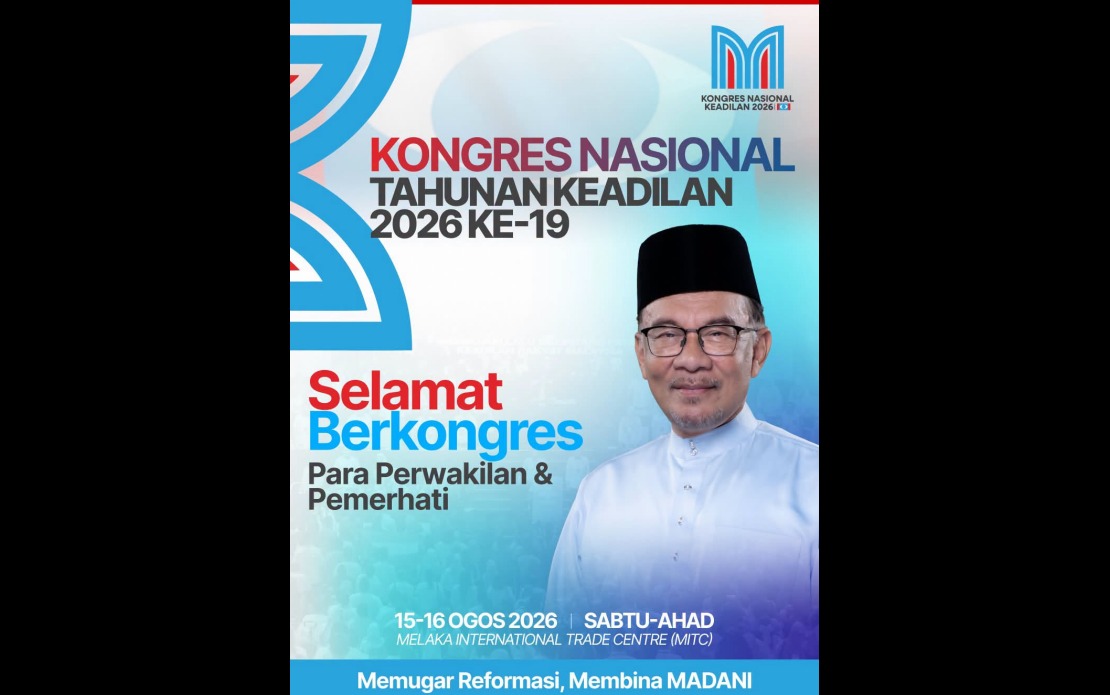
The Prime Minister's message arrives as PKR prepares for its National Congress 2026, scheduled to convene tomorrow at the Melaka International Trade Centre in Ayer Keroh. The two-day event carries considerable significance for the coalition government, as it provides a formal space for the party to reaffirm its foundational principles and recalibrate its strategic direction amid a complex and shifting political environment. Anwar's emphasis on introspection suggests PKR leadership recognises the need for internal consolidation—a process that often becomes necessary when parties face external pressures or internal scrutiny regarding their adherence to stated principles.
Under the thematic banner "Memugar Reformasi, Membina MADANI," the congress attempts to reconnect with the reformasi movement that catalysed PKR's establishment decades ago. This framing is particularly noteworthy given the evolution of Malaysian politics since the 1998 Reformasi movement. What began as a mass mobilisation against perceived injustice has matured into institutional structures that must now balance ideological consistency with the operational requirements of governing. The congress theme suggests party officials view renewed engagement with foundational principles as essential for maintaining relevance and legitimacy among the broader electorate.
Anwar's invocation of integrity, social justice, unity, and public trust reflects the core philosophical commitments that distinguish PKR from competing political entities in Malaysia's coalition landscape. These principles carry particular weight given Malaysia's ongoing efforts to strengthen democratic institutions and public confidence in governance. The emphasis on building "a more dignified, prosperous and just Malaysia" articulates aspirations that resonate across socioeconomic divides, though translating such rhetoric into tangible policy outcomes remains an enduring challenge for any government.
The congress represents an opportunity for PKR to assess its performance since assuming significant ministerial responsibilities within the federal government. As the largest component of the Pakatan Harapan coalition, PKR's capacity to implement reformist agendas while managing the practical constraints of coalition governance directly impacts public perception of the ruling alliance's commitment to change. Such gatherings typically feature both celebratory assessment of achievements and critical examination of shortcomings—a duality that tests leadership's willingness to acknowledge imperfections.
Anwar's scheduled policy address carries particular importance, as it will outline PKR's strategic priorities and medium-term direction. Such speeches typically synthesise party achievements, respond to public criticisms, articulate future commitments, and establish frameworks for party members' engagement with policy implementation. For observers tracking Malaysian political development, Anwar's remarks will provide insight into how PKR leadership envisions the party's evolution and whether recent electoral performance or internal challenges have prompted strategic recalibration.
The broader context of this congress encompasses Malaysia's political landscape following the 2023 general election and subsequent developments in coalition dynamics. PKR's position within ruling structures has required navigating competing pressures—maintaining party members' morale and reward structures while advancing governance objectives, satisfying grassroots expectations while accommodating coalition partners' interests, and sustaining public support despite inevitable policy compromises. These tensions frequently surface during party congresses, where diverse factions articulate competing visions of party direction.
For Malaysian observers, the significance of this gathering extends beyond PKR's internal affairs to encompass broader questions about the trajectory of democratic institutions and coalition governance. The emphasis on mass movement principles suggests party leadership acknowledges that electoral success alone cannot sustain political legitimacy indefinitely. Public confidence requires consistent alignment between stated principles and governmental action—a standard that becomes increasingly stringent when parties occupy executive positions.
The reformasi agenda invoked throughout the congress theme carries particular resonance given Malaysia's constitutional democracy and evolving relationship with institutional reform. Regenerating commitment to reformasi principles may reflect recognition that public memory of the original movement's idealism could strengthen party cohesion and electoral appeal. However, translating historical movement principles into contemporary governance frameworks presents substantive challenges, particularly when coalition partnerships may impose constraints on unilateral action.
As PKR gathers in Melaka, the congress will demonstrate whether internal mechanisms remain vibrant spaces for genuine deliberation or function primarily as celebratory venues for leadership pronouncements. The degree to which delegates engage substantively with party direction, accountability mechanisms, and future strategic priorities will provide crucial indicators of institutional health. Anwar's emphasis on introspection and assessment suggests openness to critical evaluation, though outcomes will ultimately depend on actual congress proceedings and subsequent implementation of articulated commitments.
The congress concludes a period during which PKR, as governing party, has confronted inevitable tensions between idealistic principles and pragmatic governance realities. By framing the gathering as opportunity for reassessing the party's commitment to foundational values, Anwar signals recognition that maintaining public trust requires consistent demonstrated alignment between political rhetoric and governmental outcomes. For Malaysian political observers and Southeast Asian analysts tracking democratic development, PKR's congress provides a relevant case study of how established movements navigate the complexities of institutionalisation while attempting to preserve original ideological commitments.

