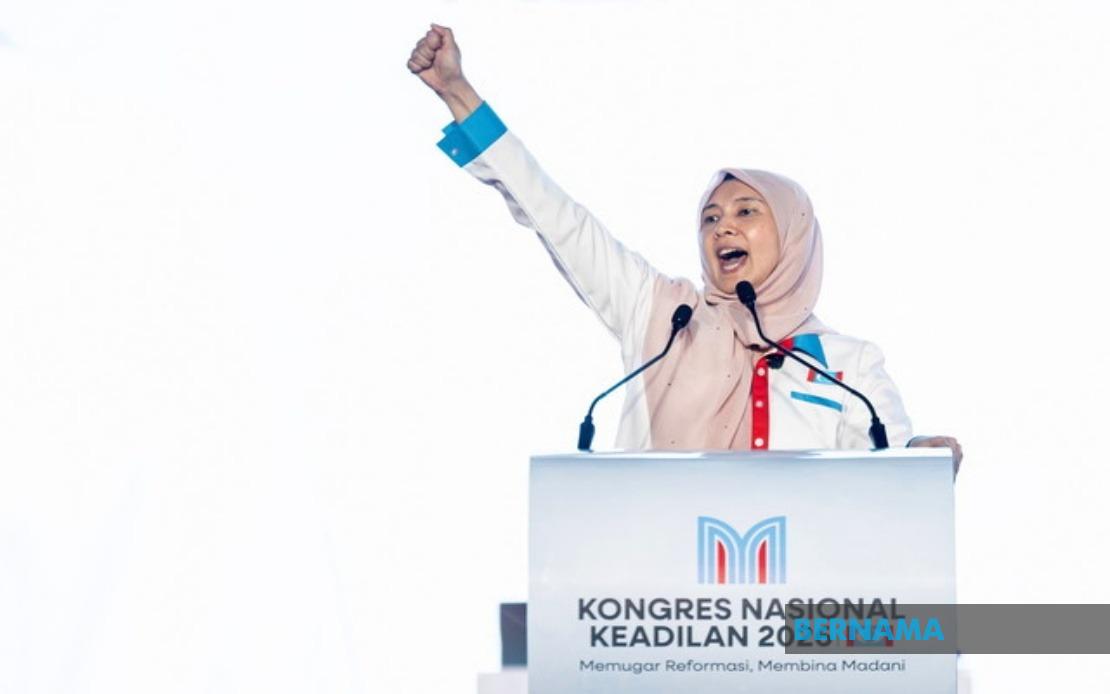
PKR's reform mission must remain at the centre of the party's identity even as it governs, according to deputy president Nurul Izzah Anwar, who delivered this message to party delegates at the PKR 2026 National Congress in Melaka. Speaking at the two-day gathering held at Melaka International Trade Centre, Izzah stressed that the party born from a wave of pro-democracy and institutional change cannot afford to become complacent after achieving electoral success. The challenge facing PKR, she suggested, is to translate electoral mandate into tangible structural improvements that reshape how government functions and distributes opportunity.
The timing of Izzah's exhortation carries significance for Malaysian politics. Since the formation of the MADANI Government, PKR has held key ministerial portfolios while operating within a coalition framework. This positioning creates both opportunity and peril: the party can leverage executive power to enact long-standing reform planks, yet risks being perceived as abandoning its founding principles if it prioritises governing stability over disruptive change. Izzah's intervention signals internal party concern that momentum may be slipping, and that newer members who joined PKR primarily through electoral appeal rather than ideological commitment may not carry forward its reform DNA.
One concrete example illustrates her point. The repeal of the Universities and University Colleges Act (AUKU) 1971 represents a cause PKR championed for years while in opposition, arguing the legislation unjustly restricted academic freedom and student political participation. The fact that this reform has now been achievable only because PKR holds government positions underscores Izzah's broader argument: power, when wielded purposefully, becomes an instrument for change rather than merely a perch from which to consolidate advantage. Yet the path from legislative repeal to institutional transformation remains long, requiring bureaucratic buy-in and cultural shifts within universities themselves.
Beyond education policy, Izzah directed attention toward economic inclusion as another frontier where reform impulses must intensify. The MADANI Government has achieved measurable economic growth metrics, but she emphasised that headline figures mask persistent inequalities in how that growth translates into household prosperity. Job creation alone is insufficient if those positions offer stagnant wages that erode in real terms. Small and medium enterprises, which employ millions across Malaysia, require structural support beyond occasional government schemes—they need access to credit, regulatory simplification, and market protection from oversized competitors.
Her emphasis on female and youth economic participation reflects evolving priorities within PKR's reformist coalition. Malaysia's female labour force participation, while improving, remains below regional averages and far below potential. Young Malaysians, meanwhile, increasingly migrate for opportunity or face underemployment despite tertiary qualifications. These are not marginal concerns but central to whether Malaysia's economic transition gains legitimacy among its own citizens. Izzah's framing suggests that reform must now mean not merely opening political space or democratising institutions, but genuinely restructuring economic access to prevent new generations from viewing the political system as unresponsive to their material circumstances.
Central to her message was a philosophical point about power itself. She warned PKR leaders against treating positions as property rather than temporary stewardship of public trust. This admonition may reflect unspoken tensions within coalitional politics, where portfolio allocation, succession planning, and individual advancement sometimes overshadow collective mission. By contrast, Izzah invoked a vision where leaders measure their legacy not by titles retained or hierarchies climbed, but by institutional changes that outlast their tenure. This framing challenges a common Malaysian political tendency where power becomes personalised and leaders define success through proximity to decision-making rather than through measurable policy outcomes.
The philosophical underpinning of her argument—that reform must become embedded in institutional DNA rather than remaining hostage to individual leaders' commitment—carries particular relevance for Southeast Asian democracies grappling with democratic backsliding. In Thailand, Myanmar, and increasingly concerning to observers, the Philippines, personalised power structures have enabled authoritarian reversals. PKR's experience, by contrast, demonstrates that institutional reform pursued collectively can create durable constraints on power abuse. Yet this only works if successive cohorts of party members internalise and champion those principles rather than treating them as historical baggage.
Nurul Izzah's intervention also signals something about PKR's internal dynamics. As the party matures from a protest movement into a governing entity, generational tensions inevitably emerge between founders and newer entrants, between those who sacrificed during opposition years and those who joined after victory appeared assured. Her insistence that reform must continue suggests concern that pragmatic compromise inherent to coalition governance could gradually erode the ideological distinctiveness that made PKR attractive to its base. This is a delicate balance—coalitions require flexibility, yet flexibility without principle can become indistinguishability.
For Malaysian observers, the implications extend beyond PKR itself. If the coalition government's dominant party allows reform commitments to atrophy, the broader MADANI initiative risks becoming merely administrative continuity rather than genuine transformation. Voters who supported change partly because existing systems felt sclerotic and unresponsive would register disappointment. Conversely, if PKR successfully embeds institutional reforms—through wages policy aligned to productivity growth, genuine meritocracy in civil service advancement, or genuine devolution of power to local government—it creates a template other governments might emulate across Southeast Asia's democracies.
Ultimately, Izzah's exhortation reflects a truism sometimes forgotten in the transition from opposition to governance: staying true to founding principles while wielding executive power requires constant vigilance and recommitment. The 2026 National Congress represented an opportunity to reinforce those commitments to a party that has grown substantially since its reformist origins. Whether PKR can sustain genuine reform momentum while navigating coalition pressures and managing diverse interests within its membership will substantially determine not only its own trajectory but also the durability of institutional changes that Malaysia requires.

