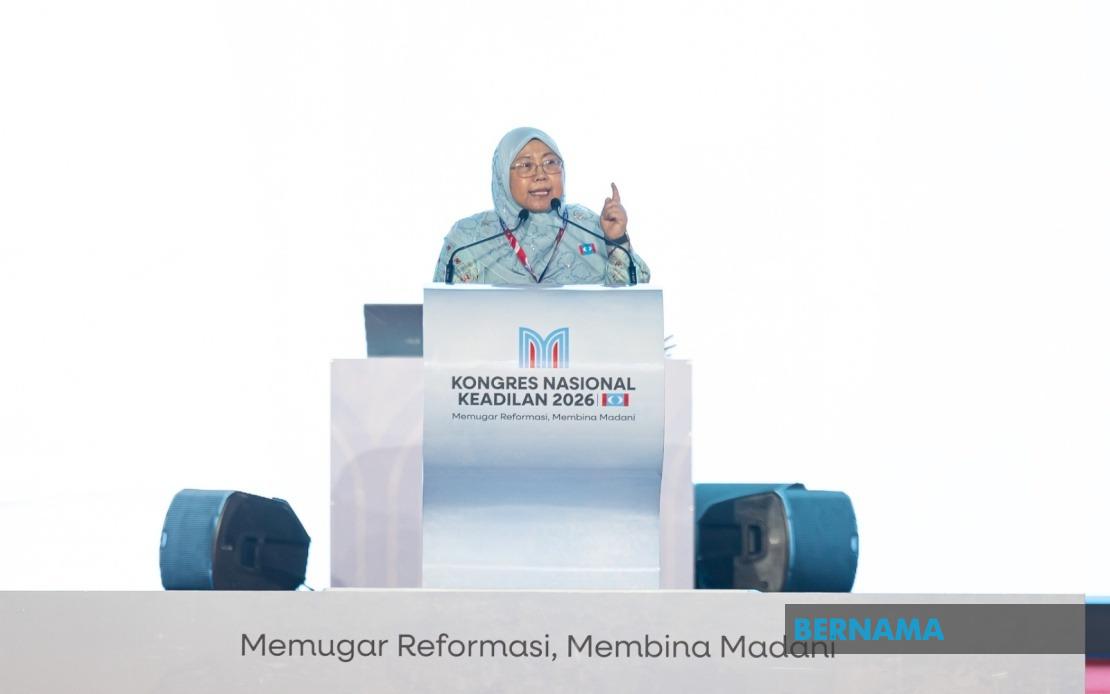
Parti Keadilan Rakyat (PKR) must confront the current political landscape with a measured and forward-thinking disposition, according to party secretary-general Senator Datuk Dr Fuziah Salleh, who delivered a sobering yet hopeful message to the party faithful gathered in Melaka this week. Speaking at the 2026 PKR National Congress held at the Melaka International Trade Centre (MITC) in Ayer Keroh, Fuziah emphasised that recent electoral disappointments should serve as a catalyst for rejuvenation rather than a source of blame-shifting and internal conflict. The congress, which drew together 2,594 delegates and more than 2,000 observers from around the country, has become a crucial juncture for Malaysia's premier reformist party to reassess its direction and recommit to its foundational ideals at a time when its political fortunes appear uncertain.
The timing of Fuziah's exhortation is significant, as PKR navigates a period of declining electoral performance and diminished parliamentary representation compared to its aspirations when it co-led the Pakatan Harapan government. Her insistence that the congress serve as a platform for introspection rather than recrimination reflects an awareness that factional tensions and mutual accusations could further fracture a party already grappling with internal strains. She warned against using the gathering as an opportunity for members to apportion blame to other parties or to engage in retaliatory posturing over the challenges currently confronting the party. Instead, Fuziah framed the congress as a moment for collective reflection, where members could acknowledge difficult experiences without permitting those setbacks to dictate the party's trajectory going forward.
Central to Fuziah's argument is a historical perspective that reframes PKR's present difficulties within a longer arc of struggle and recovery. She invoked the aftermath of the 2004 General Election, a watershed moment when PKR's parliamentary representation collapsed to a single seat, a nadir that threatened the party's very viability. Rather than capitulating to despair, PKR leadership at that time chose to strengthen internal organisational structures, deepen grassroots engagement, and carry the Reformasi message across the nation. This strategic persistence ultimately bore fruit, enabling the party to rebuild its political capital and lay the groundwork for its eventual participation in government. By reference to this historical recovery, Fuziah sought to persuade contemporary party members that current difficulties, while painful, do not constitute an existential crisis comparable to earlier trials the party has overcome.
The symbolism embedded in this year's congress theme, "Memugar Reformasi, Membina MADANI," carries particular weight in Fuziah's framing of PKR's challenge. The Malay term "memugar" carries connotations of revival, renewal, and restoration—suggesting that PKR's task is not to abandon or reinvent the foundational principles that gave rise to the party, but rather to revitalise those principles and render them pertinent to contemporary Malaysian political realities. Fuziah emphasised that the party does not seek to construct a novel ideological framework but rather to rekindle the original spirit of idealism that undergirded the Reformasi movement and motivated PKR's founding. This distinction is crucial, as it acknowledges that some revision and adaptation are necessary without suggesting a fundamental departure from core commitments to transparency, accountability, and democratic governance.
The congress attracted international attention, with 26 diplomatic representatives from 19 countries in attendance, including six ambassadors, a testament to the perceived importance of PKR's internal deliberations to the broader regional and international community. This diplomatic turnout underscores how developments within Malaysia's primary reformist party carry implications beyond domestic electoral competition, touching on regional questions of democratic governance, civil liberties, and political pluralism. For Malaysia's partners in Southeast Asia and beyond, the stability and coherence of PKR as an institutional force matters insofar as it affects the durability of democratic institutions and competitive politics within the region's largest economy.
The scale of participation at the congress—nearly 5,000 official delegates and observers—indicates that despite recent electoral reverses, PKR retains considerable organisational infrastructure and grassroots engagement. This reservoir of activist commitment and institutional capacity could prove instrumental if the party successfully transforms disappointment into mobilisation. However, the challenge lies in channelling this energy constructively, ensuring that reflection does not devolve into recrimination and that shared acknowledgement of defeat strengthens rather than fractures party cohesion. Fuziah's appeal for maturity can be read as an implicit acknowledgement that without deliberate stewardship, the congress risked becoming a venue for airing grievances and assigning blame.
The broader political context shaping PKR's predicament involves the fragmentation of Malaysia's opposition landscape and the complex dynamics of coalition politics. Since the 2022 general election and the formation of the Anwar Ibrahim-led government, PKR has encountered the distinct challenges that come with executive responsibility, including trade-offs between ideological commitments and pragmatic governance, and the necessity of managing coalition partners with differing interests and constituencies. Electoral losses in recent contests have prompted internal questioning about strategy, leadership decisions, and the party's capacity to maintain political relevance in an evolving landscape. Fuziah's injunction to avoid finger-pointing suggests awareness that such questioning, if unchecked, could devolve into factional conflict undermining the party's organisational effectiveness.
For Malaysian observers and regional analysts, PKR's trajectory matters because the party represents one of the principal institutional vehicles through which Malaysia's opposition and reform constituencies have mobilised in recent decades. If PKR successfully navigates this period of introspection and emerges with renewed strategic clarity and internal cohesion, it could reinforce the pluralistic character of Malaysian politics and strengthen institutional checks on executive power. Conversely, if current difficulties precipitate deeper factional conflict or organisational decline, the ramifications could extend beyond the party itself, affecting the broader health of Malaysia's political competition and democratic institutions. Fuziah's emphasis on learning from history and avoiding destructive internal conflict can thus be understood not merely as pragmatic party management but as a statement about the responsibilities of opposition movements in sustaining democratic governance.
The 2026 National Congress represents, in many respects, a test of whether PKR can move beyond the disappointments of recent years through genuine institutional renewal grounded in reaffirmed commitment to foundational principles. Fuziah's message, while necessarily calibrated to inspire hope and unity, also implicitly acknowledges that the party faces a choice: it can either channel current difficulties into constructive reform and strategic repositioning, or it can permit them to fester as sources of internal division and organisational decay. The congress theme and her framing thereof suggest a preference for the former path, though the actual realisation of such renewal will depend on whether the party membership, leadership, and organisational structures can sustain the collaborative ethos she has articulated. In the months and years ahead, observers will monitor whether PKR's congress rhetoric translates into substantive institutional changes and renewed electoral competitiveness.

