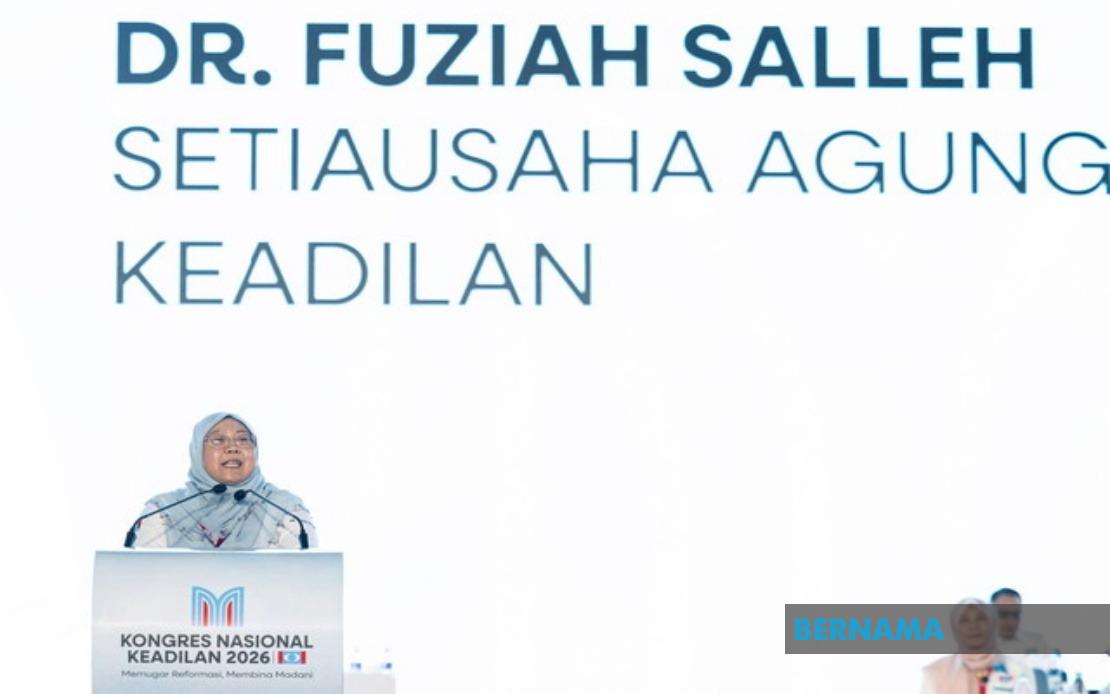
Datuk Dr Fuziah Salleh, secretary-general of Parti Keadilan Rakyat, has issued a call for the party to substantially deepen and clarify its communication strategy around the MADANI Economy framework, warning that without stronger narrative cohesion and disciplined execution, the party's broader reform agenda risks remaining theoretical rather than transformative. Speaking during her closing remarks at the PKR National Congress 2026 in Melaka on August 16, Fuziah underscored that party members and leaders across all organizational levels must embrace a more dynamic approach to translating the party's conceptual thinking into tangible programs that directly improve citizens' lives.
The emphasis on narrative and communication reflects a recognition within PKR's leadership that political parties in Malaysia increasingly compete not merely on electoral performance but on the clarity and accessibility of their policy messages to voters. The MADANI Economy framework, which has served as a cornerstone of the current government's economic approach, encompasses principles around inclusive growth, fair distribution of resources, and reduction of inequality. However, Fuziah's statement suggests that party machinery has struggled to effectively communicate these concepts beyond internal party structures or high-level policy circles, potentially limiting their resonance with ordinary citizens who might benefit from such frameworks.
In her remarks, Fuziah emphasized that reshaping internal party culture would be essential to this communication overhaul. She specifically called for transformation in three interconnected areas: the way party members think about economic and social issues, the channels and methods through which the party communicates its positions, and the broader narrative or story that the party tells about its vision for Malaysia. This three-pronged approach suggests recognition that effective political change requires simultaneous shifts in intellectual orientation, operational capacity, and public messaging—a comprehensive approach that extends well beyond simple public relations adjustments.
The secretary-general was candid about the institutional challenges involved in implementing such reforms. She stressed that translating party thinking into government action demands exceptional levels of discipline and commitment from both the party apparatus and the government administration itself. Fuziah used the metaphor of warfare to illustrate the scale of the ambition: winning politically is insufficient without adequate resources, strategic clarity, and sustained momentum to achieve concrete outcomes. This framing acknowledges that many reform initiatives falter not because of flawed ideas but because of insufficient organizational discipline or wavering commitment when implementation becomes difficult or politically contentious.
A particularly significant dimension of Fuziah's address concerned PKR's positioning as a multiethnic and non-communal party. She reiterated that the party's organizing principle centers not on safeguarding the rights of specific ethnic or religious groups but on championing the interests of economically disadvantaged populations regardless of their background. This statement carries particular weight in Malaysian politics, where communal considerations have traditionally dominated party strategy and political discourse. By reaffirming this inclusive stance, Fuziah was signaling to both PKR members and the broader public that the party's reform agenda is fundamentally premised on class-based rather than ethnic-based analysis of social problems.
The emphasis on fighting poverty and economic hardship across all communities connects directly to the MADANI Economy framework, which is premised on ensuring that growth benefits reach all segments of society. However, maintaining this non-communal approach consistently across organizational structures, campaign activities, and policy implementation represents a persistent challenge for multiethnic parties in Malaysia. Fuziah's remarks appeared intended to reinvigorate commitment to this principle among delegates gathered at the congress, suggesting that drift toward more communal positioning may have emerged in certain party circles or geographic branches.
Fuziah's address also implicitly acknowledged that the current political and governance environment presents substantial obstacles to implementing institutional reforms. Malaysia's complex federal system, entrenched bureaucratic practices, competing political interests within coalition governments, and resource constraints all complicate efforts to translate policy frameworks into lived improvements for citizens. By characterizing the task as challenging and demanding high discipline, she was preparing party members for a lengthy, difficult process rather than promising quick victories or dramatic transformations. This realistic framing, while less emotionally galvanizing than rousing rhetoric, may better prepare party cadres for the sustained effort required.
The timing of these remarks at the PKR National Congress is significant, as such party gatherings serve as crucial moments for resetting organizational direction and recommitting members to shared principles. Fuziah's emphasis on strengthening thinking and communication around MADANI Economy suggests that internal party surveys, feedback mechanisms, or leadership assessments had revealed gaps between the sophistication of policy frameworks developed at higher levels and the understanding or commitment to these frameworks among grassroots members. By using the congress platform to address this gap directly, leadership was attempting to create common ground around complex economic concepts.
For Malaysian readers and Southeast Asian observers, the implications of PKR's reform agenda extend beyond party-internal dynamics. As a major component of the federal government coalition, PKR's capacity to effectively implement MADANI Economy principles directly affects government performance and economic policy direction. If PKR can successfully strengthen internal commitment to these principles and improve communication about them, the broader government reform agenda gains momentum. Conversely, if the party struggles with organizational discipline or messaging clarity, this signals limitations in government capacity to deliver on comprehensive reform initiatives across multiple policy domains.
The broader context involves Malaysia's ongoing economic challenges, including moderate growth rates, persistent income inequality, and youth unemployment concerns. The MADANI Economy framework represents one strategic approach to addressing these issues, emphasizing inclusive growth and social protection alongside market-oriented policies. PKR's role in advocating for and implementing this approach within government structures thus carries genuine significance for millions of Malaysians navigating economic uncertainty. Fuziah's call for stronger commitment and clearer communication can be understood as an effort to ensure that these policy aspirations actually shape government behavior and resource allocation rather than remaining aspirational statements.
Looking forward, the challenge for PKR involves translating Fuziah's congress remarks into sustained organizational change. Party structures must develop mechanisms for educating members about MADANI Economy principles, ensuring consistency in how these ideas are communicated, and monitoring whether government implementation aligns with party positioning. Additionally, the party must navigate the tension between maintaining its inclusive, non-communal orientation while operating within a political system where communal appeals continue to exert substantial influence on voter behavior. Successfully managing these tensions while delivering tangible improvements in citizens' economic well-being will ultimately determine whether PKR's reform narrative translates into meaningful political and social impact.

