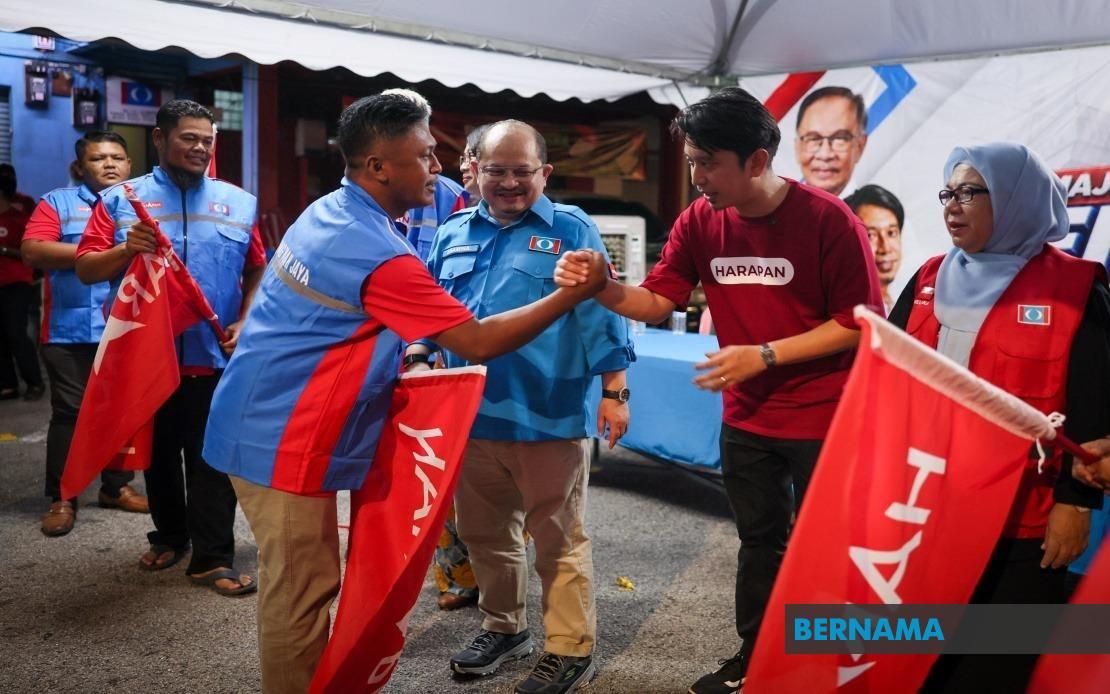
PKR Melaka has decided to move up the timetable for announcing its state election candidates, a strategic shift designed to give untested party members sufficient runway to prepare before encountering voters. The decision reflects lessons learned from past election cycles, where delayed candidate declarations left newcomers scrambling to build visibility and establish themselves within their constituencies.
Adam Adli Abdul Halim, acting chairman of the Melaka PKR Leadership Council, explained that the party has deliberately chosen to front-load its candidate selection process to accommodate its ambitious plan to field numerous fresh political faces. This acceleration serves multiple objectives: it allows new candidates to engage with constituents over a longer period, build grassroots networks, and become familiar figures before campaigning intensifies. The timing also addresses internal party pressures to demonstrate commitment to generational renewal and inclusive representation.
The screening mechanism operates across distinct layers of party hierarchy. Initial vetting begins at branch level, where local party members evaluate potential candidates based on community standing and organisational commitment. These recommendations then move to state-level review, where PKR Melaka evaluates candidates across broader strategic considerations. Only after clearing both stages do names reach the central party apparatus in Kuala Lumpur, where party president Anwar Ibrahim's office conducts final validation and approval.
Beyond expediting announcements, PKR Melaka is emphasising careful candidate preparation through structured development. The party recognises that deploying untested political operatives requires substantial investment in training, positioning, and public relations. Early announcement permits this preparation work to proceed in parallel with nomination processes, rather than sequentially, compressing what would otherwise be a compressed timeframe between selection and active campaigning.
Equally important to PKR's strategic calculus is balancing representation across demographic lines. The party explicitly seeks to elevate women candidates and younger aspirants, reflecting broader Pakatan Harapan commitments to democratisation and generational succession. This deliberate diversification demands careful orchestration to ensure neither demographic group faces tokenisation or inadequate support infrastructure. Early timelines facilitate the coaching and mentoring systems necessary to integrate these representatives effectively.
The party is simultaneously building electoral machinery across five key constituencies: Tangga Batu, Hang Tuah Jaya, Alor Gajah, Masjid Tanah, and Jasin. This systematic approach to organisational strengthening proceeds independently of candidate selection, recognising that robust grassroots structures matter more than any individual candidate's profile. PKR appears determined to prevent situations where candidate quality matters little because party machinery remains dormant or poorly coordinated.
Adam Adli, who holds the Deputy Minister of Higher Education portfolio, characterised election machinery as the foundation upon which candidate success depends. His remarks suggest PKR has concluded that weak organisational scaffolding undermines even capable candidates, whilst strong machinery can substantially amplify mediocre candidates' prospects. This reasoning appears to prioritise institutional capacity building over attempting to recruit marquee figures capable of single-handedly carrying constituencies.
Cooperation negotiations between PKR-led Pakatan Harapan and Barisan Nasional remain preliminary and informal. While party leaders have engaged in preliminary discussions exploring potential arrangements, formal negotiations determining the precise contours of possible collaboration have not yet commenced. These talks carry significant implications for Melaka's political trajectory, potentially determining whether competing parties divide constituencies, run multiple candidates in three-cornered contests, or forge formal electoral pacts.
Adam Adli indicated that PH election director Datuk Seri Amirudin Shari has initiated contact with Melaka Chief Minister Datuk Seri Ab Rauf Yusof seeking scheduling for substantive negotiations. The emphasis on preliminary communication reflects both parties' recognition that contested elections produce outcomes neither side entirely controls. By maintaining open channels, PH and BN potentially preserve options for managed competition or tactical alliances, depending on negotiations' trajectory.
Within this uncertain political landscape, PKR Melaka is hedging strategically. The party continues advancing its own preparations and hasn't foreclosed the possibility of contesting independently if BN negotiations fail to produce satisfactory arrangements. This dual-track approach—maintaining collaboration discussions whilst simultaneously strengthening internal capacity—preserves PKR's autonomy and negotiating leverage. The party signals it can succeed either through cooperation or opposition, reducing incentives for BN to demand excessive concessions.
The Melaka election occurs against Malaysia's broader political reconfiguration, where state-level contests increasingly become laboratories for national coalition experiments. How PKR and BN manage their Melaka interactions may establish precedents affecting future negotiations at other state levels. This tactical and strategic significance explains the careful positioning both sides are adopting regarding candidate timing, machinery development, and formal cooperation discussions.
For Malaysian politics more broadly, PKR's emphasis on institutional machinery and deliberate candidate development reflects evolving sophistication in electoral strategy. Rather than relying on personality-driven campaigns or last-minute organisational scrambles, the party is institutionalising systematic approaches to candidate grooming and grassroots mobilisation. Whether this translates into improved electoral performance will test whether contemporary Malaysian voters respond to organisational capacity or remain primarily motivated by individual candidate appeal and national political currents.

