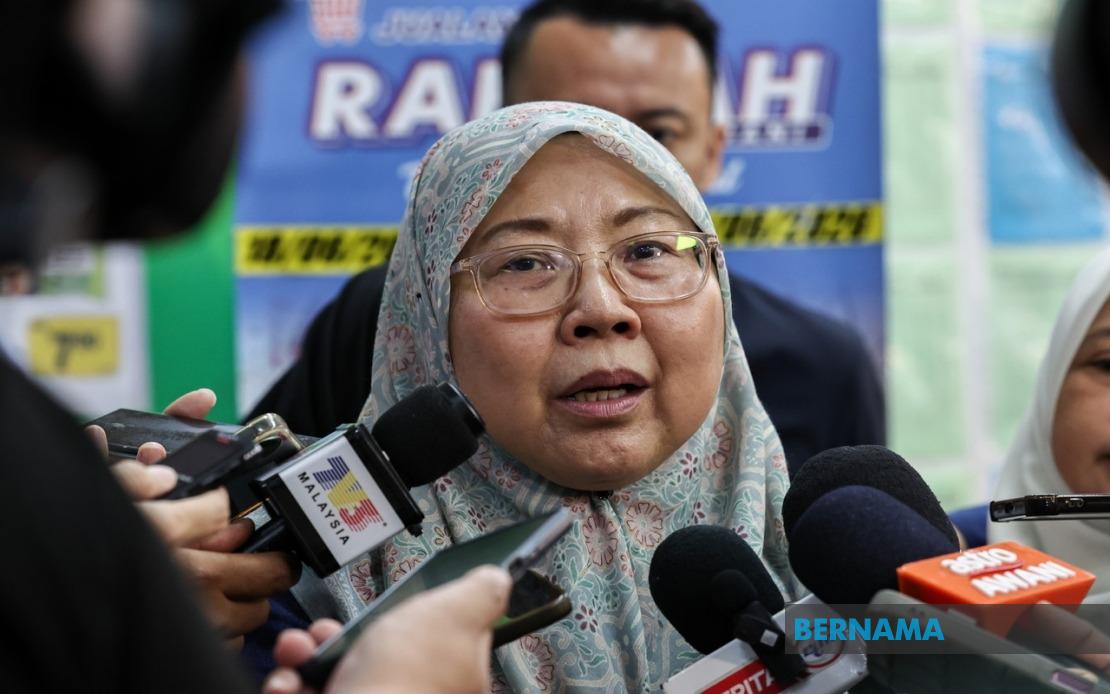
PKR's candidate nominations for the Johor and Negeri Sembilan state elections have reached 99 per cent finalization, according to party secretary-general Datuk Dr Fuziah Salleh, with a formal announcement anticipated within days. The party will contest 20 state seats in Johor and 16 in Negeri Sembilan, positioning itself as a significant contender in both electoral contests scheduled for the coming months.
The slate reflects PKR's stated commitment to generational and gender diversity, blending established party figures with newcomers and prominently featuring both women and younger candidates. However, the party has remained circumspect about revealing the precise proportion of fresh faces entering the political arena, preferring to unveil these details during the official candidate announcement ceremony.
One lingering complication threatening to disrupt the party's unity involves a territorial dispute over the Puteri Wangsa constituency in Johor. Amanah, PKR's coalition partner, has disputed PKR's claim to the seat, arguing that the seat should not revert to PKR following its temporary allocation to MUDA during the 2022 state election. This disagreement underscores the ongoing tensions within the Pakatan Harapan coalition as component parties jockey for electoral positioning ahead of critical state-level contests.
Dr Fuziah acknowledged that Johor Amanah vice chairman Dr Zuhan Zain has registered formal objections to ceding the Puteri Wangsa seat to PKR, despite PKR's assertion that the seat inherently belonged to them before being loaned to the Malaysian Democratic Alliance Party. Rather than attempting to broker a resolution at administrative levels, PKR has escalated the matter to coalition leadership, indicating that top-tier party officials from both organizations will determine the final allocation.
Separately, PKR confronts an internal disciplinary matter involving Subang MP Wong Chen, who previously challenged the party to expel him following a formal investigation into his conduct. Dr Fuziah confirmed that the party's Disciplinary Board has assumed responsibility for proceeding with appropriate sanctions, though she did not elaborate on the investigation's specifics or the likely timeline for concluding the matter.
The Johor electoral landscape presents considerable complexity. The Election Commission designated June 27 as the nomination day, with polling scheduled for July 11. This timeline followed the dissolution of the state legislative assembly on June 1. The chamber comprises 56 seats total, with Barisan Nasional previously commanding a commanding majority of 40 seats, Pakatan Harapan holding 12, Perikatan Nasional controlling three, and MUDA retaining a single seat. PKR's decision to contest 20 seats represents a measured approach that acknowledges the coalition's entrenched opposition status while allowing sufficient room for coalition partners to field their own candidates.
Negeri Sembilan's electoral schedule differs significantly, with voting set for August 1. The nomination process commences on July 18, with early voting opportunities available on July 28. The state assembly previously contained 36 seats distributed among Pakatan Harapan holding 17, Barisan Nasional 14, and Perikatan Nasional five, following the dissolution announced on June 5. PKR's allocation of 16 seats effectively reserves the remaining 20 seats for coalition partners and contested races.
These elections assume heightened significance for PKR within the broader Malaysian political trajectory. The party's performance in Johor and Negeri Sembilan will furnish crucial indicators regarding its capacity to mount competitive campaigns and potentially capture power in state administrations controlled by opposing coalitions. Success in either state would substantially reinvigorate Pakatan Harapan's credibility following recent electoral setbacks and internal conflicts.
For Malaysian voters, particularly in these two states, the upcoming contests represent genuine opportunities to shape regional governance. The composition of PKR's candidate list will substantially influence electoral outcomes, as the party's ability to energize grassroots support depends significantly on whether candidates resonate with local constituencies and reflect community demographics and aspirations.
Coalition cohesion remains fragile heading into these contests. The Puteri Wangsa dispute illustrates how component parties within Pakatan Harapan continue negotiating territorial claims and historical precedents rather than approaching coalition arrangement with systematic, transparent frameworks. Such disputes risk alienating supporters who perceive coalition partners as engaged in self-interested maneuvering rather than pursuing collective electoral objectives.
For the region more broadly, these state elections carry implications extending beyond simple vote tallies. Successful coalition governance at state level could demonstrate that multi-party alliances function effectively in Malaysian democracy, potentially normalizing power-sharing arrangements. Conversely, continued friction over seat allocations and disciplinary matters may reinforce perceptions that Malaysian coalitions remain perpetually unstable arrangements susceptible to internal collapse.