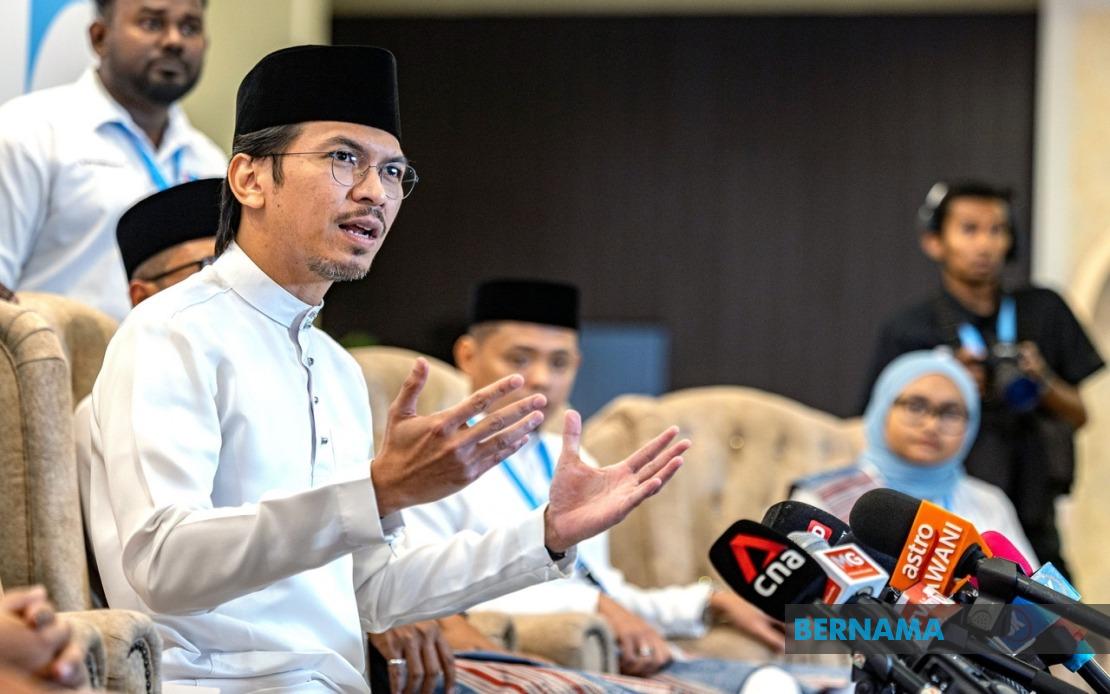
The Parti Keadilan Rakyat (PKR) is moving to contain speculation about internal erosion following reports of defections to rival parties, with the party's youth wing leadership dismissing the exodus as a minor phenomenon that poses no threat to its institutional strength. Speaking at the 2026 Angkatan Muda Keadilan (AMK) National Congress in Melaka on Wednesday, AMK chief Muhammad Kamil Ahmad Munim sought to provide reassurance that the party remains cohesive and operationally sound, even as some members have voted with their feet by joining competing political vehicles.
Muhammad Kamil's comments come in direct response to assertions by Parti Bersama Malaysia co-founder Datuk Seri Rafizi Ramli that approximately 25 per cent of Bersama's new membership roster consists of individuals who previously held PKR membership. The claim carries particular resonance given Bersama's positioning as a fresh political alternative in Malaysia's increasingly fragmented party landscape, and Rafizi's status as a high-profile politician with considerable machinery and political capital. For PKR, the suggestion that one-quarter of a rival party's founding cohort originates from its own ranks represents a significant challenge to narratives of internal solidarity and ideological commitment.
However, Muhammad Kamil countered that while he could not specify the precise percentage of departing members, available data indicates that actual losses remain marginal and exert no measurable impact on party administration or capacity. The characterisation of member attrition as "insignificant" reflects a strategy common among political parties under pressure—minimising the salience of defections while emphasising continuity and operational competence. The AMK chief noted that the party continues to consolidate its organisational reach, pointed to robust attendance at the congress as evidence of grassroots commitment, and stressed that members choosing to depart were exercising personal agency in a manner the party respects.
The broader context involves questions about PKR's resilience at a moment when Malaysian politics is experiencing notable realignment. The emergence of Bersama as a centrist alternative, combined with ongoing competitive pressures from Amanah, DAP, and other components within the Pakatan Harapan coalition, has created an environment in which party loyalty is increasingly contestable. For ordinary PKR members frustrated by internal dynamics, performance in government, or ideological direction, switching platforms now carries fewer historical or psychological barriers than it might have in earlier periods. The party's youth wing, tasked with renewal and engagement, has particular incentive to project confidence and maintain internal morale.
A complicating factor in PKR's current management of internal affairs is the status of deputy president Nurul Izzah Anwar, who is currently on leave from her formal responsibilities. While Muhammad Kamil sought to assure party stakeholders that Nurul Izzah's temporary absence does not impair institutional function, the reality is more complex. Her presence or absence carries symbolic weight within a party that has traditionally emphasised dynastic and generational continuity, particularly given her profile as a senior figure and her relationship to party president Anwar Ibrahim. The statement that operations continue through clearly defined divisions of labour, with vice-president Datuk Seri Saifuddin Nasution Abdullah and PKR election director Datuk Seri Amirudin Shari assuming expanded portfolios, represents an attempt to normalise the situation.
From a Southeast Asian perspective, PKR's difficulties mirror broader trends affecting multi-party coalitions across the region. In Thailand, Indonesia, and the Philippines, centre-left and reformist parties have struggled to maintain member loyalty when facing competition from newer entrants promising fresher approaches or different ideological emphases. The ability of parties to retain members depends increasingly on tangible delivery of goods and services, ministerial appointments, and evidence that membership confers concrete advantages. In Malaysia's context, where PKR holds significant ministerial portfolios and remains a dominant force within Pakatan Harapan, the loss of members to Bersama—a party without current government representation—suggests that grievances run deeper than mere opportunism.
The party's messaging around the AMK congress attempted to reframe the narrative from one of internal weakness to one of institutional vitality. Muhammad Kamil emphasised the commitment of delegates in attending the congress, interpreted high turnout as evidence of enduring faith in the party's direction, and positioned preparation for the upcoming state elections and general election as grounds for unity and focus. This forward-looking approach is strategically sound but also reveals the underlying tension: the party leadership must acknowledge defections sufficiently to address member concerns, yet must avoid amplifying the narrative that PKR faces existential challenge.
The reference to state and branch-level leadership providing explanations to grassroots members reflects PKR's attempt to manage expectations at the ground level, where departures and party organisational shifts are directly observable. By framing the matter as one that has been transparently addressed and accepted by rank-and-file members, the party seeks to close what could otherwise develop into a prolonged controversy affecting recruitment and volunteer engagement. Whether this messaging gains traction depends partly on the actual economic and political conditions affecting ordinary members, and partly on how effectively PKR delivers on policy objectives and government performance in the coming months.
Looking ahead, PKR faces the challenge of stabilising its membership base whilst navigating competitive pressures from multiple directions. The party's performance in forthcoming state elections will provide a more concrete test of whether the defections remain genuinely marginal or whether they signal the onset of more significant realignment. For Malaysian observers and regional political analysts, PKR's ability to manage this transition will offer instructive lessons about coalition resilience in multi-party democracies where party switching has become normalised and voters increasingly shop for political vehicles aligned with their current preferences.

