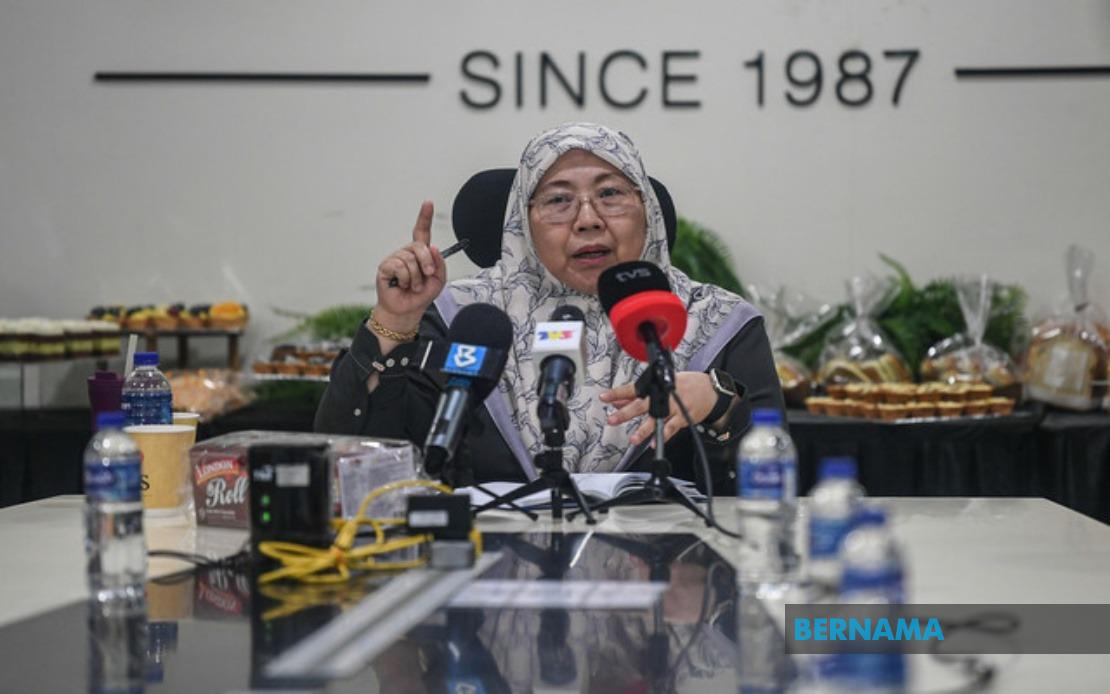
The departure of several prominent PKR members and supporters to the Malaysian Indian Congress, announced just days ago, reflects a pattern of internal frustration rather than ideological schism, according to PKR's highest-ranking administrative official. During a working visit to a food manufacturing facility in Skudai on June 30, Datuk Dr Fuziah Salleh, the party's secretary-general, characterised the recent exodus as fundamentally rooted in the unfulfilled expectations of aspiring office-holders seeking roles within the party hierarchy. Her assessment came amid a broader campaign period that has seen Malaysia's political landscape shift significantly in the southern state of Johor.
The specific incident prompting Fuziah's comments involved M. Murugan, who previously held the position of vice-chairman in the Johor PKR State Leadership Council, announcing his departure along with approximately 200 supporters to join the MIC's Iskandar Puteri division on June 28. Rather than view this move as a rejection of the party's core principles or governance, PKR's internal analysis suggests the departure stems from grievances within the party's structural allocation of positions. Fuziah's public acknowledgement of this pattern indicates that party leadership recognises the challenge of managing expectations among members who aspire to formal appointments, and she extended goodwill wishes to the departing group in their pursuit of opportunities elsewhere.
The timing of these defections carries particular significance given that Johor is preparing for a significant democratic exercise, with polls scheduled for July 11. The state election will see 172 candidates competing across 56 constituencies, with early voting taking place on July 7, making this a critical moment for all political coalitions vying for voter support. The departures, while notable, occur within a much larger strategic contest involving multiple coalitions seeking to consolidate their respective voter bases before the ballot box opens.
Beyond the immediate issue of defections, Fuziah turned her attention to broader coalition dynamics involving parties outside of Pakatan Harapan. She addressed recent statements from Tan Sri Abdul Hadi Awang, president of the Pan-Malaysian Islamic Party, who has called on voters to reject Pakatan Harapan in the upcoming elections. According to Fuziah's analysis, such pronouncements appear designed to signal a potential revival of cooperative arrangements between Barisan Nasional and PAS, two coalitions that have competed vigorously in recent electoral cycles. She encouraged Johor voters to engage in careful deliberation about the political landscape before casting their votes, recognising that voter decision-making would ultimately determine electoral outcomes.
The strategic moves by Perikatan Nasional, which observers have characterised as attempts to attract voters who traditionally support Barisan Nasional, present another layer of complexity in the state's political competition. However, Fuziah suggested that this approach may ultimately prove counterproductive for the Perikatan alliance, rather than delivering the anticipated advantage. She argued that such tactics risk exposing internal tensions and contradictions within the Perikatan coalition, potentially weakening rather than strengthening its electoral position. Her assessment suggested that PAS's recent public positioning, particularly its calls against voting for Pakatan Harapan, could be interpreted as damaging to its own coalition partners within Perikatan, creating internal friction that might undermine the alliance's cohesion.
Fuziah's conclusion from this political analysis proved optimistic for her own coalition, as she articulated her belief that the constellation of strategic moves and public statements from rival coalitions ultimately redounded to Pakatan Harapan's benefit. Rather than viewing the competitive landscape as uniformly threatening, she framed the current political dynamics as presenting opportunities for Pakatan Harapan to capitalise on divisions and miscalculations among its opponents. This assessment reflects the confidence that senior PKR leadership possesses heading into the Johor ballot, even as the party contends with the ongoing challenge of member retention and internal satisfaction.
For Malaysian voters and political observers, the situation in Johor encapsulates several broader tensions within Malaysia's contemporary political system. The defections from PKR to MIC speak to ongoing frustrations within coalition partners about the distribution of party positions and electoral candidacies, a perennial source of friction in multi-party democratic systems. Simultaneously, the competing strategic overtures from Barisan Nasional, Perikatan Nasional, and Pakatan Harapan demonstrate how Malaysia's three major political blocs are jockeying for advantage in a critical state election that could reshape regional power dynamics.
The regional significance of Johor's electoral outcome extends beyond the state itself, as Malaysia's most developed and economically influential southern state has traditionally served as a bellwether for national political sentiment. Results in Johor have historically influenced calculations about which coalitions possess momentum heading into potential federal contests, making the state election a crucial testing ground for each coalition's appeal to voters. PKR's leadership clearly recognises that maintaining unity and demonstrating momentum remains essential to competitive performance in such high-stakes contests.
As the campaign period intensifies toward the July 11 polling day, the interplay between these various factors—member dissatisfaction, coalition coordination challenges, and voter preferences—will shape the outcome of one of Malaysia's most politically significant elections in recent years. Fuziah's public remarks, while addressing the immediate issue of PKR defections, also signal broader confidence within Pakatan Harapan about the strategic environment heading into the ballot.

